
Short Answer
Overview of Fundamental Particles
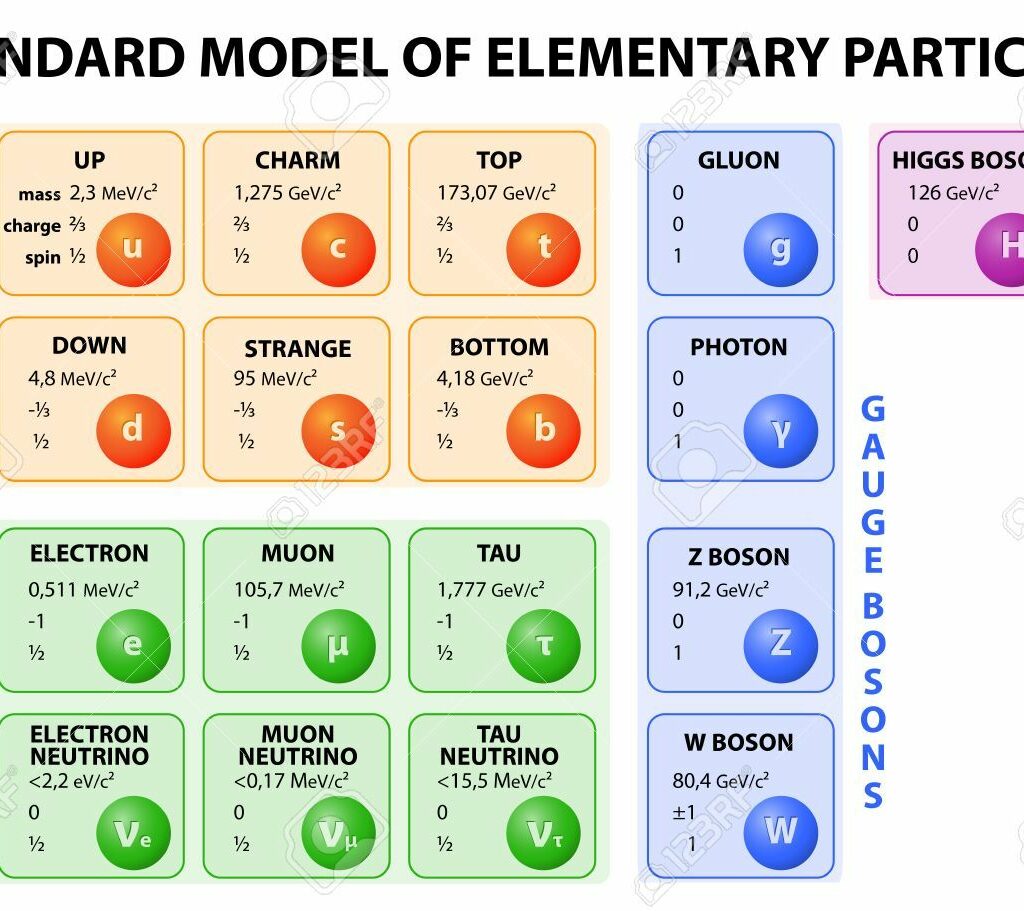
The discovery of the twelve fundamental particles, which constitute the foundation of the Standard Model in particle physics, represents a remarkable scientific journey spanning many decades. These particles are categorized into two main groups: fermions and bosons. Each plays an essential role in forming matter and mediating the fundamental forces that govern the universe. The story of their identification highlights the dynamic relationship between theoretical predictions and experimental confirmations, showcasing the persistent curiosity that drives scientific progress.
Historical Context and Early Discoveries
The early 20th century marked a revolutionary era in physics, characterized by the emergence of quantum mechanics. This new theoretical framework challenged classical views by proposing that subatomic entities exhibit both particle-like and wave-like properties. This paradigm shift ignited a quest to understand the fundamental constituents of matter, leading to the discovery of several elementary particles.
Rutherford’s Gold Foil Experiment and the Proton
In 1911, Ernest Rutherford’s gold foil experiment revealed the existence of a dense atomic nucleus, fundamentally altering the atomic model. This experiment provided evidence for protons as positively charged particles residing within the nucleus, setting the stage for further exploration of subatomic structure.
Neutron Discovery and Isotopes
During the 1930s, James Chadwick identified the neutron, a neutral particle within the nucleus. This discovery was pivotal in establishing the proton-neutron model of atomic nuclei and introduced the concept of isotopes-atoms of the same element with varying neutron numbers, resulting in different atomic masses. The neutron’s neutrality complemented the proton’s positive charge and raised important questions about nuclear forces.
Leptons and Their Significance
The electron, discovered by J.J. Thomson in 1897, was the first identified lepton and opened new avenues for understanding charged particles and electromagnetic interactions. Subsequently, the muon and tau leptons were discovered, expanding the lepton family and deepening our comprehension of matter’s complexity.
Quarks and the Structure of Hadrons
Mid-20th century advancements in particle accelerators led to the discovery of numerous hadrons-particles composed of quarks. In 1964, Murray Gell-Mann and George Zweig independently proposed the quark model, which classified hadrons into two categories:
- Baryons:
Composed of three quarks. - Mesons:
Made up of a quark and an antiquark pair.
The quark family consists of six flavors: up, down, charm, strange, top, and bottom, each with distinct properties. This classification enriched the inventory of fundamental particles and provided a deeper understanding of matter’s substructure.
Gauge Bosons and Fundamental Forces
The 1980s witnessed the discovery of the W and Z bosons, which mediate the weak nuclear force. These findings were crucial in unifying the weak nuclear force with electromagnetism under the electroweak theory. The detection of these bosons at CERN’s Super Proton Synchrotron confirmed theoretical predictions and advanced the understanding of particle interactions.
The Higgs Boson and Mass Generation
The search for the Higgs boson culminated in its discovery at the Large Hadron Collider (LHC) in 2012. This particle is integral to the Standard Model as it explains how particles acquire mass through the Higgs field. The confirmation of the Higgs boson was a landmark achievement, reinforcing the Standard Model while opening new questions about physics beyond its scope.
Definition of the Twelve Fundamental Particles
The twelve fundamental particles are divided into two categories:
- Fermions:
These include six quarks (up, down, charm, strange, top, bottom) and six leptons (electron, muon, tau, and their corresponding neutrinos). Fermions constitute matter. - Bosons:
These particles mediate forces and include the photon (electromagnetic force), W and Z bosons (weak force), gluons (strong force), and the Higgs boson (mass generation).
Mechanism of Particle Interactions
Fundamental particles interact through four known forces: gravitational, electromagnetic, strong nuclear, and weak nuclear forces. Gauge bosons act as force carriers, facilitating these interactions. For example, photons mediate electromagnetic interactions, while gluons bind quarks together within hadrons. The Higgs boson interacts with particles to endow them with mass via the Higgs field.
Mathematical Framework: The Standard Model
The Standard Model is a quantum field theory describing the behavior and interactions of fundamental particles. It incorporates gauge symmetries and spontaneous symmetry breaking to explain particle masses and forces. Key components include:
- Gauge Groups: SU(3) for strong interaction, SU(2) × U(1) for electroweak interaction.
- Higgs Mechanism: Provides mass to W and Z bosons and fermions through spontaneous symmetry breaking.
Practical Examples in Physics
Particle accelerators like the Large Hadron Collider recreate conditions to observe fundamental particles and their interactions. For instance, high-energy collisions produce quark-antiquark pairs, enabling the study of hadron formation. The detection of neutrinos from the sun and cosmic rays provides insight into lepton behavior. These experiments validate theoretical models and expand our understanding of the universe.
Common Misunderstandings About Fundamental Particles
- Misconception: Protons and neutrons are fundamental particles.
Correction: Protons and neutrons are composite particles made of quarks. - Misconception: The Higgs boson is a force carrier like other bosons.
Correction: The Higgs boson is unique as it is associated with the Higgs field responsible for mass, not a force mediator. - Misconception: Electrons are indivisible and have no internal structure.
Correction: Current evidence supports electrons as fundamental, but ongoing research explores possible substructures.
Significance of Fundamental Particles
Understanding the twelve fundamental particles is crucial for comprehending the universe’s composition and the forces shaping it. This knowledge underpins modern physics, enabling technological advances such as medical imaging, nuclear energy, and quantum computing. Moreover, it drives ongoing research into unexplained phenomena like dark matter and the unification of forces, highlighting the enduring importance of particle physics in science and technology.
FAQ
What are the 12 fundamental particles?
The 12 fundamental particles include six types of quarks (up, down, charm, strange, top, bottom), three charged leptons (electron, muon, tau), their associated neutrinos, and force-carrying bosons such as the photon, W and Z bosons, gluons, and the Higgs boson.
How did the discovery of the proton and neutron contribute to particle physics?
The proton and neutron discoveries established the nuclear model of the atom, providing a foundation for understanding atomic structure and paving the way for the development of quantum mechanics and particle physics.
Why is the Higgs boson important?
The Higgs boson explains how particles acquire mass through the Higgs field, completing the Standard Model and confirming key theoretical predictions.
What role do particle accelerators play in identifying fundamental particles?
Particle accelerators enable high-energy collisions that produce and reveal fundamental particles, allowing experimental confirmation of theoretical models.




Leave a Reply