

Short Answer
Definition of Essential Measuring Instruments in Physics
Accurate measurement is the cornerstone of scientific research and experimentation, particularly in physics. The ability to quantify physical properties with precision ensures the reliability and validity of experimental results. To achieve this, physicists rely on a variety of specialized instruments, each designed to measure specific parameters with high accuracy. Understanding these tools and their applications is fundamental to advancing scientific knowledge.
Overview of Key Measuring Devices
Below is a detailed examination of six fundamental measuring instruments that are indispensable in physics, highlighting their functions, types, and the challenges associated with their use.
Caliper: Precision in Dimensional Measurement
The caliper is a highly adaptable device used to measure dimensions such as length, depth, and internal or external diameters with remarkable accuracy. Available in both digital and mechanical variants, calipers operate via a sliding mechanism that can achieve precision up to 0.01 millimeters. This makes them invaluable in disciplines like engineering and manufacturing where exact measurements are critical.
- Types:
Digital calipers provide easy-to-read measurements, while mechanical calipers require manual interpretation of scales. - Challenges:
Proper handling and reading skills are essential to avoid errors, especially under time constraints or in high-pressure environments.
Anemometer: Measuring Wind Velocity
Anemometers are instruments designed to quantify wind speed, playing a crucial role in environmental physics, meteorology, and aerodynamics. Various models exist, each suited to different contexts:
- Cup Anemometers:
Ideal for general outdoor wind speed measurements. - Vane Anemometers:
Combine wind speed and direction measurement. - Hot-Wire Anemometers:
Used primarily in laboratory settings to assess airflow with high sensitivity.
Accurate wind speed measurement can be complicated by environmental factors such as temperature and humidity, requiring careful calibration and interpretation to maintain data integrity.
Multimeter: Versatile Electrical Measurement Tool
The multimeter is an essential instrument for electrical diagnostics, capable of measuring voltage, current, and resistance. It serves as a multifunctional tool for physicists and engineers alike.
- Types:
Analog multimeters offer continuous needle readings, while digital multimeters provide precise numerical outputs. - Usage Complexity:
Users must adeptly select appropriate settings and distinguish between alternating current (AC) and direct current (DC) to obtain accurate measurements.
Oscilloscope: Visualizing Electrical Signals
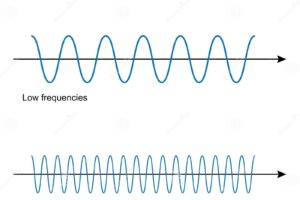
An oscilloscope is a powerful device that graphically displays electrical signals as voltage over time, enabling detailed analysis of waveform characteristics such as frequency, amplitude, and shape. This capability is vital in telecommunications, audio engineering, and electronic research.
- Functionality:
By visualizing transient and steady-state signals, oscilloscopes help diagnose circuit behavior and signal integrity. - Interpretation Challenges:
Mastering the controls and accurately analyzing rapid, short-duration phenomena require significant expertise.
Thermometer: Measuring Temperature Accurately
Temperature measurement is fundamental in many physical processes, making thermometers indispensable in both laboratory and fieldwork. Various types cater to different needs:
- Mercury Thermometers:
Traditional devices known for reliability but limited temperature range. - Digital Thermometers:
Provide quick and precise readings with ease of use. - Thermocouples:
Highly responsive sensors capable of measuring extreme temperatures.
Challenges include managing sensor thermal mass, minimizing environmental interference, and ensuring proper calibration to maintain measurement accuracy.
Spectrophotometer: Analyzing Light and Material Properties
The spectrophotometer is a sophisticated instrument used to measure light intensity across different wavelengths, facilitating the study of a material’s optical characteristics such as absorbance and transmittance. It is widely employed in chemistry, biology, and materials science.
- Applications:
Determining molecular and atomic structures through spectral analysis. - Analytical Challenges:
Interpreting complex spectra with multiple peaks and troughs demands advanced analytical skills to accurately deduce material properties.
How These Instruments Function
Each measuring tool operates on distinct principles tailored to its specific application:
- Calipers use a sliding scale to measure physical dimensions directly.
- Anemometers detect wind speed through mechanical rotation or thermal changes.
- Multimeters measure electrical parameters by connecting to circuits and interpreting electrical signals.
- Oscilloscopes convert electrical signals into visual waveforms for temporal analysis.
- Thermometers detect temperature changes via expansion of liquids, electronic sensors, or thermoelectric effects.
- Spectrophotometers measure light absorption and transmission by passing light through samples and detecting intensity variations.
Importance of Accurate Measurement in Physics
Precision in measurement underpins the scientific method, enabling reproducibility and validation of experimental results. These instruments empower physicists to explore natural phenomena with confidence, driving technological innovation and deepening our understanding of the universe. Mastery of these tools not only enhances experimental accuracy but also fosters critical analytical skills essential for scientific advancement.
Common Misunderstandings About Measuring Tools
- Misconception: Digital instruments are always more accurate than analog.
Correction: While digital devices often provide easier readings, accuracy depends on calibration and proper use, not solely on digital display. - Misconception: Measuring temperature is straightforward and free from error.
Correction: Environmental factors and sensor characteristics can significantly affect temperature readings, requiring careful technique. - Misconception: All anemometers function identically.
Correction: Different types of anemometers are optimized for specific conditions and applications, affecting their suitability and accuracy.
Practical Applications of Measuring Instruments
These tools find extensive use across various scientific and industrial domains:
- Calipers: Used in manufacturing for quality control and component fitting.
- Anemometers: Employed in weather stations and aerodynamic testing.
- Multimeters: Essential for electrical troubleshooting and circuit design.
- Oscilloscopes: Critical in electronics development and signal analysis.
- Thermometers: Utilized in climate studies, medical diagnostics, and material testing.
- Spectrophotometers: Applied in chemical analysis, biological research, and material characterization.
FAQ
What is the primary use of a caliper?
A caliper is primarily used to measure dimensions such as length, depth, and internal/external diameters with high precision.
How does an anemometer differ among its types?
Cup anemometers measure general wind speed, vane types measure wind direction and speed, and hot-wire anemometers assess airflow in laboratory environments.
What are common challenges when using a multimeter?
Challenges include selecting the correct measurement mode and distinguishing between AC and DC currents.
Why is the oscilloscope important in telecommunications?
It provides detailed visual analysis of signal integrity, frequency, and waveform shape critical for telecommunications.
What factors affect thermometer accuracy?
Thermal mass, environmental interference, and calibration accuracy affect thermometer precision.

Leave a Reply