
Short Answer
Definition of Molecular Mass
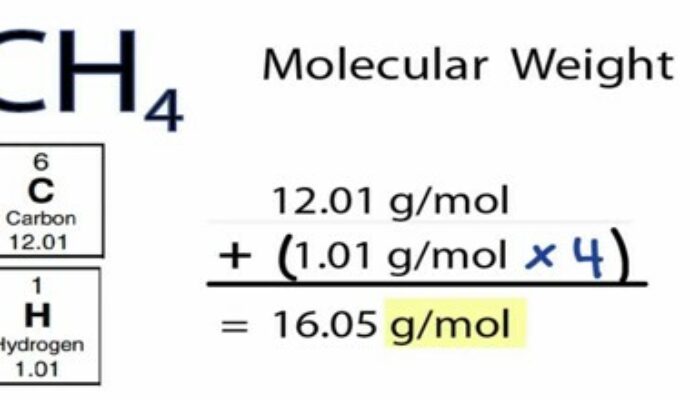
Molecular mass, also known as molar mass, refers to the total mass of a single molecule expressed in atomic mass units (amu). It is calculated by summing the atomic masses of all atoms that compose the molecule. Each element’s atomic mass, found on the periodic table, serves as the fundamental value for these calculations.
Fundamental Principles of Molecular Mass Calculation
To determine the molecular mass, one must first identify the number and types of atoms within the molecule. Using the atomic masses from the periodic table, multiply each element’s atomic mass by the quantity of atoms present, then add these values together to obtain the molecule’s total mass.
- Atomic Mass:
The mass of an individual atom, typically measured in atomic mass units (amu), as listed on the periodic table. - Number of Atoms:
The count of each type of atom within the molecular formula.
Step-by-Step Example: Calculating Molecular Mass of Water
Consider water (H2O), which contains two hydrogen atoms and one oxygen atom. The atomic mass of hydrogen is approximately 1.01 amu, while oxygen’s atomic mass is about 16.00 amu. The molecular mass is calculated as follows:
- Hydrogen: 2 × 1.01 amu = 2.02 amu
- Oxygen: 1 × 16.00 amu = 16.00 amu
Adding these yields the molecular mass of water:
2.02 amu + 16.00 amu = 18.02 amu
Advanced Techniques for Molecular Mass Determination
While basic calculations suffice for simple molecules, complex compounds often require more sophisticated methods. Mass spectrometry is a powerful analytical technique that measures the mass-to-charge ratio of ionized particles. By ionizing a sample and accelerating the ions through an electric field, the instrument determines molecular mass with high precision based on the ions’ trajectories.
Empirical and Molecular Formulas: Relationship and Calculation
The empirical formula represents the simplest whole-number ratio of atoms in a compound, whereas the molecular formula indicates the actual number of atoms. By comparing the empirical formula mass to experimentally determined molecular mass, chemists can deduce the molecular formula using a multiplicative factor.
- Empirical Formula:
Simplest ratio of elements (e.g., CH). - Molecular Formula:
Actual number of atoms (e.g., C2H2), derived by multiplying the empirical formula by an integer.
Impact of Isotopes on Molecular Mass
Isotopes are variants of elements differing in neutron number, which affects their atomic masses. For example, carbon has isotopes 12C (12.00 amu) and 13C (approximately 13.00 amu). The natural abundance of isotopes influences the average atomic mass used in molecular mass calculations, making it essential to consider isotopic distribution for precise results.
Practical Example: Molecular Mass of Glucose
Glucose (C6H12O6) consists of carbon, hydrogen, and oxygen atoms. Using atomic masses:
- Carbon: 6 × 12.01 amu = 72.06 amu
- Hydrogen: 12 × 1.01 amu = 12.12 amu
- Oxygen: 6 × 16.00 amu = 96.00 amu
Summing these values gives the molecular mass:
72.06 amu + 12.12 amu + 96.00 amu = 180.18 amu
Common Misconceptions About Molecular Mass
Molecular mass and molecular weight are always the same.
Molecular mass is a precise measurement in atomic mass units, while molecular weight is a dimensionless ratio relative to a standard.
Isotopes do not affect molecular mass calculations.
Isotopic variations influence atomic masses and must be considered for accurate molecular mass determination.
Significance of Molecular Mass in Science and Industry
Understanding molecular mass is crucial across various scientific disciplines, including chemistry, biology, and pharmacology. It aids in predicting molecular behavior, calculating reactant quantities in chemical reactions, and designing pharmaceuticals. Accurate molecular mass determination underpins advancements in material science, environmental studies, and molecular biology, making it a foundational concept in both research and practical applications.
FAQ
What is molecular mass?
Molecular mass is the total mass of a molecule calculated by adding the atomic masses of all atoms it contains.
How do you calculate molecular mass from a chemical formula?
Multiply the atomic mass of each element by the number of atoms in the molecule and sum all the values.
Why is mass spectrometry used in molecular mass determination?
Because it measures the mass-to-charge ratio of ions, allowing for accurate determination of molecular mass, especially for complex molecules.
How do isotopes affect molecular mass calculations?
Isotopes have different atomic masses, so their natural abundance must be considered to ensure accurate molecular mass values.





Leave a Reply