

Short Answer
Definition of Water and Its Molecular Composition
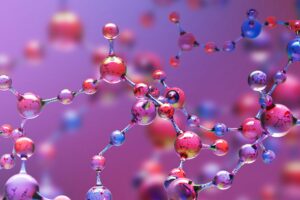
Water, a substance fundamental to life on Earth, is chemically denoted as H2O. This formula indicates that each water molecule is composed of two hydrogen atoms bonded covalently to a single oxygen atom. Despite its apparent simplicity, the molecular structure of water reveals a complex interplay of atomic interactions that underpin its unique properties and vital role in biological and environmental systems.
Quantifying Water Molecules in a Standard Glass
To understand the scale of hydrogen atoms in a glass of water, it is essential first to estimate the number of water molecules present. A typical glass holds about 250 milliliters of water. Given that water has a density close to 1 gram per milliliter, this volume corresponds to roughly 250 grams of water.
The molar mass of water, calculated by adding the atomic masses of its constituent atoms-approximately 1 gram per mole for hydrogen and 16 grams per mole for oxygen-totals about 18 grams per mole. This value allows us to convert the mass of water into moles, a standard unit in chemistry representing a specific number of molecules.
Calculating the Number of Water Molecules
The number of moles in the glass can be found using the formula:
Number of moles = mass (grams) / molar mass (grams per mole)
Applying this to our example:
250 g / 18 g/mol ≈ 13.89 moles
Using Avogadro’s number, which is approximately 6.022 × 10²³ molecules per mole, we can determine the total number of water molecules:
Number of molecules = moles × Avogadro’s number
Thus:
13.89 moles × 6.022 × 10²³ molecules/mole ≈ 8.36 × 1024 molecules
Estimating the Quantity of Hydrogen Atoms
Since each water molecule contains two hydrogen atoms, the total number of hydrogen atoms in the glass is twice the number of water molecules:
8.36 × 1024 molecules × 2 hydrogen atoms/molecule ≈ 1.67 × 1025 hydrogen atoms
This calculation reveals that a single glass of water contains approximately 16.7 octillion hydrogen atoms, illustrating the immense scale of atomic constituents even in everyday quantities of substances.
Hydrogen Bonding and Water’s Unique Properties
Beyond the sheer numbers, the behavior of hydrogen atoms within water molecules is crucial to understanding water’s distinctive characteristics. The hydrogen atoms participate in hydrogen bonding, a type of intermolecular attraction weaker than covalent bonds but strong enough to influence water’s physical properties significantly. These bonds contribute to water’s high specific heat capacity, surface tension, and its exceptional ability to act as a solvent for a wide range of substances.
Biochemical Significance of Hydrogen in Water
Hydrogen atoms are not only vital within water molecules but also play a central role in biochemistry. They are fundamental components of organic molecules such as amino acids, nucleotides, and carbohydrates, which are essential to life processes. The omnipresence of hydrogen in biological molecules underscores its importance in metabolism, cellular structure, and energy transfer.
Applications and Scientific Relevance
The study of hydrogen atoms in water extends into various scientific fields. For example, understanding hydrophilicity-the affinity of molecules for water-is critical in cell membrane biology. Additionally, water’s role as a solvent facilitates countless chemical reactions, making it indispensable in both natural and industrial processes. Investigating the quantity and behavior of hydrogen atoms in water thus provides insights into molecular interactions that are foundational to chemistry, biology, and environmental science.
Common Misconceptions About Water and Hydrogen Atoms
Water molecules contain only one hydrogen atom.
Each water molecule consists of two hydrogen atoms bonded to one oxygen atom.
The number of atoms in a glass of water is small.
Even a modest glass contains on the order of 1025 hydrogen atoms, demonstrating the vast scale of atomic particles.
Why Understanding Hydrogen Atoms in Water Is Important
Grasping the abundance and role of hydrogen atoms in water enriches our comprehension of molecular science and the natural world. This knowledge is pivotal in fields ranging from environmental science to medicine, as water’s properties influence climate, biological functions, and chemical reactions. Recognizing the scale and significance of hydrogen atoms helps illuminate the intricate connections that sustain life and shape our planet.
FAQ
How many hydrogen atoms are in a glass of water?
A 250 ml glass of water contains about 1.67 x 10²⁵ hydrogen atoms.
What is the significance of hydrogen in water?
Hydrogen atoms form covalent bonds with oxygen in water molecules and contribute to hydrogen bonding, which is essential for water's unique properties and biological functions.
How do you calculate the number of molecules in a glass of water?
By dividing the mass of water by its molar mass to find moles, then multiplying by Avogadro's number to get the number of molecules.
Why is Avogadro's number important in chemistry?
It represents the number of molecules or atoms in one mole of a substance, allowing conversion between moles and number of particles.




Leave a Reply