
Short Answer
Definition of Graphene and Its Origin
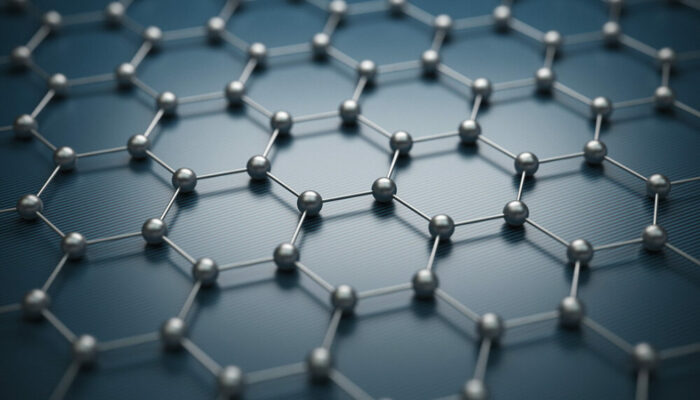
Graphene is a single layer of carbon atoms arranged in a two-dimensional honeycomb lattice, renowned for its extraordinary electrical, thermal, and mechanical properties. It is derived from graphite, a naturally occurring form of carbon composed of stacked layers of graphene sheets. This unique atomic structure endows graphene with remarkable strength-over 100 times stronger than steel in theory-and exceptional electrical conductivity, making it a focal point of advanced material research and technological innovation.
Graphite as the Precursor Material
Graphite consists of multiple layers of carbon atoms bonded in planar sheets, loosely held together by van der Waals forces. These layered planes serve as the starting material for graphene extraction. The challenge lies in isolating individual graphene layers from the bulk graphite, which requires precise and controlled methods to preserve the integrity and superior properties of graphene.
Primary Techniques for Graphene Production
Mechanical Exfoliation
Often dubbed the “Scotch tape method,” mechanical exfoliation involves peeling thin graphene layers from graphite using adhesive tape. This straightforward technique produces high-quality monolayer graphene, ideal for laboratory-scale experiments. However, its labor-intensive nature and low throughput limit its practicality for large-scale manufacturing.
Chemical Exfoliation
Chemical exfoliation offers a more scalable alternative by introducing strong oxidizing agents to intercalate graphite layers, facilitating their separation into graphene oxide sheets. Subsequent chemical reduction transforms graphene oxide back into graphene, though this process must carefully balance the restoration of electrical conductivity and structural integrity. This method is widely used for bulk production but may compromise some of graphene’s pristine properties.
Chemical Vapor Deposition (CVD)
CVD is a sophisticated technique where carbon-containing gases decompose at high temperatures on substrates such as metals or ceramics, enabling the growth of continuous graphene films. This method excels in producing large-area, high-quality graphene suitable for electronic devices and advanced applications. Despite its advantages, CVD requires stringent temperature control and specialized equipment, which can increase production costs and energy consumption.
Liquid-Phase Exfoliation
This process disperses graphite in solvents and applies ultrasonic energy to separate graphene sheets. Liquid-phase exfoliation facilitates the production of graphene suspensions, which are useful for composite materials and coatings. However, the resulting graphene often exhibits a range of flake sizes and less uniformity, necessitating additional purification for high-performance uses.
Electrochemical Exfoliation
Emerging as a promising method, electrochemical exfoliation uses electrical currents in aqueous solutions to delaminate graphite into graphene layers. This approach offers potential benefits in scalability, cost-effectiveness, and automation. Additionally, it supports the fabrication of graphene-based sensors and energy storage devices, broadening the material’s applicability in nanotechnology.
Mechanisms Behind Graphene Synthesis Methods
Each graphene production technique operates on distinct principles:
- Mechanical Exfoliation:
Physical separation of layers by adhesive forces overcoming interlayer van der Waals interactions. - Chemical Exfoliation:
Oxidation introduces functional groups between layers, increasing spacing and weakening interlayer bonds for easier separation. - CVD:
Thermal decomposition of gaseous carbon precursors deposits carbon atoms onto substrates, forming crystalline graphene layers. - Liquid-Phase Exfoliation:
Ultrasonic waves generate cavitation and shear forces that peel graphene sheets from graphite in solvents. - Electrochemical Exfoliation:
Electrochemical reactions produce gas and ions that intercalate and separate graphite layers.
Challenges and Limitations in Graphene Production
Despite advances, several obstacles remain in graphene manufacturing:
- Scalability:
Techniques like mechanical exfoliation are not easily scalable for industrial demands. - Cost:
High-temperature and controlled-environment methods such as CVD incur significant expenses. - Quality Control:
Achieving consistent layer thickness, purity, and defect-free graphene is difficult across large batches. - Structural Integrity:
Chemical methods may introduce defects or residual functional groups that degrade performance.
Applications and Significance of Graphene
Graphene’s exceptional properties have far-reaching implications across multiple sectors:
- Electronics:
Utilized in transistors, flexible displays, and conductive inks due to its high electrical conductivity. - Energy Storage:
Enhances batteries and supercapacitors by improving charge capacity and cycling stability. - Composite Materials:
Incorporated into polymers and metals to increase strength and reduce weight. - Biomedical Devices:
Explored for sensors, drug delivery systems, and tissue engineering scaffolds.
Common Misunderstandings About Graphene Production
- Misconception: Mechanical exfoliation is suitable for mass production.
Correction: While it yields high-quality graphene, it is impractical for large-scale manufacturing due to low throughput. - Misconception: All graphene produced chemically has the same properties as pristine graphene.
Correction: Chemical methods often introduce defects or functional groups that alter electrical and mechanical characteristics.
Future Directions in Graphene Synthesis
Ongoing research aims to develop cost-effective, scalable, and environmentally friendly production methods that maintain graphene’s superior qualities. Innovations in hybrid techniques, automation, and material integration are expected to accelerate commercial adoption. The balance between performance, cost, and manufacturability remains the key to unlocking graphene’s full potential in next-generation technologies.
FAQ
What is graphene?
Graphene is a single layer of carbon atoms arranged in a two-dimensional honeycomb lattice, known for its remarkable strength, conductivity, and flexibility.
How is graphene made from graphite?
Graphene is produced by separating the layers of graphite using methods such as mechanical peeling, chemical treatments, vapor deposition, or electrochemical processes.
What is mechanical exfoliation?
Mechanical exfoliation, also known as the Scotch tape method, involves physically peeling thin graphene layers from bulk graphite.
Why is chemical vapor deposition used for graphene synthesis?
Chemical vapor deposition allows for the growth of high-quality, large-area graphene films suitable for electronic and industrial applications.
What are the main challenges in graphene production?
Challenges include producing graphene at scale with consistent quality, managing cost, and maintaining the material's unique properties during synthesis.




Leave a Reply