
Short Answer
Definition of the First Molecules
The emergence of the first molecules marks a crucial chapter in the cosmic narrative, representing the initial step from simple atomic particles to the complex chemical structures that underpin life. These primordial molecules formed through natural processes in the early universe, setting the stage for biological evolution and the development of the biosphere.
- Primordial Elements:
Hydrogen and helium, the universe’s earliest elements, served as the foundational building blocks for molecular formation. - Complex Molecules:
Over time, these simple atoms combined to create more intricate molecules essential for life, such as amino acids and nucleotides.
Cosmic Origins of Elements
The genesis of the first molecules is deeply rooted in stellar processes that occurred over billions of years. Initially, the Big Bang produced primarily hydrogen and helium atoms. Within stars, nuclear fusion transformed these light elements into heavier atoms like carbon, oxygen, and nitrogen-key constituents of organic molecules.
- Stellar Nucleosynthesis:
Fusion reactions in stars generate heavier elements by combining lighter nuclei under extreme temperatures and pressures. - Supernovae Contributions:
The explosive deaths of massive stars scatter these elements across space, enriching interstellar clouds with the materials necessary for molecular complexity.
Formation of Early Celestial Bodies and Earth’s Environment
Following the dispersal of elements, gravity caused particles to aggregate, forming planets and other celestial bodies. Earth’s early environment was characterized by volcanic activity, a dense atmosphere, and vast oceans, creating a dynamic setting conducive to chemical experimentation and molecular synthesis.
- Volcanic Activity:
Released gases such as methane, ammonia, and water vapor, contributing to the primordial atmosphere. - Oceanic Pools:
Provided a medium where organic molecules could accumulate and interact, often referred to as the “primordial soup.”
Abiogenesis and the Primordial Soup Hypothesis
Abiogenesis describes the natural process by which life arises from non-living matter. The primordial soup hypothesis suggests that Earth’s early oceans contained a mixture of organic compounds energized by environmental factors like lightning, which facilitated the synthesis of complex molecules such as amino acids.
- Energy Sources:
Lightning, ultraviolet radiation, and geothermal heat supplied the energy needed to drive chemical reactions. - Organic Compound Formation:
Simple molecules like methane and ammonia reacted to form amino acids, the precursors to proteins.
Molecular Self-Organization and Early Biochemical Systems
Environmental conditions such as temperature shifts, pH variations, and catalytic surfaces promoted the self-assembly of molecules into organized, functional structures. This molecular self-organization laid the groundwork for increasingly complex biochemical systems capable of replication and metabolism.
- Environmental Influences:
Fluctuations in physical and chemical parameters guided molecular interactions and stability. - Emergence of Functional Assemblies:
Molecules began forming networks and structures that enhanced their survival and replication potential.
The Role of RNA in Early Molecular Evolution
RNA molecules played a pivotal role as early carriers of genetic information due to their ability to self-replicate and catalyze chemical reactions. This RNA world hypothesis posits that RNA preceded DNA and proteins, acting as a molecular intermediary in the transition toward complex life.
- Self-Replication:
RNA’s unique structure allows it to copy itself, a critical feature for heredity. - Genetic Information Transfer:
RNA molecules facilitated the storage and transmission of genetic codes before DNA took over this role.
Environmental Niches Favoring Molecular Complexity
Specific ecological settings, such as hydrothermal vents on the ocean floor, provided unique chemical environments that accelerated molecular complexity. These niches offered mineral-rich, energy-abundant conditions that fostered the assembly of proto-cellular structures.
- Hydrothermal Vents:
Interfaces between hot, mineral-laden water and cold ocean currents created gradients that powered chemical reactions. - Proto-Cell Formation:
Lipid molecules spontaneously formed bilayers, encapsulating organic molecules and creating primitive cell-like compartments.
Interplay of Chance and Necessity in Molecular Evolution
The origin of the first molecules was shaped by a combination of random events and deterministic chemical laws. While chance introduced variability, natural selection at the molecular level favored structures with greater stability and replication efficiency, driving chemical evolution forward.
- Randomness:
Stochastic molecular collisions and reactions generated diverse molecular species. - Selection Pressure:
Molecules with advantageous properties persisted and proliferated, analogous to biological natural selection.
From Molecules to Protocells: The Dawn of Life
As molecular assemblies grew more complex, they evolved into protocells-primitive, cell-like entities capable of maintaining internal environments and basic metabolic functions. This transition marked a significant step toward the emergence of true cellular life.
- Chemical Selection:
Favored molecular combinations that enhanced energy utilization and replication. - Protocell Characteristics:
Encapsulation within lipid membranes and rudimentary metabolic pathways.
Significance of the First Molecules in Cosmic and Biological Evolution
The formation of the initial molecules is a foundational event that bridges cosmic phenomena and biological complexity. Understanding this process illuminates the origins of life on Earth and informs the search for life elsewhere in the universe, highlighting the intricate interplay between physics, chemistry, and biology.
- Scientific Insight:
Provides a framework for studying life’s origins and evolutionary pathways. - Technological Impact:
Inspires biomimetic approaches and advances in synthetic biology. - Philosophical Reflection:
Connects humanity to the broader cosmic story, emphasizing our place in the universe.
FAQ
What were the simplest molecules formed after the Big Bang?
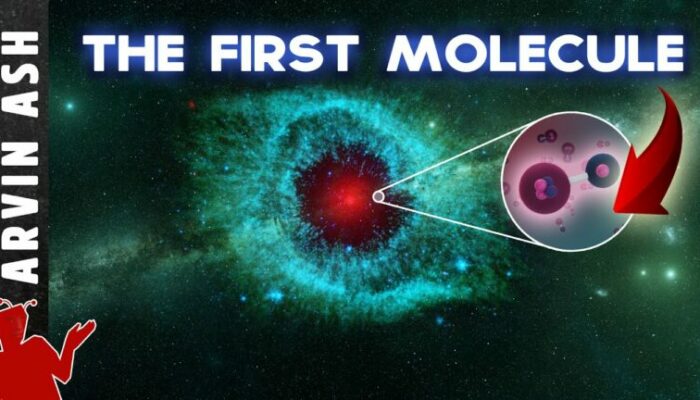
The simplest molecules were molecular hydrogen (H2) and helium hydride ion (HeH+), formed as the universe cooled.
How did complex molecules arise on early Earth?
Complex molecules formed through chemical reactions in the primordial soup, energized by lightning and volcanic activity, eventually leading to amino acids and RNA.
Why is RNA important in the origin of life?
RNA can both store genetic information and catalyze reactions, making it a key molecule in the transition from chemical evolution to biological life.





Leave a Reply