
Short Answer
Definition of Ultra-Low Temperatures
Ultra-low temperatures refer to thermal conditions that are significantly below the freezing point of water, specifically those under 1 Kelvin (-272.15°C). At these extreme cold levels, the thermal energy of particles is drastically reduced, enabling the observation of quantum mechanical effects that are otherwise hidden at higher temperatures. These phenomena include unique states of matter such as Bose-Einstein condensates and superfluid phases, which reveal new insights into the behavior of matter under near-absolute zero conditions.
Techniques for Achieving Ultra-Low Temperatures
Reaching temperatures close to absolute zero requires sophisticated cooling methods. Two primary approaches dominate this field: dilution refrigeration and laser cooling, each leveraging distinct physical principles to lower thermal energy.
Dilution Refrigeration
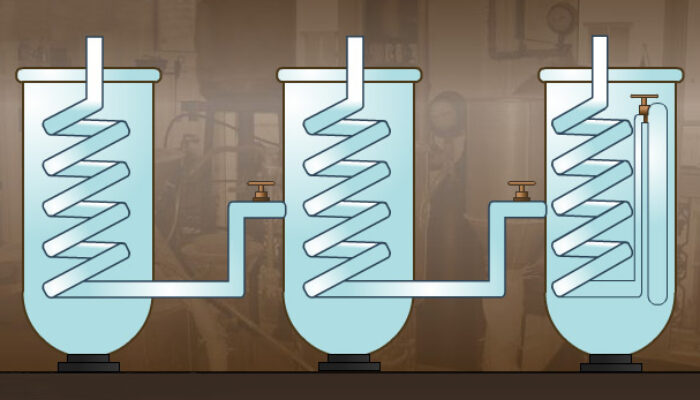
This technique exploits the properties of helium isotopes-helium-3 (He-3) and helium-4 (He-4)-to achieve temperatures in the millikelvin range. He-3 is a fermion, while He-4 is a boson, and their mixture undergoes phase separation at low temperatures. The cooling effect arises from the entropy change when He-3 atoms diffuse from a concentrated phase into a dilute phase. Typically, the process involves a two-stage cycle: an initial cooling and pressure reduction stage, followed by the dilution stage where He-3 atoms cross the phase boundary, extracting heat and lowering the temperature to as low as 10 millikelvin.
Laser Cooling
Laser cooling utilizes the momentum transfer from photons to atoms to reduce their kinetic energy. By tuning laser light to a frequency slightly below an atom’s absorption frequency, atoms absorb photons and then re-emit them, resulting in a net loss of velocity and thus temperature. This method can cool atomic gases to microkelvin temperatures, pushing the limits of how close to absolute zero matter can be brought.
Measurement of Ultra-Low Temperatures
Accurately gauging temperatures in the ultra-low regime presents unique challenges, as conventional sensors like thermocouples become unreliable due to thermal noise and scale limitations. Instead, researchers employ advanced devices such as resistive temperature detectors (RTDs) and superconducting thermometers, which maintain precision at millikelvin levels.
Resistance-Based Thermometry
One common measurement technique relies on the temperature-dependent electrical resistance of materials like platinum or silicon. As temperature decreases, the resistance changes predictably, allowing for precise calibration. However, factors such as impurities and structural alterations at cryogenic temperatures can affect resistance, necessitating careful calibration and material selection to ensure accuracy.
Physical Principles Underlying Ultra-Low Temperature Phenomena
At ultra-low temperatures, classical thermal motion is suppressed, and quantum effects dominate. The reduction in thermal energy allows particles to occupy the lowest quantum states, leading to phenomena such as:
- Bose-Einstein Condensation:
A state where bosons occupy the same quantum ground state, resulting in macroscopic quantum phenomena. - Superfluidity:
A phase of matter characterized by frictionless flow, observed in liquid helium at temperatures near absolute zero.
Applications and Significance of Ultra-Low Temperatures
The ability to reach and maintain ultra-low temperatures is crucial for advancing various scientific and technological fields. Notably, superconductors, which exhibit zero electrical resistance below critical temperatures, have transformative potential in power transmission, magnetic levitation, and medical imaging technologies.
In the realm of quantum computing, ultra-low temperatures are essential for preserving the coherence of quantum bits (qubits). Cooling qubits to near absolute zero minimizes thermal noise and decoherence, enabling more stable and reliable quantum operations. This makes ultra-low temperature technology a cornerstone in the development of next-generation computational systems.
Common Misconceptions About Ultra-Low Temperatures
Ultra-low temperatures can be achieved simply by using liquid nitrogen.
Liquid nitrogen cools only down to 77 K, which is far above the ultra-low temperature range below 1 K. Achieving ultra-low temperatures requires specialized techniques like dilution refrigeration or laser cooling.
At ultra-low temperatures, all materials become superconductors.
Only certain materials exhibit superconductivity below their critical temperatures, which vary widely. Not all substances become superconducting even near absolute zero.
Future Directions and Challenges
The pursuit of ever-lower temperatures continues to push the boundaries of experimental physics and engineering. Challenges remain in improving cooling efficiency, measurement accuracy, and material stability at these extremes. As research progresses, new quantum states and materials may be discovered, potentially revolutionizing our understanding of matter and enabling breakthroughs in technology.
FAQ
What are ultra-low temperatures?
Ultra-low temperatures are thermal conditions significantly below the freezing point of water, typically under 1 Kelvin.
How are ultra-low temperatures achieved?
They are achieved using techniques like dilution refrigeration and laser cooling.
What are the challenges in measuring ultra-low temperatures?
Conventional sensors can be unreliable; advanced devices like RTDs are used instead.





Leave a Reply