
Short Answer
Definition of Gamma-Ray Bursts
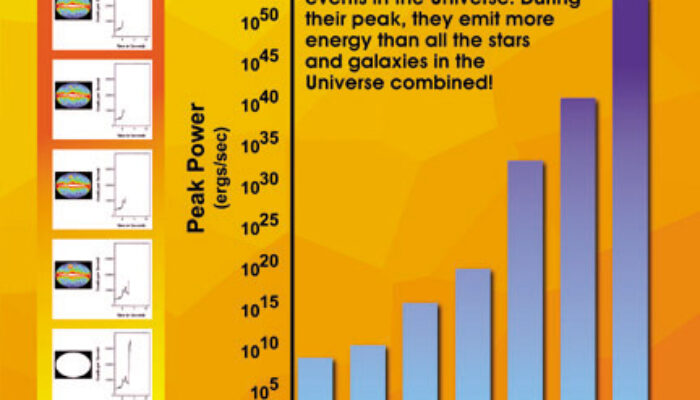
Gamma-ray bursts (GRBs) are intense, brief flashes of gamma radiation-the highest-energy form of electromagnetic waves-originating from distant cosmic events. These bursts can last from a fraction of a second to several minutes and release an extraordinary amount of energy, often surpassing the total output of our Sun over its entire lifetime within just seconds. GRBs are generally classified into two categories based on their duration:
- Short-duration bursts:
Lasting less than two seconds, these bursts are typically linked to the merging of compact stellar remnants. - Long-duration bursts:
Extending from a few seconds to several minutes, these are usually associated with the explosive deaths of massive stars.
Origins and Progenitors of Gamma-Ray Bursts
The genesis of gamma-ray bursts is rooted in some of the most violent and energetic processes in the universe. The two primary progenitor scenarios are:
- Massive Star Collapse:
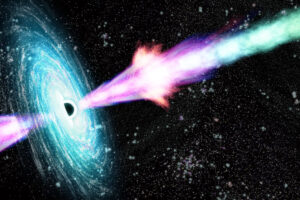
Long-duration GRBs arise when enormous stars exhaust their nuclear fuel and undergo a supernova explosion. This collapse often results in the formation of a black hole or neutron star, accompanied by the ejection of relativistic jets that emit gamma rays. - Compact Object Mergers:
Short-duration GRBs are believed to originate from the collision and merger of dense stellar remnants such as neutron stars or black holes, producing a sudden burst of gamma radiation.
Both mechanisms involve the release of highly energetic jets traveling near the speed of light, marking the dramatic endpoints of stellar evolution.
Detection and Observation Techniques
Observing gamma-ray bursts requires specialized instruments capable of detecting high-energy photons that cannot penetrate Earth’s atmosphere. Space-based observatories play a crucial role in capturing these fleeting events:
- Fermi Gamma-ray Space Telescope:
Equipped to monitor the sky for gamma-ray emissions, Fermi has significantly advanced our understanding of GRBs. - Swift Observatory:
Swift rapidly detects GRBs and promptly directs other telescopes to observe the afterglow across multiple wavelengths.
Following the initial burst, telescopes observe the afterglow in X-ray, optical, and radio bands, providing valuable data about the burst environment, host galaxies, and distance through redshift measurements. This multi-wavelength approach allows astronomers to place GRBs within the broader context of cosmic history.
Scientific Significance and Implications
Gamma-ray bursts offer profound insights into astrophysical processes and the evolution of the universe. Their study has illuminated several key areas:
- Stellar Death and Black Hole Formation:
GRBs reveal the mechanisms behind supernovae and the birth of black holes. - Element Synthesis:
The extreme conditions during GRBs contribute to the creation of heavy elements like gold and platinum, enriching the cosmic chemical inventory. - Cosmic Distance Measurement:
GRBs serve as “standard candles,” helping astronomers gauge vast cosmic distances and study the expansion of the universe. - Potential Role in Life’s Origins:
The energetic environments created by GRBs may influence molecular evolution and the distribution of life-essential elements across galaxies.
Potential Risks and Future Research Directions
While gamma-ray bursts are awe-inspiring, they also pose theoretical risks. A GRB occurring sufficiently close to Earth could damage the atmosphere by depleting the ozone layer, increasing surface exposure to harmful radiation. However, such an event is extremely unlikely due to the vastness of space and the rarity of nearby GRBs.
Continued advancements in observational technology and theoretical modeling promise to deepen our understanding of these cosmic phenomena. Future research aims to unravel the complexities of GRB progenitors, jet formation, and their broader impact on galactic environments.
Common Misconceptions About Gamma-Ray Bursts
Gamma-ray bursts are continuous explosions lasting for hours.
GRBs are extremely brief events, typically lasting from milliseconds to a few minutes.
All GRBs originate from the same type of stellar event.
GRBs have diverse origins, including massive star collapses and compact object mergers.
Gamma-ray bursts frequently threaten Earth.
The probability of a nearby GRB affecting Earth is very low due to the immense distances involved.
Why Understanding Gamma-Ray Bursts Is Crucial
Gamma-ray bursts are not only spectacular cosmic events but also vital tools for astrophysics. They help scientists probe the life cycles of stars, the formation of black holes, and the chemical enrichment of the universe. By studying GRBs, researchers gain a window into the early universe, the behavior of matter under extreme conditions, and the processes that shape galaxies. This knowledge enriches our comprehension of the cosmos and inspires technological innovation in observational astronomy.
Summary: Embracing the Mysteries of the Universe’s Most Powerful Explosions
In essence, gamma-ray bursts epitomize the dynamic and often violent nature of the cosmos. These brief yet powerful flashes challenge our understanding of stellar evolution and cosmic phenomena. By investigating GRBs, humanity expands its grasp of the universe’s vastness and complexity, fostering a spirit of curiosity and discovery. As we continue to explore these extraordinary events, we remain witnesses to the grand cosmic narrative, propelled by the echoes of the universe’s most monumental explosions.
FAQ
What are gamma-ray bursts?
Gamma-ray bursts are intense, brief flashes of gamma radiation from distant cosmic events, lasting from milliseconds to several minutes.
What causes gamma-ray bursts?
They are caused by massive star collapses or the merging of compact objects like neutron stars and black holes.
How are gamma-ray bursts detected?
They are detected using space-based observatories like the Fermi Gamma-ray Space Telescope and the Swift Observatory.

Leave a Reply