
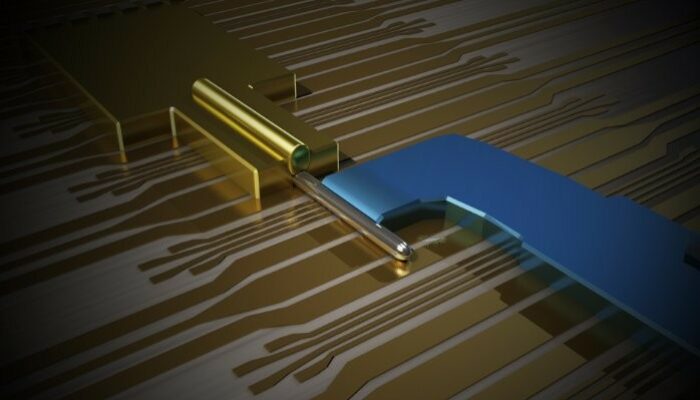
Short Answer
Definition of Majorana Fermions
Majorana fermions are a unique class of quasiparticles that emerge in certain condensed matter systems, characterized by the property of being their own antiparticles. Originally proposed by physicist Ettore Majorana in the 1930s, these particles have garnered significant interest due to their exotic nature and potential applications in quantum computing. Unlike conventional fermions, Majorana fermions appear as zero-energy modes localized at defects or boundaries within topological superconductors.
- Origin:
The concept was introduced by Ettore Majorana, who theorized particles identical to their antiparticles. - Physical Realization:
They manifest as zero-energy states in solid-state systems, particularly in nanowires exhibiting topological superconductivity. - Significance:
Their non-Abelian statistics make them promising candidates for fault-tolerant quantum computation.
Fundamental Principles Behind Majorana Fermions
Topological Superconductivity and Nanowires
Majorana fermions arise in materials that undergo a topological phase transition, resulting in a superconducting state with nontrivial global properties. Nanowires composed of materials such as indium arsenide (InAs) or silicon, when combined with strong spin-orbit coupling and proximity-induced superconductivity, provide an ideal platform for realizing these states. The interplay between these factors leads to the formation of Majorana bound states at the ends of the nanowire.
Spin-Orbit Coupling Explained
Spin-orbit coupling is a relativistic interaction where a particle’s spin is influenced by its motion through an electric field, effectively linking spin and orbital degrees of freedom. In nanowires, this effect creates a spin texture essential for the emergence of Majorana modes. When subjected to an external magnetic field and coupled to a superconductor, the system’s electronic structure is modified to support zero-energy Majorana states.
Experimental Techniques for Detecting Majorana Fermions
Transport Spectroscopy
One of the primary methods to identify Majorana fermions involves measuring the electrical conductance of nanowires at cryogenic temperatures. Majorana bound states produce distinctive signatures in the conductance spectrum, notably zero-bias conductance peaks that appear as quantized plateaus. These peaks indicate the presence of zero-energy modes localized at the wire’s ends, serving as a hallmark of Majorana fermions.
Tunneling Spectroscopy Using STM
Scanning tunneling microscopy (STM) offers a high-resolution approach to probe the local density of states in nanowires. By positioning the STM tip near the wire’s end, researchers can detect characteristic zero-energy peaks in the density of states, which correspond to Majorana modes. This technique requires precise spatial control and detailed spectral analysis to differentiate Majorana signatures from other low-energy excitations.
Braiding Operations and Quantum Computation
Majorana fermions exhibit non-Abelian statistics, enabling the implementation of braiding operations-exchanges of particle positions that alter the quantum state in a topologically protected manner. These operations form the basis for fault-tolerant quantum gates, making braiding experiments a critical step toward harnessing Majorana fermions for quantum information processing. Successful braiding would provide definitive proof of their existence and utility.
Challenges and Criteria for Confirming Majorana States
Despite promising experimental observations, distinguishing true Majorana fermions from trivial states such as Andreev bound states remains a significant challenge. Zero-bias conductance peaks can arise from multiple sources, necessitating stringent verification protocols. Key criteria include the robustness of the zero-bias peak under varying magnetic fields, the spatial separation (nonlocality) of the modes, and reproducibility across different devices and conditions.
Theoretical Modeling and Simulation
Advanced theoretical frameworks and numerical simulations are indispensable for interpreting experimental data and guiding future research. Models incorporate spin-orbit coupling, superconductivity, and magnetic effects to predict the behavior of Majorana states under diverse scenarios. These simulations help optimize experimental parameters and clarify the conditions necessary for stable Majorana fermions.
Real-World Applications and Importance
The discovery and manipulation of Majorana fermions hold transformative potential for quantum technology. Their inherent resistance to local disturbances makes them ideal for constructing qubits that are less prone to decoherence, a major obstacle in quantum computing. Beyond fundamental physics, Majorana fermions could revolutionize information processing, cryptography, and materials science by enabling robust, scalable quantum devices.
Common Misconceptions About Majorana Fermions
Majorana fermions are elementary particles like electrons.
Majorana fermions in condensed matter are quasiparticles-emergent phenomena arising from collective excitations in materials, not fundamental particles.
Any zero-bias conductance peak confirms the presence of Majorana fermions.
Zero-bias peaks can also result from trivial Andreev bound states; rigorous testing is required to confirm Majorana modes.
FAQ
What are Majorana fermions?
Majorana fermions are quasiparticles that are their own antiparticles, emerging in certain condensed matter systems and are significant for quantum computing.
How are Majorana fermions detected?
They can be detected using methods like transport spectroscopy and scanning tunneling microscopy (STM) to observe zero-bias conductance peaks and local density of states.
What are the applications of Majorana fermions?
Majorana fermions are promising for quantum computing due to their resistance to decoherence, making them ideal candidates for robust qubits.






Leave a Reply