
Short Answer
Definition of Femtosecond Electron Pulses
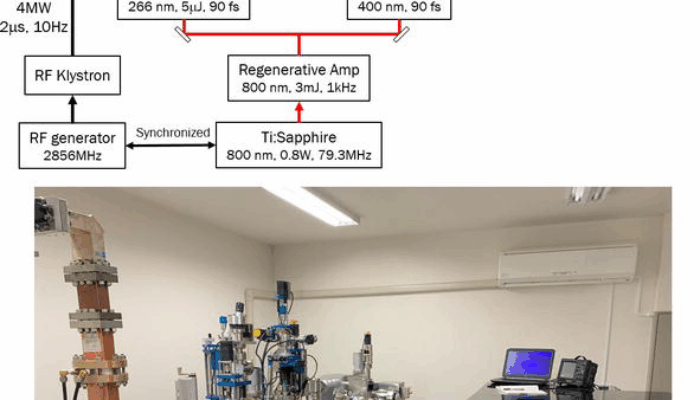
Femtosecond electron pulses are ultra-short bursts of electrons lasting on the order of femtoseconds (10-15 seconds). These pulses enable scientists to investigate phenomena occurring at atomic and molecular timescales, which were previously inaccessible with conventional measurement techniques. By capturing events as fast as atomic vibrations and electron movements, femtosecond electron pulses open a window into the ultrafast dynamics of matter.
- Femtosecond timescale:
Refers to durations in the range of one quadrillionth of a second, allowing observation of atomic and electronic motions. - Electron pulses:
Short bursts of electrons accelerated to high velocities, used as probes to study material structures and dynamics.
Fundamentals of Ultrafast Physics
Ultrafast physics focuses on understanding the rapid processes that govern the behavior of electrons and atoms in materials. These processes include chemical reactions, phase changes, and electronic transitions, all of which occur on femtosecond timescales. The generation and application of femtosecond electron pulses are central to this field, providing temporal resolution far beyond traditional methods.
By employing techniques such as electron diffraction, researchers can visualize how atomic arrangements evolve in real time. This capability is crucial for deciphering the fundamental mechanisms behind material properties and transformations.
Mechanism of Femtosecond Electron Diffraction (FED)
Femtosecond electron diffraction operates by directing a brief electron pulse at a target sample. As electrons interact with the atomic lattice, they scatter and produce diffraction patterns that encode information about the atomic positions within the material. By analyzing these patterns, scientists reconstruct the atomic structure with exceptional precision.
The key challenge lies in synchronizing the electron pulses with the ultrafast dynamics of the sample. The pulse duration must be carefully controlled to capture transient states without blurring the temporal resolution. Overcoming timing uncertainties is essential for accurate measurement of rapid atomic motions.
Mathematical Framework and Temporal Resolution
The temporal resolution of femtosecond electron pulses is governed by the pulse duration τ, typically on the order of femtoseconds:
τ ≈ 10-15 seconds
Electron pulses are accelerated to relativistic speeds, which can be described by the Lorentz factor γ:
γ = 1 / √(1 – v²/c²)
- v: Electron velocity
- c: Speed of light
This acceleration minimizes pulse broadening and enhances spatial resolution. The diffraction pattern intensity I(q) depends on the scattering vector q, which relates to atomic spacing:
I(q) ∝ |F(q)|²
- F(q): Structure factor representing atomic arrangement
Applications Across Scientific Disciplines
Femtosecond electron pulses have transformative applications in multiple fields:
- Material Science:
Investigating phase transitions and electronic properties in novel materials, including topological insulators. - Chemistry:
Capturing transient molecular states during chemical reactions to understand reaction pathways. - Biology:
Studying biomolecular dynamics such as protein folding and molecular interactions on ultrafast timescales. - Quantum Physics:
Probing non-equilibrium quantum states and many-body interactions that classical mechanics cannot describe.
Integration with Advanced Detection Techniques
The combination of femtosecond electron pulses with cutting-edge detectors enhances both temporal and spatial resolution. Time-resolved imaging methods allow simultaneous observation of structural and electronic changes, providing a comprehensive picture of dynamic processes. However, integrating multiple modalities introduces complexity in data interpretation, requiring sophisticated analytical tools to disentangle overlapping signals.
Theoretical Challenges and Quantum Considerations
Interpreting ultrafast phenomena demands theoretical models beyond classical physics. Quantum mechanics and many-body theory are essential to describe particle correlations and quantum coherence during femtosecond events. Understanding these quantum effects could pave the way for designing materials with customized electronic and magnetic properties.
Exploration of Topological Materials
Topological materials exhibit unique electronic behaviors arising from their intrinsic properties and external influences. Femtosecond electron pulses serve as a powerful probe to study these materials, revealing the interplay between conductivity, magnetism, and quantum correlations. Despite promising technological implications, achieving reproducible experimental results remains a significant hurdle in this emerging area.
Biomedical Implications
In biomedical research, femtosecond electron pulses offer new avenues to explore the ultrafast dynamics of biomolecules. Techniques like femtosecond electron diffraction can elucidate protein folding mechanisms and molecular interactions critical to biological function. These insights hold potential for advancing therapeutic strategies, although the complexity of biological systems presents ongoing challenges.
Common Misconceptions
Femtosecond electron pulses can directly image electrons in real time.
While these pulses provide snapshots of atomic and molecular structures, they do not capture individual electron trajectories but rather collective scattering patterns.
Classical mechanics suffices to explain ultrafast phenomena.
Quantum mechanical frameworks are necessary to accurately describe processes occurring on femtosecond timescales.
Significance and Future Prospects
The advent of femtosecond electron pulses marks a pivotal advancement in our ability to probe the fundamental dynamics of matter. By bridging experimental innovation with theoretical insight, this technology promises to unlock new scientific frontiers in physics, chemistry, materials science, and biology. As research progresses, the potential to harness ultrafast phenomena for technological breakthroughs and novel materials design continues to grow, heralding a new era of discovery.
FAQ
What are femtosecond electron pulses?
They are ultra-short bursts of electrons that last for about one quadrillionth of a second, allowing for the investigation of fast atomic and molecular phenomena.
How are femtosecond electron pulses used in research?
They are used to study rapid processes, such as chemical reactions and phase changes, by providing high temporal resolution.




Leave a Reply