
Short Answer
Definition of Early Supermassive Black Holes
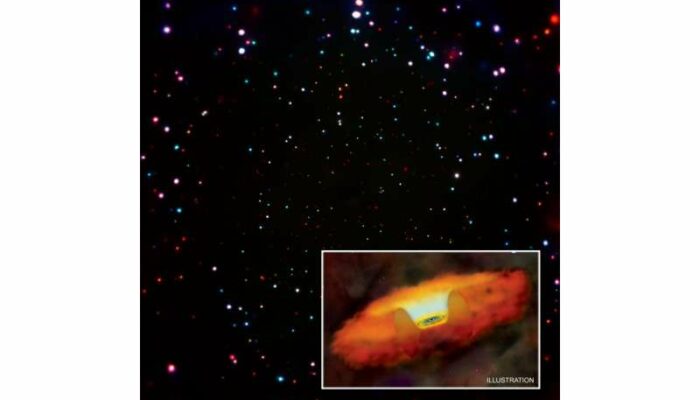
Supermassive black holes (SMBHs) are extraordinarily dense cosmic objects with masses ranging from millions to billions of times that of our Sun. These colossal entities are believed to have formed during the universe’s infancy, within the first few hundred million years after the Big Bang. Their early appearance in cosmic history has intrigued astronomers and physicists, prompting investigations into their origins and growth mechanisms.
Traditional Formation Theories
Conventional models propose that SMBHs originated from the remnants of massive stars that collapsed under their own gravity. These stellar-mass black holes then grew larger through a hierarchical merging process, where smaller black holes combined over time to form the supermassive variants observed today. This framework emphasizes a competitive environment where multiple black holes interact and merge within dense stellar populations.
Emergence of the Solitary Growth Hypothesis
Recent research suggests an alternative scenario in which early SMBHs may have developed predominantly through isolated growth rather than hierarchical mergers. This solitary growth model posits that seed black holes formed from the gravitational collapse of primordial gas clouds in relatively quiescent regions of the early universe. In these less crowded environments, black holes could accrete surrounding gas without significant interference from neighboring black holes, allowing for rapid mass accumulation.
Mechanisms Behind Solitary Growth
The solitary growth process depends heavily on the dynamics of gas accretion. When fragments of primordial gas collapse under their own gravity, they can form initial seed black holes. If these seeds exist in isolation, they can attract and consume nearby gas in episodic bursts, leading to sudden increases in mass. This pattern contrasts with the steady, continuous growth expected in regions dense with competing stellar objects.
Cosmic Conditions Favoring Isolated Black Hole Growth
During the cosmic dawn-the epoch marking the formation of the first stars and galaxies-the universe experienced significant fluctuations in temperature and density. These variations created pockets of primordial gas capable of collapsing into black holes. If such regions remained isolated from other black hole-forming sites, the resulting black holes could grow autonomously by accreting gas over extended periods, largely unaffected by external gravitational influences.
Observational Evidence Supporting Solitary Growth
Advancements in astronomical instrumentation, including high-resolution telescopes, have enabled the detection of distant quasars powered by SMBHs. Spectral analysis of these quasars reveals that substantial mass accumulation can occur even in relatively isolated environments. This evidence challenges the dominance of hierarchical merging models and supports the possibility that solitary growth played a significant role in the early universe.
Theoretical Implications and Model Revisions
Traditional hierarchical growth models face difficulties explaining the rapid emergence of massive SMBHs at high redshifts. Numerical simulations incorporating complex factors such as gas inflow dynamics, radiation pressure, and feedback mechanisms suggest that solitary growth pathways are plausible. These findings necessitate updates to existing theoretical frameworks to accommodate multiple growth scenarios for SMBHs.
Impact on Cosmic Evolution Understanding
Recognizing solitary growth as a viable formation channel for early SMBHs has profound consequences for cosmology. It implies a need to reconsider the initial mass distribution of black holes and the role of gravitational interactions in mass assembly. This shift influences our broader comprehension of galaxy formation and the large-scale structure of the universe, highlighting the diversity of processes shaping cosmic evolution.
Future Research Directions
- Primordial Gas Cloud Characteristics:
Investigating the physical properties of early gas clouds that favor isolated black hole formation. - Accretion Physics in Isolation:
Developing refined models to simulate gas accretion onto black holes in low-density environments. - Observational Campaigns:
Utilizing next-generation telescopes to detect and analyze more distant quasars and SMBHs to test solitary growth predictions.
Common Misconceptions About SMBH Formation
All early SMBHs formed exclusively through mergers.
Evidence indicates that solitary accretion can also lead to rapid SMBH growth without the need for mergers.
Black hole growth is always a continuous process.
Growth can be episodic, especially in isolated environments where accretion occurs in bursts.
Significance of Understanding SMBH Growth Modes
Deciphering the growth mechanisms of early supermassive black holes is crucial for unraveling the history of the universe. These black holes influence galaxy formation, regulate star formation through feedback processes, and affect the distribution of matter on cosmic scales. A comprehensive understanding of their origins enriches astrophysical theory and informs observational strategies aimed at probing the universe’s earliest epochs.
FAQ
What are early supermassive black holes?
Early supermassive black holes are extraordinarily massive cosmic objects formed shortly after the Big Bang, believed to have evolved through unique growth mechanisms.
How do solitary growth mechanisms differ from hierarchical merging?
Solitary growth involves black holes forming and growing in isolation, while hierarchical merging involves smaller black holes combining over time.


Leave a Reply