
Short Answer
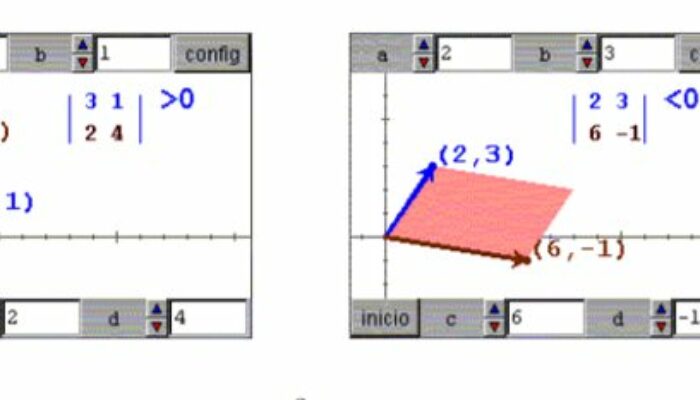
Definition of Jacobian Matrices
Jacobian matrices are fundamental mathematical constructs widely employed across various branches of physics. They serve as essential tools for analyzing complex systems and phenomena that involve transformations and partial derivatives. By encapsulating how a set of variables changes with respect to another, Jacobian matrices enable the study of multidimensional relationships and dynamic behaviors in physical contexts.
- Jacobian Matrix:
A matrix of all first-order partial derivatives of a vector-valued function, representing the best linear approximation near a given point. - Applications:
Used to transform coordinate systems, analyze system dynamics, and relate different physical quantities.
Role in Classical Mechanics and System Dynamics
In classical mechanics, Jacobian matrices are instrumental in converting coordinates between different reference frames, such as from generalized coordinates to Cartesian coordinates. This transformation is crucial when studying particle systems where positions are expressed in generalized terms. The Jacobian matrix, formed by the derivatives of generalized coordinates with respect to Cartesian coordinates, facilitates the analysis of motion, especially when transitioning between inertial and non-inertial frames where fictitious forces arise.
Moreover, in the study of system dynamics, Jacobian matrices help formulate equations of motion by linking velocities and applied forces. They are vital for determining the forces necessary to maintain equilibrium and for identifying normal modes of oscillation in complex structures like bridges and buildings, thereby aiding in stability and vibration analysis.
Jacobian Matrices in Thermodynamics and Statistical Mechanics
Within thermodynamics, Jacobian matrices play a pivotal role in expressing equations of state that relate thermodynamic properties such as internal energy, entropy, and volume. By calculating the required partial derivatives, these matrices allow for the examination of how a system’s state evolves when certain variables change, which is especially important for systems operating out of equilibrium.
In statistical mechanics, Jacobian matrices assist in bridging macroscopic variables with microscopic properties. They underpin the derivation of fundamental results like the equipartition theorem and help formulate probability distributions that describe the behavior of large ensembles of particles, thereby providing a mathematical foundation for understanding thermodynamic phenomena from a microscopic perspective.
Applications in Electromagnetism
Electromagnetic theory extensively utilizes Jacobian matrices, particularly when transforming fields between coordinate systems such as Cartesian, cylindrical, and spherical coordinates. These transformations are essential for accurately describing electric and magnetic fields in various geometries.
Additionally, Jacobian matrices are crucial in potential theory for calculating current densities and charge distributions in complex systems. Their application extends to practical technologies including electrical circuits and antennas, where they facilitate the analysis of electromagnetic wave propagation and interactions.
Jacobian Matrices in Relativity and Cosmology
In the realm of relativity, Jacobian matrices are indispensable for expressing transformations between reference frames moving at relativistic speeds. They enable the formulation of particle motion equations within curved spacetime, providing a mathematical framework for understanding relativistic effects.
Cosmology also benefits from Jacobian matrices in studying the universe’s expansion and spacetime geometry. These matrices help describe how spacetime curvature influences light trajectories and galaxy distributions, which is fundamental for interpreting phenomena such as redshift and the formation of large-scale cosmic structures.
Use in Optics and Acoustics
In optics, Jacobian matrices describe how light waves propagate through different media by representing changes in wave amplitude and phase. This mathematical approach aids in analyzing optical phenomena like diffraction and interference.
Similarly, in acoustics, Jacobian matrices model the propagation of sound waves in various environments. They are particularly useful in complex settings such as soundproof rooms or architectural acoustics, where understanding the relationship between medium properties and wave behavior is essential.
Mathematical Framework of Jacobian Matrices
The Jacobian matrix of a vector function F(x) = (f₁(x), f₂(x), …, fₙ(x)) with respect to variables x = (x₁, x₂, …, xₙ) is defined as:
J = (begin{bmatrix} frac{partial f_1}{partial x_1} & frac{partial f_1}{partial x_2} & cdots & frac{partial f_1}{partial x_n} \ frac{partial f_2}{partial x_1} & frac{partial f_2}{partial x_2} & cdots & frac{partial f_2}{partial x_n} \ vdots & vdots & ddots & vdots \ frac{partial f_n}{partial x_1} & frac{partial f_n}{partial x_2} & cdots & frac{partial f_n}{partial x_n} end{bmatrix})
- Variables:
x₁, x₂, …, xₙ represent independent variables. - Functions:
f₁, f₂, …, fₙ are dependent functions of the variables. - Interpretation:
The Jacobian matrix provides the linear approximation of the function near a point, essential for coordinate transformations and sensitivity analysis.
Practical Examples of Jacobian Matrices in Physics
- Coordinate Transformation:
Converting from Cartesian to spherical coordinates in electromagnetism to analyze field distributions. - Vibration Analysis:
Using Jacobian matrices to find normal modes in mechanical structures like bridges. - Thermodynamic State Changes:
Calculating how entropy varies with volume and temperature in non-equilibrium systems. - Relativistic Frame Changes:
Applying Jacobian matrices to transform between inertial frames moving at relativistic speeds. - Wave Propagation:
Modeling light and sound wave behavior in varying media using Jacobian-based transformations.
Common Misunderstandings About Jacobian Matrices
- Misconception: Jacobian matrices are only relevant for coordinate transformations.
Correction: While crucial for coordinate changes, they also play a vital role in system dynamics, thermodynamics, and other areas involving multivariable functions. - Misconception: The Jacobian matrix is always square.
Correction: The Jacobian matrix can be rectangular, depending on the dimensions of the input and output vectors of the function. - Misconception: Jacobian matrices are only used in theoretical physics.
Correction: They have practical applications in engineering, technology, and applied sciences, such as in circuit design and acoustic modeling.
Significance of Jacobian Matrices in Science and Technology
Jacobian matrices are indispensable in advancing both theoretical and applied physics. Their ability to succinctly represent complex relationships between variables makes them foundational in modeling, simulation, and analysis across disciplines. From enabling precise coordinate transformations to facilitating the understanding of dynamic systems and wave phenomena, Jacobian matrices underpin many modern scientific and technological developments. As research progresses, their utility continues to expand, offering deeper insights into the intricate workings of the physical world.
FAQ
What is a Jacobian matrix?
A Jacobian matrix is a matrix of all first-order partial derivatives of a vector-valued function, which helps in understanding how changes in input variables affect output variables.
How are Jacobian matrices applied in physics?
They are used to transform coordinates, analyze system dynamics, formulate equations of motion, and describe propagation of waves in various physics disciplines.
Why are Jacobian matrices important in thermodynamics?
They allow calculation of partial derivatives between thermodynamic properties, aiding in the study of systems under changing conditions.
In what way do Jacobian matrices support electromagnetism?
They facilitate coordinate transformations of electric and magnetic fields and assist in calculating charge and current distributions.
Do Jacobian matrices have applications in cosmology?
Yes, they help describe space-time curvature effects and analyze the expansion and structure of the universe.




Leave a Reply