
Short Answer
Definition of Dark Matter and Its Spatial Characteristics
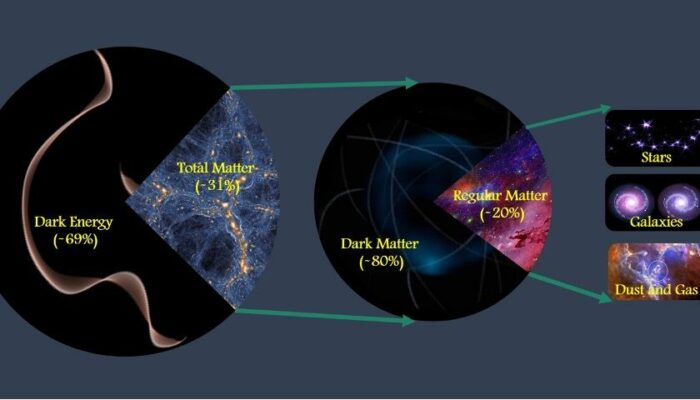
Dark matter constitutes a mysterious and largely unknown component of the cosmos. Unlike ordinary matter, it neither emits nor absorbs light, rendering it invisible to traditional observational techniques. Despite this invisibility, its presence is unmistakably detected through gravitational effects on visible matter and cosmic structures. A central question in astrophysics and cosmology is whether dark matter occupies space in the same way as conventional, baryonic matter. Addressing this question requires an exploration of dark matter’s fundamental properties, its modes of interaction, and the implications for how it exists within the universe.
Distinguishing Baryonic Matter from Dark Matter
To understand whether dark matter occupies space similarly to normal matter, it is important to first define what constitutes baryonic matter. Baryonic matter is composed of atoms and molecules, which include familiar particles such as protons, neutrons, and electrons. This form of matter makes up stars, planets, living organisms, and the interstellar medium. A key feature of baryonic matter is its interaction via electromagnetic forces, which cause atoms to repel each other due to overlapping electron clouds. This electromagnetic interaction is responsible for the tangible volume, density, and solidity we observe in everyday objects.
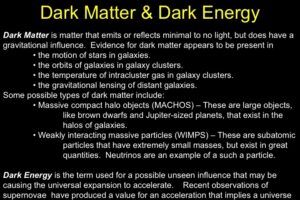
In contrast, dark matter is not made up of atomic particles and does not participate in electromagnetic interactions. It neither emits nor absorbs electromagnetic radiation, making it invisible across the entire electromagnetic spectrum. Scientists detect dark matter indirectly by observing its gravitational influence on visible matter, radiation, and the large-scale structure of the universe.
How Ordinary Matter Occupies Space
Baryonic matter occupies space because its constituent particles interact through electromagnetic forces. When two solid objects come into contact, the electron clouds surrounding their atoms repel each other, preventing the objects from passing through one another. This repulsion creates the sensation and reality of solidity and volume. In gases, particles move freely within a container, exerting pressure through collisions, which also defines their spatial occupation.
This spatial occupation is measurable and well-defined. For instance, a chair displaces the air around it, creating a volume that cannot be simultaneously occupied by another object without displacement. The interplay of atomic forces and electromagnetic interactions underpins the concept of volume as a fundamental property of baryonic matter.
Does Dark Matter Occupy Space Like Normal Matter?
Dark matter exhibits fundamentally different behavior. Since it does not interact electromagnetically, it does not form atoms or molecules and does not experience the repulsive forces characteristic of baryonic matter. Consequently, dark matter particles-regardless of their exact nature-can theoretically pass through ordinary matter and other dark matter particles with minimal resistance.
This unique property suggests that dark matter does not occupy space in the traditional volumetric sense. Instead of displacing other matter or creating exclusive spatial regions, dark matter permeates space almost invisibly and without obstruction. Its presence is primarily detected through gravitational effects, influencing galaxy rotation curves, the dynamics of galaxy clusters, and the cosmic microwave background radiation.
Spatial Distribution of Dark Matter in the Universe
On a cosmic scale, dark matter is distributed throughout the universe, forming an invisible framework known as the cosmic web. This structure acts as a gravitational scaffold that supports the formation and clustering of galaxies and large-scale cosmic features. Despite not occupying space in a conventional manner, dark matter significantly shapes the gravitational landscape of the universe.
Dark matter is often conceptualized as a diffuse halo enveloping galaxies rather than as discrete, solid objects occupying exclusive volumes. Even in regions of higher dark matter density, such as galactic halos, it does not create physical boundaries or displace baryonic matter as ordinary matter does.
Implications for Physics and Cosmology
The fact that dark matter does not occupy space in the classical sense challenges traditional definitions of matter and volume. It broadens the concept of spatial occupation beyond electromagnetic interactions to include gravitational influence alone. This insight compels physicists to consider forms of matter that defy classical descriptions.
Hypothetical dark matter candidates-such as Weakly Interacting Massive Particles (WIMPs), axions, or sterile neutrinos-are thought to possess mass and exert gravitational pull but lack the electromagnetic interactions that produce physical volume. This distinction has profound implications for theoretical physics and cosmology.
Experimental Challenges and Theoretical Perspectives
Detecting dark matter is exceptionally difficult because it does not interact with electromagnetic radiation. Experiments using underground detectors and particle accelerators aim to observe rare interactions between dark matter and baryonic matter, but definitive evidence remains elusive. The ability of dark matter particles to pass through ordinary matter without obstruction supports the idea that they do not occupy space in the conventional sense.
Theoretical models also explore the possibility that dark matter exists in extra spatial dimensions or exhibits quantum properties that challenge classical spatial concepts. These hypotheses suggest that the notion of “occupying space” may be an emergent property tied to electromagnetic forces and quantum principles like the Pauli exclusion principle, rather than to mass or gravity alone.
Dark Matter’s Role in Everyday Reality
From a human perspective, dark matter’s invisibility and intangible nature mean it has negligible direct impact on daily physical experiences, aside from its gravitational influence. Objects we interact with-such as furniture, vehicles, and air molecules-are governed by forces that maintain their spatial boundaries and solidity. Dark matter quietly permeates the environment, coexisting with baryonic matter without causing displacement or obstruction.
This coexistence highlights the remarkable diversity of the universe’s composition. While we can physically interact with baryonic matter occupying space, dark matter flows through and around us, playing a crucial role in cosmic evolution despite being imperceptible to our senses.
Conclusion: Rethinking Spatial Occupation in the Universe
Dark matter’s elusive and non-electromagnetic nature challenges conventional ideas about matter and spatial occupation. Unlike baryonic matter, it does not displace other particles or create physical volume. Instead, it exists as a pervasive, gravitationally influential component that fills the universe without the typical constraints of volumetric presence.
Recognizing this distinction enhances our understanding of dark matter’s cosmological significance and invites a reevaluation of what it means to occupy space. Ongoing research into dark matter’s true nature promises to reveal new insights into the interplay between space, mass, and fundamental interactions, reshaping our comprehension of the universe’s fabric.
FAQ
What is dark matter?
Dark matter is a form of matter that does not emit or absorb light, making it invisible. It is detected through its gravitational effects on visible matter.
Does dark matter take up space?
No, dark matter does not occupy space in the traditional sense; it permeates the universe without displacing other matter.
How is dark matter detected?
Dark matter is detected indirectly through its gravitational influence on galaxies and cosmic structures.



Leave a Reply