

Short Answer
Understanding Stellar Orbits
Do stars revolve around larger cosmic structures? This question invites us to explore the vast and intricate architecture of the universe beyond the familiar notion that planets orbit stars. While it is well-known that planets circle their host stars, stars themselves are not isolated wanderers; they participate in grander orbital systems that extend far beyond individual solar systems.
Stars in Motion: Beyond Static Points of Light
Although stars appear as fixed points in the night sky, they are in constant motion. Our Sun, for example, is one among hundreds of billions of stars in the Milky Way galaxy, moving along a complex orbit around the galaxy’s center. This reveals that stars do indeed orbit something much larger, albeit on a scale that is difficult to grasp.
The Milky Way and Its Gravitational Core
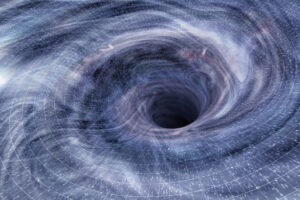
The Milky Way is a barred spiral galaxy that serves as the gravitational anchor for countless stars, including our Sun. These stars follow elliptical paths around the galactic center, which harbors a supermassive black hole known as Sagittarius A*. This black hole, with a mass millions of times greater than the Sun, exerts a dominant gravitational pull that governs the orbital motions of stars in the galaxy’s core.
Complexity of Galactic Orbits
Stellar orbits within a galaxy are not simple or perfectly circular. The gravitational environment is shaped by a combination of dark matter, interstellar gas, stellar remnants, and massive celestial bodies. This intricate gravitational landscape causes stars to follow winding, oscillating trajectories that evolve over millions of years.
Galaxies Within Larger Cosmic Structures
Stars are part of galaxies, but galaxies themselves are components of even larger systems. These include galaxy groups and clusters, which are gravitationally bound collections of galaxies. For instance, the Milky Way belongs to the Local Group, a cluster of about 54 galaxies held together by gravity. Within these groups, galaxies orbit common centers of mass, extending the concept of orbiting larger bodies from stars to galaxies.
Galaxy Clusters and the Cosmic Web
On scales beyond individual galaxies, galaxy clusters exert gravitational influence over their member galaxies and their stars. While individual stars rarely leave their home galaxies to orbit the cluster directly, the collective motion of stars contributes to the galaxy’s overall movement within the cluster. Beyond clusters lies the cosmic web-a vast network of dark matter and gas filaments spanning billions of light-years-that shapes the large-scale flow of matter in the universe.
Rogue Stars: Exceptions to Galactic Orbits
Some stars, known as rogue stars, escape their galaxies due to gravitational interactions or violent astrophysical events. These stars drift through intergalactic space, no longer bound to a single galaxy. However, their paths are still influenced by the gravitational fields of nearby galaxies, clusters, and the cosmic web, meaning they remain part of the universe’s gravitational framework, albeit in a more independent manner.
Stellar Orbits Within Multiple Star Systems
On a smaller scale, stars often orbit one another in binary or multiple star systems. These gravitationally bound systems demonstrate the diversity of stellar motions before considering the larger galactic context. This nested hierarchy-from planets orbiting stars, to stars orbiting each other, to stars orbiting galactic centers-illustrates the fractal nature of cosmic structures.
Timescales of Cosmic Orbits
The timescales involved in these orbital motions vary dramatically. While planets complete orbits around stars in years or decades, stars take hundreds of millions of years to orbit their galactic centers. Galaxies within clusters move on even longer timescales, spanning billions of years. These immense durations highlight the slow, majestic rhythms that govern the universe’s dynamics.
Summary: The Cosmic Hierarchy of Orbits
In conclusion, stars unquestionably orbit larger structures, primarily their host galaxies, which themselves are part of galaxy groups and clusters. This layered system of gravitational orbits-from planetary to galactic to cluster scales-demonstrates the universal role of gravity in shaping cosmic motion. Stars, far from being isolated points of light, are integral participants in vast, interconnected cosmic dances that unfold over incomprehensible distances and times.
Significance of Stellar Orbits in Understanding the Universe
Exploring whether stars orbit something larger deepens our appreciation of the universe’s complexity. It encourages us to look beyond simple celestial mechanics and recognize the grand structures and forces at work. Each star is a dynamic element within a vast cosmic symphony, moving in harmony with entities of immense scale and mystery. This perspective enriches our understanding of the cosmos and inspires continued exploration of its profound intricacies.
Leave a Reply