
Short Answer
Definition of Circular Orbits
A circular orbit refers to the path of a celestial object moving around a central body in a perfect circle, maintaining a constant distance throughout its revolution. This idealized orbit is characterized by zero eccentricity, meaning the orbiting body’s distance from its focus remains unchanged at every point along its trajectory.
- Zero Eccentricity:
The defining feature of a circular orbit, indicating no deviation from a perfect circle. - Constant Radius:
The orbiting object maintains an unvarying distance from the central mass. - Idealized Concept:
A theoretical model often used to simplify the study of orbital mechanics.
Fundamental Principles of Orbital Motion
Orbital dynamics are governed primarily by Newton’s law of universal gravitation, which describes the attractive force between two masses. When a smaller body orbits a larger one, the gravitational pull acts as the centripetal force, keeping the smaller body in motion along a curved path. The classical two-body problem reveals that possible orbital shapes include circles, ellipses, parabolas, and hyperbolas, with circular orbits representing a special case of elliptical orbits.
Newton’s Law of Universal Gravitation
This law states that every two masses attract each other with a force proportional to the product of their masses and inversely proportional to the square of the distance between them. Mathematically:
F = G * (m₁ * m₂) / r²
- F: Gravitational force between the two masses
- G: Gravitational constant
- m₁, m₂: Masses of the two objects
- r: Distance between the centers of the two masses
Mathematical Explanation of Circular Orbits
In a circular orbit, the gravitational force provides the exact centripetal force needed to keep the orbiting body moving at a constant speed along a circular path. The balance can be expressed as:
F_gravity = F_centripetal
or
G * (M * m) / r² = m * v² / r
where:
- M: Mass of the central body
- m: Mass of the orbiting object
- r: Radius of the circular orbit
- v: Orbital velocity
Rearranging to find orbital velocity:
v = √(G * M / r)
This formula shows that the orbital speed depends on the mass of the central body and the radius of the orbit.
Real-World Occurrences and Limitations
While perfect circular orbits are mathematically feasible under ideal conditions, the actual universe rarely presents such flawless paths. Various factors introduce perturbations that cause orbits to deviate from perfect circles:
- Gravitational Perturbations:
The influence of additional celestial bodies disturbs the orbit, causing it to become elliptical or more complex. - Non-Uniform Mass Distribution:
Central bodies are not perfect spheres, leading to variations in gravitational pull. - Relativistic Effects:
General relativity introduces corrections that slightly alter orbital paths. - Tidal Forces and Resonances:
Over long timescales, these can circularize orbits but rarely achieve perfect circularity.
In our solar system, many moons and smaller planets exhibit orbits with very low eccentricity, closely approximating circles. For instance, some satellites of gas giants have nearly circular orbits due to tidal interactions. However, even these orbits show tiny deviations when measured precisely.
Impact of Orbital Eccentricity on Celestial Phenomena
Small deviations from circularity have significant consequences for planetary environments and dynamics. Earth’s slightly elliptical orbit causes variations in solar energy received during different parts of the year, influencing seasonal changes. This eccentricity, combined with Earth’s axial tilt, orchestrates the complex pattern of seasons and climate variations essential for life.
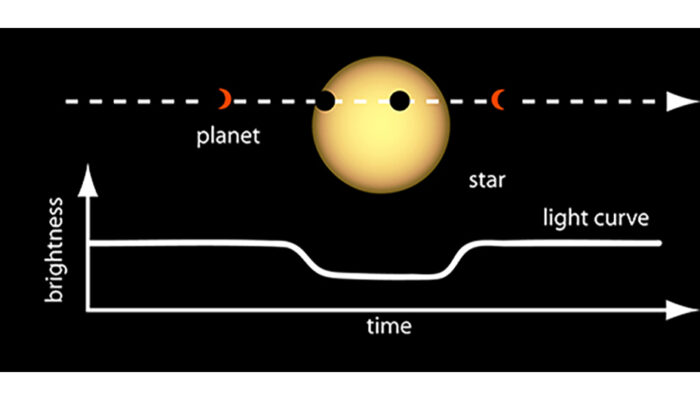
Beyond our solar system, exoplanet discoveries reveal a wide range of orbital eccentricities, some highly elliptical. These eccentric orbits suggest dynamic histories involving gravitational interactions, migrations, or past collisions, highlighting the complexity and diversity of planetary systems.
Common Misconceptions About Circular Orbits
Perfect circular orbits are common in space.
They are extremely rare and mostly theoretical, as real orbits are influenced by multiple perturbing factors.
Circular orbits imply stable, unchanging paths.
Even nearly circular orbits evolve over time due to gravitational interactions and other forces.
Significance of Understanding Orbital Shapes
Recognizing the nature of orbital paths is crucial for both scientific inquiry and practical applications. In astrophysics, it aids in interpreting planetary system formation and evolution. For space exploration, accounting for orbital imperfections is vital for mission planning, satellite deployment, and trajectory optimization. Engineers often exploit elliptical orbits to maximize fuel efficiency and mission objectives rather than striving for perfect circularity.
Technological Advances in Orbital Measurement
Modern observational tools, including space telescopes and satellites, have enhanced our ability to detect subtle orbital variations. High-precision measurements reveal the intricate gravitational interplay and tidal forces shaping orbits. Computational models simulate these dynamics, providing deeper insights into the stability and evolution of celestial systems.
Philosophical Reflections on Orbital Perfection
The concept of a perfect circular orbit serves as a theoretical benchmark rather than a common cosmic reality. It invites contemplation on the balance between order and chaos in the universe. The subtle imperfections in orbits contribute to the richness and complexity of cosmic phenomena, reminding us that the universe thrives on dynamic variability rather than static perfection.
Conclusion: The Reality of Circular Orbits in Space
In summary, perfectly circular orbits are largely idealized constructs that help frame our understanding of gravitational mechanics. While nearly circular orbits exist, true perfection is elusive due to the myriad forces acting on celestial bodies. This imperfection enriches the cosmic narrative, driving the diversity of planetary environments and inspiring ongoing exploration into the forces shaping our universe.
FAQ
What are the factors that affect orbital shapes?
Gravitational perturbations, non-uniform mass distribution, relativistic effects, and tidal forces.
Why is understanding orbital shapes important?
It aids in interpreting planetary system formation, mission planning, and optimizing satellite trajectories.


Leave a Reply