

Short Answer
Definition of Exoplanetary Debris
Exoplanetary debris refers to the fragments and remnants of celestial bodies orbiting stars beyond our solar system. These materials, ranging from tiny dust particles to large rocky fragments, are the byproducts of violent cosmic events such as collisions, fragmentation, and gravitational interactions. Studying this debris offers critical insights into the processes that shape planetary systems and the broader universe.
- Debris Types:
Includes dust grains, asteroid fragments, meteoroids, and possibly remnants of entire planets. - Debris Structures:
Often found in debris disks-rings of material encircling young stars where planetary formation is actively occurring.
Formation and Evolution of Exoplanetary Debris
The origin of exoplanetary debris is closely tied to the dynamic and often chaotic evolution of planetary systems. Collisions between celestial bodies, gravitational perturbations, and fragmentation events generate a diverse array of debris. These processes are fundamental to the lifecycle of planetary systems, influencing their architecture and stability over time.
- Collisional Events:
Impacts between planets, moons, and smaller bodies produce debris by shattering solid surfaces. - Gravitational Dynamics:
Interactions among bodies can destabilize orbits, leading to collisions or ejections of material. - Accretion and Aggregation:
Debris can coalesce to form larger bodies, contributing to planet formation.
Mechanisms Behind Debris Disk Formation
Debris disks form when dust and rock fragments orbit a star, often as a result of ongoing collisions within a young planetary system. These disks serve as natural laboratories for observing the early stages of planet formation. The continuous cycle of collision, fragmentation, and accretion within these disks shapes the eventual planetary architecture.
Gravitational Interactions and Dynamical Evolution
The gravitational interplay among celestial bodies governs the movement and fate of exoplanetary debris. This complex “dance” can lead to both stable configurations and chaotic disruptions. Resonances and orbital alignments may trigger cascades of collisions, generating new debris and reshaping planetary systems over millions of years.
Scientific Importance of Exoplanetary Debris
Studying debris from distant worlds is crucial for understanding planetary formation, geological history, and the potential for life beyond Earth. Debris carries chemical and isotopic signatures that reveal the conditions under which planets formed and evolved. Additionally, organic molecules found within some debris suggest that the building blocks of life may be widespread in the cosmos.
Technological Advances in Observing Exoplanetary Debris
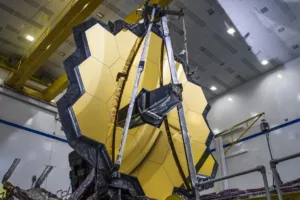
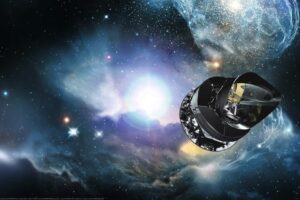
Modern space telescopes equipped with photometric and spectroscopic instruments, such as the Kepler Space Telescope and the James Webb Space Telescope, have revolutionized the detection and analysis of exoplanetary debris. These tools allow astronomers to study the composition, structure, and dynamics of debris disks by analyzing the light they emit or reflect.
Challenges in Studying Distant Debris
Despite technological progress, observing exoplanetary debris remains challenging due to the immense distances and faint signals involved. Direct imaging is often impossible, requiring reliance on indirect methods and computer simulations to interpret data and model the physical processes at play.
Real-World Examples of Exoplanetary Debris
Several well-studied debris disks around nearby stars provide valuable case studies:
- Beta Pictoris:
A young star surrounded by a prominent debris disk, known for evidence of ongoing planet formation and cometary activity. - Fomalhaut:
Features a bright debris ring with indications of planetary bodies sculpting the disk’s structure. - HR 8799:
Hosts multiple directly imaged exoplanets within a complex debris environment.
Common Misconceptions About Exoplanetary Debris
Debris disks are static and unchanging.
Debris disks are dynamic systems, constantly evolving due to collisions and gravitational forces.
All debris is harmful to planet formation.
While some debris results from destructive events, it also provides the raw materials necessary for building new planets.
Why Understanding Exoplanetary Debris Matters
Exploring the remnants of distant worlds deepens our comprehension of the universe’s formative processes and the delicate balance between destruction and creation. This knowledge not only advances astrophysics but also informs the search for habitable environments and extraterrestrial life. By decoding the stories encoded in cosmic debris, humanity gains a richer perspective on its place in the cosmos and the universal forces that shape planetary systems.
FAQ
What is exoplanetary debris?
Exoplanetary debris refers to the fragments and particles such as dust, rock, and asteroids orbiting stars outside our solar system, remnants of planetary formation and destruction processes.
How do astronomers study debris from distant worlds?
Astronomers use advanced telescopes equipped with photometric and spectroscopic instruments, such as the Kepler and James Webb Space Telescopes, to observe debris disks and analyze their composition and dynamics.
Why is exoplanetary debris important in understanding planetary systems?
Studying debris helps scientists understand the formation, evolution, and dynamical interactions within planetary systems, shedding light on processes like collisions, accretion, and potential habitability.
Can debris from exoplanets indicate the potential for life?
Yes, some debris contains organic molecules that could be precursors to life, suggesting that environments around exoplanets might have the necessary ingredients for biological development.



Leave a Reply