

Short Answer
Definition of Modern Astronomy and Its Expanding Horizons
Astronomy, the scientific study of celestial objects and phenomena beyond Earth’s atmosphere, is entering a transformative phase marked by rapid technological progress and global cooperation. This evolving discipline seeks to unravel the mysteries of the universe, from the birth of galaxies to the search for extraterrestrial life, by employing advanced observational tools and interdisciplinary approaches.
- Technological Advancements:
Cutting-edge instruments such as space telescopes and gravitational wave detectors are revolutionizing our ability to observe the cosmos. - Collaborative Research:
International partnerships enable large-scale projects that pool resources and expertise to tackle complex astronomical questions. - Interdisciplinary Integration:
Astronomy increasingly intersects with fields like biology, geology, and computer science to deepen our understanding of cosmic phenomena.
Technological Innovations Driving Astronomical Discoveries
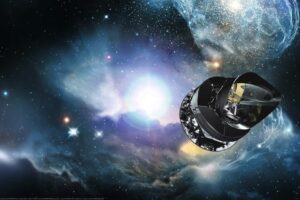
The recent surge in astronomical breakthroughs is largely fueled by novel technologies that enhance observational capabilities and data processing. Among these, next-generation space telescopes stand out for their ability to peer deeper into the universe than ever before.
Next-Generation Space Telescopes
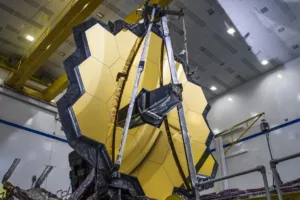
Instruments like the James Webb Space Telescope (JWST) utilize advanced infrared sensors to detect faint signals from distant galaxies, exoplanet atmospheres, and the elusive dark matter framework. These capabilities allow astronomers to study cosmic phenomena previously hidden from view, offering unprecedented insights into the universe’s early stages and its large-scale structure.
Artificial Intelligence and Data Analysis
With the exponential growth of astronomical data, machine learning and artificial intelligence have become indispensable. These technologies sift through vast datasets, identifying patterns and anomalies that might elude human observers. However, the challenge lies in ensuring that algorithms capture the universe’s complexity without oversimplifying its intricate phenomena.
Collaborative Efforts and Large-Scale Projects
Modern astronomy thrives on global cooperation, exemplified by initiatives like the Square Kilometre Array (SKA), which collects immense volumes of radio wave data to explore cosmic origins and evolution.
International Scientific Collaboration
Thousands of scientists from diverse backgrounds work together to harmonize methodologies and share findings, aiming to answer fundamental questions about the universe’s birth, cosmic reionization, and gravitational waves. This collective approach enhances research quality but also requires navigating cultural and procedural differences.
Interdisciplinary Approaches in Cosmic Exploration
The boundaries between astronomy and other scientific disciplines are increasingly blurred, fostering a holistic approach to understanding the cosmos.
Astrobiology and the Search for Life
Explorations of exoplanet atmospheres for biosignatures and missions like Mars 2020 Perseverance and Europa Clipper integrate geological and biological perspectives to investigate the origins and potential existence of life beyond Earth.
Challenges of Cross-Disciplinary Integration
While interdisciplinary collaboration promises accelerated discovery, it also demands overcoming differences in research methods and terminologies to create cohesive scientific narratives.
Gravitational Wave Astronomy: A New Window into the Universe
The detection of gravitational waves has opened a novel observational frontier, revealing cataclysmic events such as black hole mergers and neutron star collisions.
Complementing Electromagnetic Observations
Gravitational wave data must be integrated with traditional electromagnetic signals to develop a comprehensive understanding of cosmic phenomena, presenting both opportunities and challenges in data synthesis and interpretation.
Ethical Considerations in Astronomical Exploration
As humanity extends its reach into space, ethical questions arise regarding the exploration and potential colonization of celestial bodies.
- Exploration vs. Exploitation:
Balancing the desire for discovery with the responsibility to preserve extraterrestrial environments is a critical concern. - Stewardship of Space:
Developing a conservationist ethic for celestial bodies is essential to ensure sustainable and respectful exploration practices.
Accessibility and Inclusivity in Astronomy
The democratization of astronomical data through open-source platforms has empowered citizen scientists and amateur astronomers to contribute meaningfully to research.
- Citizen Science Contributions:
Enthusiasts provide valuable observations and computational resources, enriching the scientific community. - Maintaining Scientific Integrity:
Ensuring rigorous standards while fostering inclusivity remains a delicate balance for institutions like NASA and ESA.
Why Advancing Astronomy Matters
The continuous expansion of astronomical knowledge not only deepens our comprehension of the universe but also challenges humanity to address philosophical and ethical questions. By integrating technological innovation, collaborative research, and responsible stewardship, astronomy holds the potential to inspire a shared vision that harmonizes scientific inquiry with societal values, shaping our collective future among the stars.
FAQ
What advances are shaping the future of astronomy?
Advances include powerful space telescopes like JWST, AI-driven data analysis, large-scale collaborative projects, and interdisciplinary approaches combining biology and geology with astronomy.
How is data handled in modern cosmic research?
Astronomers use machine learning algorithms to process and interpret vast datasets, enabling detection of subtle patterns and anomalies in celestial observations.
What ethical issues are associated with space exploration?
Ethical issues involve managing the impact of exploration on celestial bodies, responsible use of resources, and ensuring equitable access to scientific opportunities.

Leave a Reply