
Short Answer
Definition of Light Trapping in Crystals
Light trapping within crystalline materials refers to the phenomenon where light pulses are confined and sustained inside a crystal’s structured lattice. This effect arises from the unique interaction between light waves and the periodic atomic arrangement of the crystal, enabling selective control over the propagation of specific light frequencies. The ability to capture and hold light pulses challenges traditional understandings of optics and opens new avenues for manipulating light in advanced technological applications.
Fundamental Optical Properties of Crystals
Crystals are solids characterized by a highly ordered, repeating atomic structure. This periodicity gives rise to distinctive optical behaviors, notably the formation of photonic bandgaps. These bandgaps function similarly to electronic bandgaps in semiconductors by prohibiting certain wavelengths of light from passing through while allowing others to transmit freely. The interaction between incoming light and the crystal lattice creates conditions conducive to trapping light pulses, effectively holding them within the material for extended durations.
- Photonic Bandgaps:
Frequency ranges where light propagation is forbidden due to the crystal’s periodic structure. - Periodic Atomic Arrangement:
The regular lattice that influences how light waves interact with the material.
Mechanism Behind Light Pulse Trapping
The entrapment of light pulses in crystals is primarily governed by resonant interactions between the light and the crystal’s electronic and vibrational modes. When a light pulse enters the crystal at a precise frequency and angle, it can couple resonantly with these internal modes, leading to a sustained presence of light within the lattice. This resonant coupling is dictated by the crystal’s structural and optical properties, enabling researchers to manipulate light behavior with high precision.
Temporal Dynamics and Real-Time Monitoring
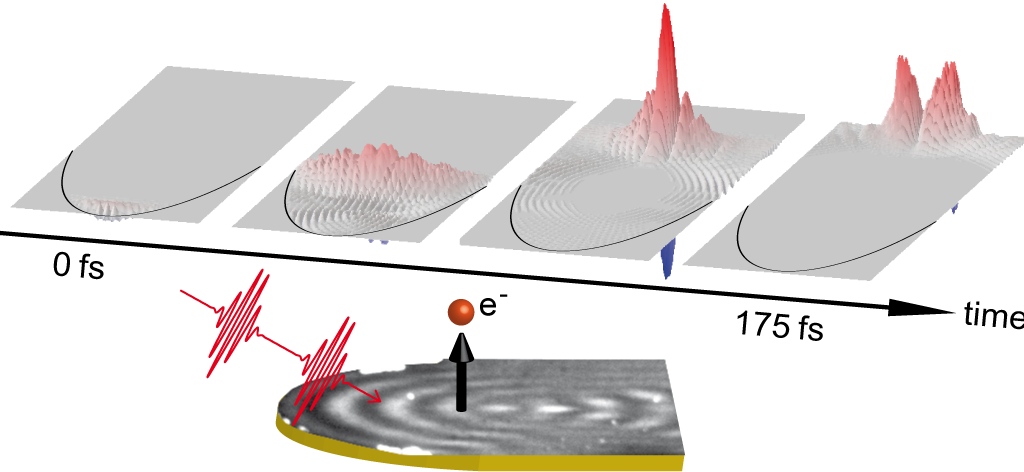
One of the most compelling aspects of light trapping is the temporal control it affords. Instead of passively observing light as it travels, scientists can now study the dynamic evolution of light pulses within the crystal in real time. This capability enhances the understanding of complex optical phenomena such as nonlinear optics and coherent quantum state control, providing a vivid depiction of light’s behavior under varying conditions.
Applications in Photonics and Telecommunications
The ability to trap light pulses has significant implications for photonic technologies, especially in optical communication systems. Trapped light can improve data transmission efficiency by overcoming the speed and bandwidth limitations inherent in electronic systems. Moreover, precise manipulation of light pulses facilitates advanced signal processing, contributing to the miniaturization and enhanced functionality of photonic devices.
Integration with Quantum Information Science
Light trapping intersects profoundly with quantum mechanics, offering promising advancements in quantum information processing. Controlled storage and retrieval of light pulses align with the requirements for quantum state preparation and measurement, essential for quantum computing. Stable and coherent light interactions support the operation of quantum bits (qubits), potentially accelerating developments in quantum networking, secure communication, and algorithm design.
Challenges in Material Engineering
Achieving effective light trapping demands meticulous engineering of the crystal’s intrinsic properties. Researchers must balance enhancing light-matter interactions with preserving the crystal’s structural integrity. Defects and impurities within the crystal lattice can disrupt performance, posing significant experimental challenges. Overcoming these obstacles is critical for realizing practical applications of trapped light technologies.
Advancements in Artificial Photonic Structures
Recent research has explored engineered materials such as photonic lattices and metamaterials, designed to optimize light trapping capabilities. These artificial structures exhibit unconventional optical properties that enhance light coupling. For instance, nonlinear optical effects in these materials enable frequency conversion processes, where light signals are transformed to different frequencies, broadening the scope of light manipulation techniques.
Impact on Imaging Technologies
The principles of light trapping also influence the development of advanced optical imaging methods. Real-time monitoring of light behavior within crystals can significantly improve spatial and temporal resolution in imaging systems. Techniques like super-resolution microscopy benefit from these advancements, allowing unprecedented visualization of biological and structural phenomena at nanoscale precision.
Significance and Future Prospects
The concept of crystals that capture light represents a transformative shift in photonics, merging material science, optics, and quantum physics. This interdisciplinary convergence fosters innovation with the potential to revolutionize industries ranging from telecommunications to quantum computing. As research progresses, the ability to harness and control light at the nanoscale promises to unlock new technological frontiers and deepen our understanding of light-matter interactions.
Summary
Exploring the trapping of light pulses within crystalline materials redefines conventional perspectives on optical phenomena. This sophisticated control over light not only enriches fundamental photonics research but also drives advancements across multiple scientific and technological domains. Continued investigation into these interactions holds the promise of groundbreaking applications, inspiring future generations of physicists and engineers to expand the horizons of light-based technologies.
FAQ
What is light trapping in crystals?
Light trapping in crystals refers to the phenomenon where light pulses are confined and sustained inside a crystal’s structured lattice due to the interaction between light waves and the periodic atomic arrangement.
What are photonic bandgaps?
Photonic bandgaps are frequency ranges where light propagation is forbidden due to the crystal’s periodic structure, allowing for selective control over light transmission.
How does light trapping impact telecommunications?
Light trapping can enhance data transmission efficiency in optical communication systems by overcoming speed and bandwidth limitations of electronic systems.






Leave a Reply