
Short Answer
Understanding Black Holes as Cosmic Telescopes
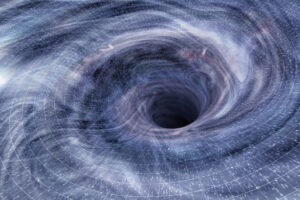
Black holes have fascinated humanity for decades, often depicted as mysterious cosmic voids where gravity dominates, engulfing everything including light. Beyond their enigmatic nature, these celestial objects hold the potential to revolutionize astronomical observation. By harnessing the immense gravitational forces of black holes, scientists envision using them as natural telescopes, offering a novel and powerful way to explore the universe. This innovative idea challenges conventional methods and opens new avenues for observing distant cosmic phenomena.
Definition and Principles of Gravitational Lensing
At the core of using black holes as telescopes lies the phenomenon of gravitational lensing. Massive bodies such as galaxies and black holes distort spacetime, bending the paths of photons traveling nearby. This bending effect magnifies and alters the appearance of distant objects, allowing astronomers to see farther into space than would otherwise be possible.
- Gravitational Lensing:
The deflection of light caused by the curvature of spacetime around massive objects, which acts like a lens to magnify and distort images of background sources. - Black Hole Lensing:
Due to their extreme mass and density, black holes create intense spacetime curvature, producing exceptionally strong lensing effects that can amplify light from extremely distant regions of the cosmos.
Mechanism of Black Hole Telescopes
Unlike traditional telescopes limited by physical constraints such as aperture size and atmospheric interference, black holes offer a natural gravitational lens with extraordinary magnification capabilities. Their gravitational fields can bend light over vast intergalactic distances, potentially surpassing the resolution and depth achievable by any man-made instrument.
A key feature in this process is the photon sphere, a region just outside the event horizon where photons can orbit the black hole multiple times. Light passing through this sphere experiences repeated deflections, enhancing the brightness and focus of faint signals that would otherwise remain undetectable. This unique property could enable observation of objects near the cosmological horizon, revealing epochs and structures beyond the reach of conventional telescopes.
Mathematical Framework and Physical Considerations
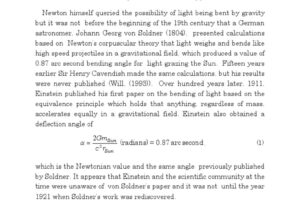
The gravitational lensing effect of black holes is described by Einstein’s theory of general relativity, which relates mass and energy to the curvature of spacetime. The bending angle of light, α, near a massive object can be approximated by:
α = (frac{4GM}{c^2 b})
- G: Gravitational constant
- M: Mass of the lensing object (black hole)
- c: Speed of light
- b: Impact parameter (closest approach distance of the light to the black hole)
For black holes, the mass M is so large and the impact parameter so small that the bending angle becomes significant, leading to multiple light paths and complex lensing patterns. Precise modeling requires integrating general relativity with quantum effects, especially near the event horizon, where classical physics alone is insufficient.
Applications and Potential Observational Strategies
Utilizing black holes as telescopes involves positioning detectors or observatories in alignment with a black hole and a distant light source. This alignment transforms the black hole into a natural magnifying glass, enabling the study of remote cosmic objects with unprecedented clarity.
- Supermassive Black Holes:
Located at the centers of galaxies, these black holes possess masses millions to billions of times that of the Sun, creating gravitational lenses on a galactic scale. Observing through these lenses could reveal distant quasars, early galaxies, and the cosmic microwave background with enhanced resolution. - Space-Based Observatories:
Deploying spacecraft near the focal points of black hole lensing could overcome atmospheric limitations and exploit the black hole’s magnification, though such missions face extreme engineering challenges due to intense gravitational forces and relativistic effects.
Challenges and Technical Obstacles
Despite the promising prospects, several formidable hurdles must be addressed:
- Extreme Gravitational Environment:
Spacecraft near black holes must withstand intense tidal forces and gravitational gradients that can disrupt instruments and navigation. - Relativistic Effects:
Time dilation, frequency shifts, and other relativistic phenomena complicate data interpretation and require sophisticated theoretical models. - Precision Alignment:
Achieving the necessary geometric configuration between the observer, black hole, and distant source demands extraordinary accuracy in positioning and timing.
Unique Observational Phenomena
Light bent around black holes exhibits distinctive characteristics that enrich scientific data:
- Time Dilation Effects:
Photons traveling different paths experience varying delays, causing observable time shifts in signals. - Frequency Shifts:
Gravitational redshift and blueshift alter the observed wavelengths, providing insights into the gravitational field and source properties. - Brightness Variations:
Multiple light paths can interfere, producing fluctuations in intensity that reveal structural details of the source and lens.
Current Research and Future Prospects
Recent advances, such as the Event Horizon Telescope’s imaging of a black hole’s event horizon, have deepened understanding of how extreme gravity influences light. Theoretical simulations continue to explore the feasibility of black hole telescopes, suggesting a future where observational astronomy transcends material limitations by exploiting spacetime geometry itself.
Significance in Astronomy and Cosmology
Employing black holes as natural telescopes could dramatically extend humanity’s observational reach, enabling the study of the universe’s earliest light and most distant structures. This approach offers a transformative perspective on cosmic observation, turning the formidable gravitational pull of black holes into a powerful tool for discovery.
Common Misconceptions
Black holes only consume light and matter, making them useless for observation.
While black holes do trap light within their event horizons, their gravitational fields outside this boundary can bend and magnify light from distant sources, effectively acting as lenses.
Using black holes as telescopes is purely science fiction.
Although challenging, the concept is grounded in well-established physics and supported by observational evidence of gravitational lensing, with ongoing research exploring practical applications.
Conclusion: A New Frontier in Cosmic Observation
Black holes, once regarded solely as cosmic enigmas, may soon become indispensable instruments in astronomy. By leveraging their gravitational lensing power, humanity can surpass current technological boundaries, unveiling the universe’s hidden depths with unprecedented clarity. This paradigm shift invites us to rethink our cosmic perspective, transforming the darkest regions of space into gateways of illumination and discovery.
FAQ
What is gravitational lensing?
Gravitational lensing is the deflection of light caused by the curvature of spacetime around massive objects, which magnifies and distorts images of background sources.
Can black holes really be used as telescopes?
Yes, theoretically, black holes can be used as natural telescopes due to their ability to bend light through gravitational lensing.

Leave a Reply