Can I own a quantum computer?

Understanding Quantum Computers Quantum computers represent a revolutionary leap in computational technology, distinct from traditional classical computers. While classical systems rely on binary bits-values of either 0 or 1-quantum computers operate using quantum bits, or qubits. These qubits possess the unique ability to exist in multiple states simultaneously due to quantum phenomena such as superposition […]

Read More →

Quantum Computing: The New Arms Race for Global Power?

Understanding Quantum Computing Quantum computing represents a revolutionary leap in technology, rooted in the principles of quantum mechanics. Unlike classical computers that use binary bits (0s and 1s), quantum computers utilize quantum bits or qubits, which can exist in multiple states simultaneously due to superposition. This unique characteristic enables quantum systems to process complex calculations […]

Read More →

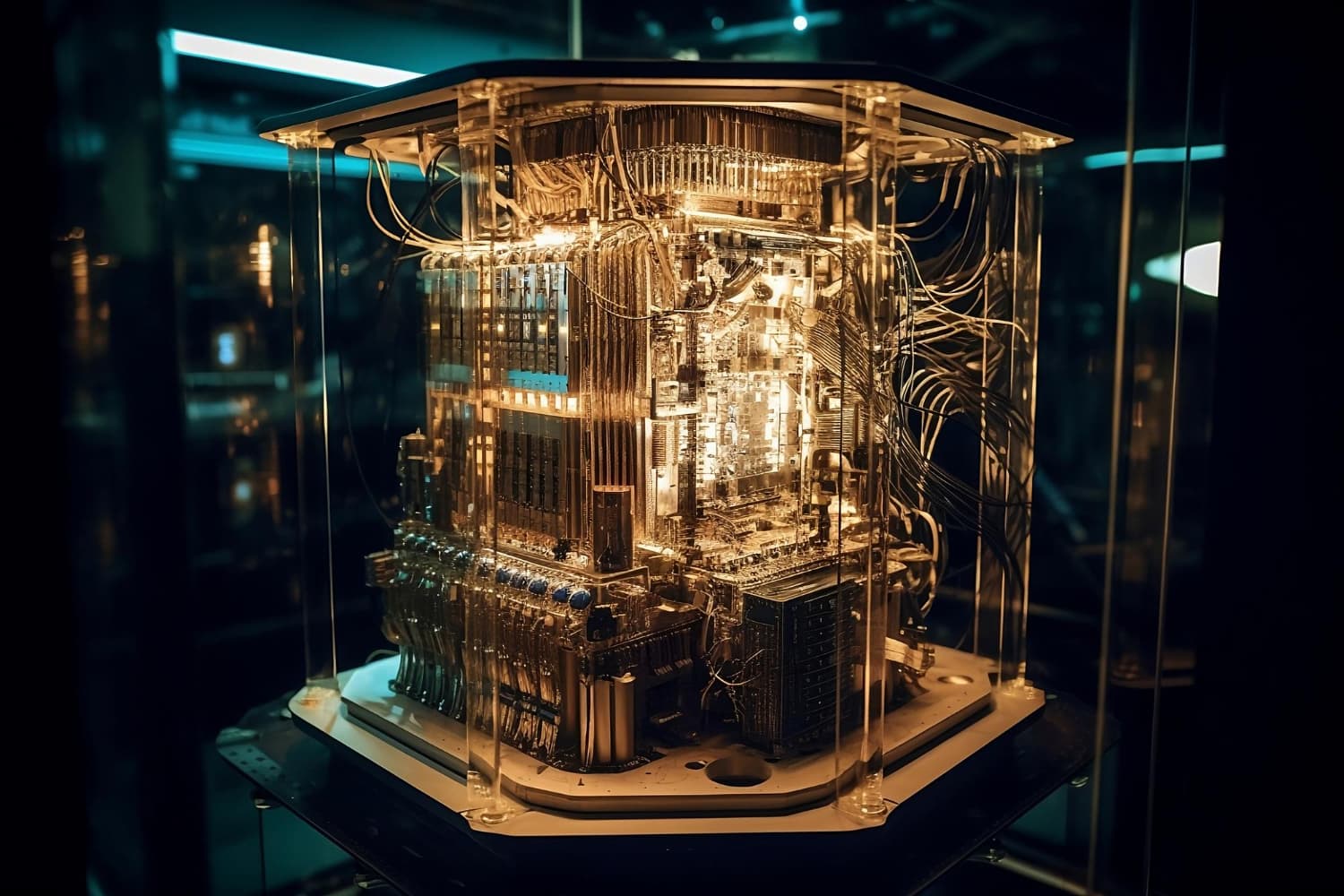
Could human brains operate like quantum computers?

Understanding the Intersection of Quantum Mechanics and Brain Function The exploration of how consciousness and cognition might intertwine with the principles of quantum mechanics has long fascinated scientists and philosophers alike. The provocative hypothesis that the human brain could operate similarly to a quantum computer challenges traditional views in neuroscience and physics, prompting profound inquiries […]

Read More →

Bad News for Code Breakers: Quantum Tech Tightens Security

Understanding Quantum Computing and Its Impact on Cryptography Quantum computing represents a revolutionary leap in computational technology, poised to transform not only processing speeds but also the foundational principles of digital security. Unlike classical computers that operate on binary bits, quantum computers utilize quantum bits or qubits, which can exist in multiple states simultaneously due […]

Read More →

How will quantum computers affect cryptography?

Understanding Quantum Computing’s Impact on Cryptography The advent of quantum computing signals a transformative era for cryptography, fundamentally altering the landscape of information security. This shift can be compared to the introduction of a new celestial entity within a well-established solar system, disrupting gravitational forces and reshaping existing orbits. The convergence of quantum mechanics with […]

Read More →

How much RAM does a quantum computer have?

Understanding Quantum Computer Memory When exploring the inner workings of quantum computers, a common question arises: how much RAM does a quantum computer have? This inquiry leads us into the complex domain of quantum mechanics and computational theory, where traditional concepts of memory and processing power are fundamentally transformed. Unlike classical computers, where RAM (Random […]

Read More →

What are the applications of quantum computers?

Understanding Quantum Computing Quantum computing represents a groundbreaking shift in computational science, leveraging the principles of quantum mechanics to perform calculations far beyond the reach of classical computers. Unlike traditional bits that exist strictly as 0s or 1s, quantum bits, or qubits, can inhabit multiple states simultaneously through a phenomenon known as superposition. This, combined […]

Read More →

What is it like to be a quantum computational process?

Definition of Quantum Computational Processes Quantum computational processes represent a cutting-edge intersection of physics, computer science, and information theory. Fundamentally, these processes leverage the principles of quantum mechanics to perform computations, setting them apart from traditional classical computing. At the heart of quantum computation lies the quantum bit, or qubit, which serves as the basic […]

Read More →

Could quantum computing make current AI models obsolete?

Understanding Quantum Computing Quantum computing represents a groundbreaking shift in computational technology, fundamentally differing from classical computing by utilizing the principles of quantum mechanics. Unlike traditional computers that operate with binary bits (0 or 1), quantum computers use quantum bits, or qubits, which can exist in multiple states simultaneously through a phenomenon known as superposition. […]

Read More →

What if we could build a 1 billion qbit quantum computer?

Understanding Quantum Computing and Qubits Quantum computing represents a revolutionary leap in computational technology, fundamentally differing from classical computing by utilizing quantum bits, or qubits, as its basic units of information. Unlike classical bits that exist strictly as 0 or 1, qubits exploit the principles of quantum mechanics, such as superposition and entanglement, allowing them […]

Read More →