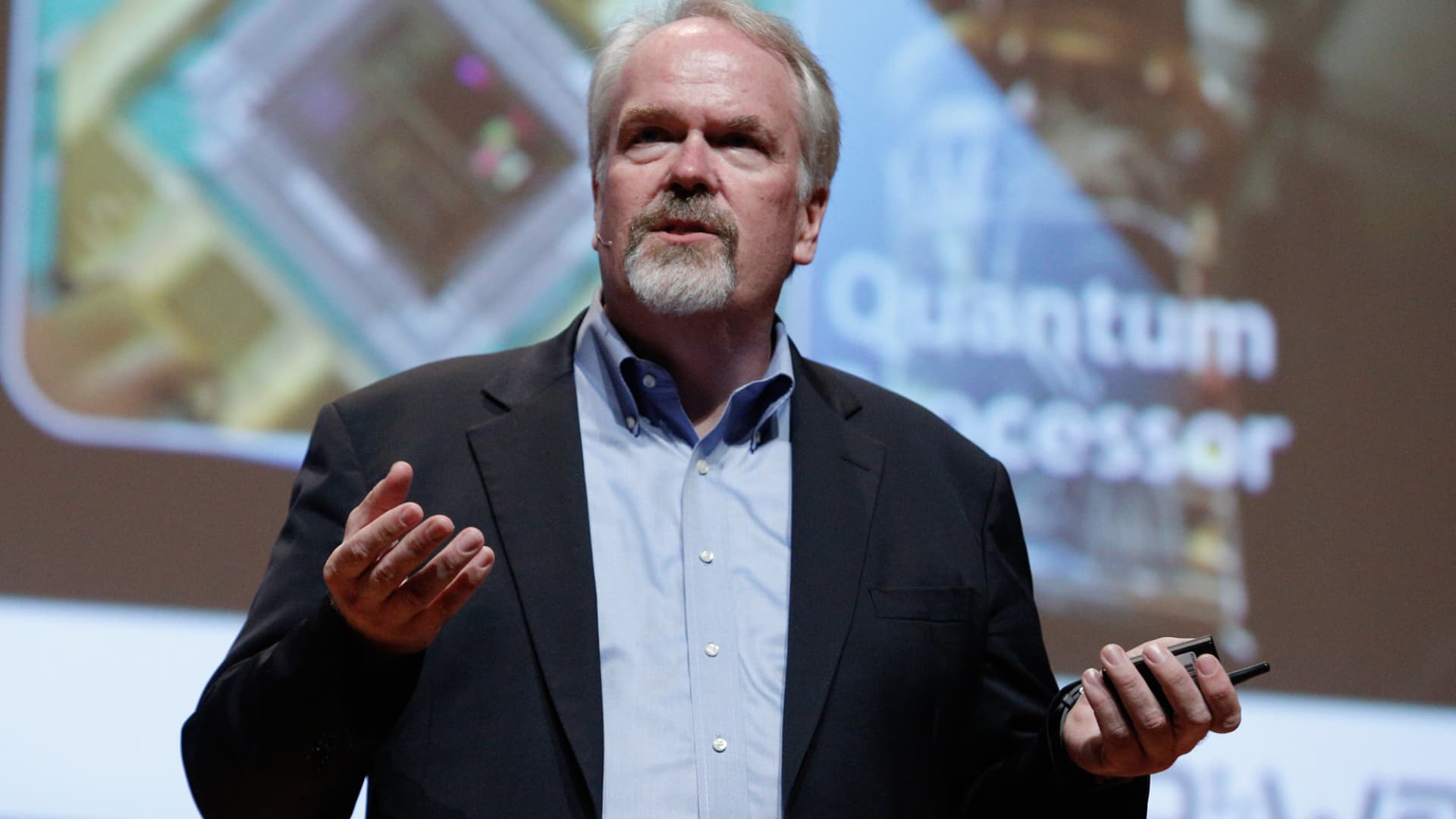
Is Quantum Computing worth learning?

Understanding Quantum Computing Quantum computing represents a revolutionary approach to processing information by harnessing the principles of quantum mechanics. Unlike traditional computers that rely on bits-binary units representing either 0 or 1-quantum computers operate using quantum bits, or qubits. These qubits can exist in a state of superposition, meaning they simultaneously embody both 0 and […]

Read More →

What is quantum device?

Definition of Quantum Devices Quantum devices are advanced technological instruments that exploit the unique principles of quantum mechanics to perform functions beyond the capabilities of classical systems. These devices operate by manipulating quantum phenomena such as superposition and entanglement, enabling new modes of computation, communication, and measurement. Far from being mere tools, quantum devices serve […]

Read More →

What is the future stock price of D-Wave Quantum Inc.?

Overview of D-Wave Quantum Inc. and Its Market Potential D-Wave Quantum Inc. stands at the forefront of the rapidly evolving quantum computing sector, captivating the attention of investors, scientists, and technology enthusiasts. This company’s pioneering efforts in quantum technology have positioned it as a key player in a field that promises to revolutionize computational capabilities. […]
Read More →

What is quantum AI? Are its using platforms legitimate?

Definition of Quantum AI Quantum AI represents the convergence of quantum computing and artificial intelligence, combining the principles of quantum mechanics with machine learning techniques. Unlike classical AI, which relies on binary bits (0s and 1s) for data processing, quantum AI utilizes quantum bits or qubits. These qubits can exist in multiple states simultaneously due […]

Read More →

What is the best software for quantum chemistry calculations?

Overview of Quantum Chemistry Software Quantum chemistry merges the principles of quantum mechanics with chemical science to decode the intricate behaviors of atoms and molecules. Computational programs in this field act as essential instruments, enabling researchers to visualize and analyze the subtle details of chemical systems. This article presents a detailed review of the leading […]

Read More →

Can quantum computers access the Internet?

Understanding Quantum Computing Quantum computing represents a groundbreaking approach to processing information, leveraging the principles of quantum mechanics to perform calculations far beyond the reach of traditional computers. This emerging technology harnesses the unique properties of quantum bits, or qubits, to tackle complex problems with unprecedented speed and efficiency. The prospect of integrating quantum computers […]

Read More →

Why is Quantum computing still in its infancy state?

Definition of Quantum Computing Quantum computing is an emerging discipline that aims to transform the landscape of technology by leveraging the principles of quantum mechanics. Unlike traditional computing, which relies on binary bits, quantum computing uses quantum bits or qubits that can exist simultaneously in multiple states. This unique capability offers the potential to solve […]

Read More →

Why has quantum computing information been blocked?

Understanding Quantum Computing Quantum computing represents a revolutionary leap in computational technology, rooted in the principles of quantum mechanics-a branch of physics that investigates the behavior of particles at the atomic and subatomic levels. Unlike traditional computers that use bits as the smallest unit of data, quantum computers utilize quantum bits or qubits. These qubits […]

Read More →

Can antimatter be used for quantum computing?

Understanding Antimatter and Quantum Computing Quantum computing represents a cutting-edge domain where traditional computational methods intersect with the peculiarities of quantum mechanics. Central to this technology are qubits-quantum bits-that exploit phenomena such as superposition and entanglement, enabling computational power far beyond classical bits. Meanwhile, antimatter, the theoretical counterpart to ordinary matter, consists of particles that […]

Read More →

How fast is a quantum processor?

Definition of Quantum Processors Quantum processors are advanced computational devices that leverage the principles of quantum mechanics to perform calculations at speeds unattainable by classical computers. Unlike traditional processors that use binary bits, quantum processors utilize quantum bits, or qubits, which can exist in multiple states simultaneously. This fundamental difference enables quantum processors to tackle […]

Read More →