Is it necessary to measure all qubits in a quantum computer?

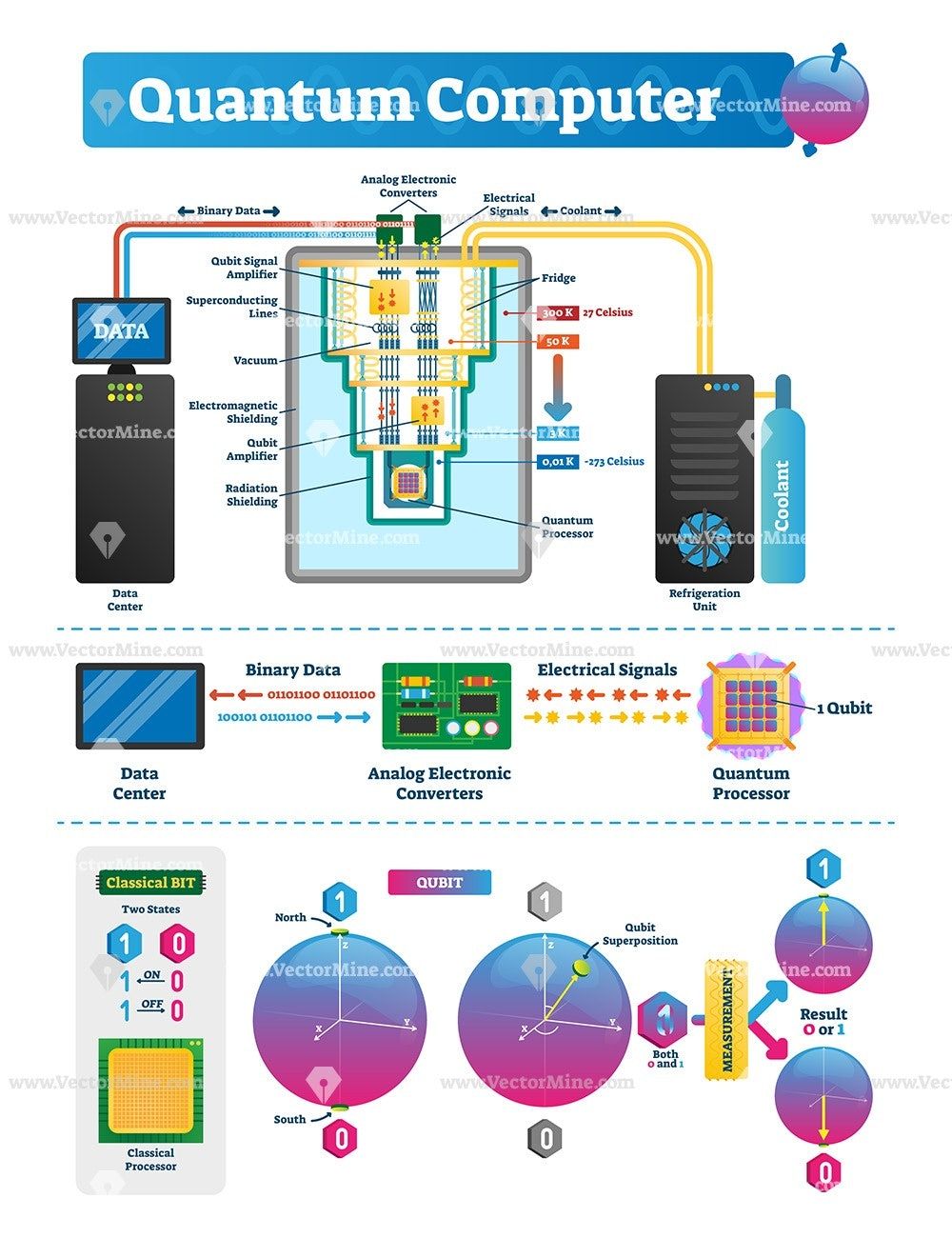
Understanding Qubits and Quantum Measurement Quantum computing operates on qubits, the fundamental units of quantum information. Unlike classical bits that distinctly represent either 0 or 1, qubits exist in a superposition, simultaneously embodying multiple states. This unique property enables quantum computers to process vast datasets in parallel, offering the potential for exponential computational speedups. Measurement […]

Read More →

What is Quantum Machine Learning?

Definition of Quantum Machine Learning Quantum Machine Learning (QML) represents an innovative interdisciplinary field that merges the principles of quantum computing with the methodologies of machine learning. This fusion aims to harness the unique properties of quantum mechanics to enhance the performance and capabilities of traditional machine learning algorithms. By integrating quantum phenomena, QML aspires […]

Read More →

How is data transmitted in quantum computing?

Definition of Quantum Data Transmission Quantum data transmission refers to the process of conveying information using the principles of quantum mechanics, which fundamentally differ from classical communication methods. This approach leverages unique quantum phenomena such as superposition and entanglement to encode, transmit, and decode data, enabling capabilities beyond the reach of traditional computing systems. Quantum […]

Read More →

Spin Charge Entanglement: What Gets Stored in a Qubit?

Definition of Spin-Charge Entanglement in Qubits Spin-charge entanglement refers to a quantum phenomenon where the spin state of an electron becomes intrinsically linked with its charge state or that of another particle. This entanglement forms a composite quantum state that is fundamental to advanced quantum information storage and processing. Unlike classical bits, which represent information […]
Read More →

What is quantum computer and how it work?

Understanding Quantum Computing Quantum computing signifies a revolutionary advancement in computational technology, transcending the limitations imposed by classical physics and venturing into the domain governed by quantum mechanics. This innovative field bridges abstract theoretical physics with tangible technological applications, utilizing the unique behaviors of subatomic particles to process data at speeds far beyond those achievable […]

Read More →

Who started creating quantum computers for A.I.?

Definition of Quantum Computing and Its Relation to Artificial Intelligence Quantum computing represents a cutting-edge discipline at the intersection of quantum physics and computer science. It leverages the principles of quantum mechanics to process information in fundamentally new ways, offering computational power that surpasses classical computers. When integrated with artificial intelligence (A.I.), quantum computing holds […]

Read More →

How many qubits can a quantum computer handle

Definition of Qubits and Quantum Computing Quantum computing signifies a transformative shift in computational theory and information processing. Central to this technology are qubits, the fundamental units of quantum information. Unlike classical bits, which are restricted to binary states of either 0 or 1, qubits exploit quantum phenomena such as superposition and entanglement. This allows […]

Read More →

What is the security of the RSA algorithm?

Definition of the RSA Algorithm The RSA algorithm is a cornerstone of modern cryptography, designed to protect sensitive information by enabling secure communication over insecure channels. It functions as a digital fortress, safeguarding data from unauthorized access by leveraging complex mathematical principles. At its core, RSA uses the properties of prime numbers and modular arithmetic […]

Read More →

Which EE specialization can work in quantum computing?

Definition of Quantum Computing and Electrical Engineering Integration Quantum computing represents a groundbreaking advancement in technology, offering computational power far beyond classical systems by leveraging the principles of quantum mechanics. The fusion of Electrical Engineering (EE) with quantum physics creates a multidisciplinary framework essential for advancing this field. This integration encompasses various EE specializations that […]

Read More →

Are there any career opportunities in quantum computing?

Understanding Quantum Computing Careers Quantum computing marks a revolutionary advancement in computational technology, leveraging the often non-intuitive principles of quantum mechanics. As this innovative field progresses, it opens a wide array of career paths across multiple industries. The integration of theoretical insights, experimental validation, and practical implementation demands a multidisciplinary workforce. This article explores the […]

Read More →