What is UChicago’s current work on Quantum Computing?

Overview of Quantum Computing at the University of Chicago Quantum computing signifies a transformative advancement in computational power, with the potential to revolutionize fields such as cryptography, artificial intelligence, and materials science. The University of Chicago stands at the forefront of this dynamic discipline, distinguished by its pioneering research and interdisciplinary collaborations. This article provides […]

Read More →

When will quantum computers be publicly used?

Understanding Quantum Computing Quantum computing represents a revolutionary leap in computational technology, often compared to the transformative impact of the Internet’s emergence. Unlike classical computers that rely on binary bits, quantum computers utilize quantum bits, or qubits, which enable them to process vast amounts of information simultaneously. This capability stems from the principles of quantum […]

Read More →

What is the strongest quantum computer in the world?

Understanding Quantum Computing Quantum computing represents a revolutionary shift in how information is processed, leveraging the principles of quantum mechanics to perform calculations far beyond the reach of classical computers. Unlike traditional bits that exist strictly as 0s or 1s, quantum bits, or qubits, can exist in multiple states simultaneously due to superposition. This unique […]

Read More →

Is quantum computing worth the leaps of faith?

Understanding Quantum Computing Quantum computing represents a groundbreaking technological frontier that leverages the principles of quantum mechanics to perform computations far beyond the capabilities of classical computers. Rooted in the peculiar behaviors of subatomic particles, this emerging field promises to revolutionize how we process information, solve complex problems, and innovate across various scientific disciplines. Definition […]

Read More →

How do the Hilbert problems relate to quantum computing?

Overview of Hilbert’s Problems At the dawn of the 20th century, David Hilbert introduced a collection of 23 profound mathematical challenges that have since become cornerstones in the evolution of modern mathematics. These problems span a wide array of disciplines, including number theory, algebra, and geometry, and were designed not only to resolve existing mathematical […]

Read More →

How is a qubit used in quantum computing?

Definition of a Qubit A qubit, short for quantum bit, represents the fundamental unit of information in quantum computing. Unlike classical bits, which are restricted to binary states of either 0 or 1, qubits possess the extraordinary ability to exist in a combination of both states simultaneously. This phenomenon, known as superposition, forms the cornerstone […]

Read More →

Who is considered the father of quantum computing?

Overview of Quantum Computing Quantum computing represents a cutting-edge intersection of quantum mechanics and computational science, heralding transformative progress in information technology. Emerging as a pioneering field with vast potential, its conceptual roots trace back to visionary scientists who laid the groundwork for this revolutionary technology. Among these pioneers, David Deutsch stands out as a […]

Read More →

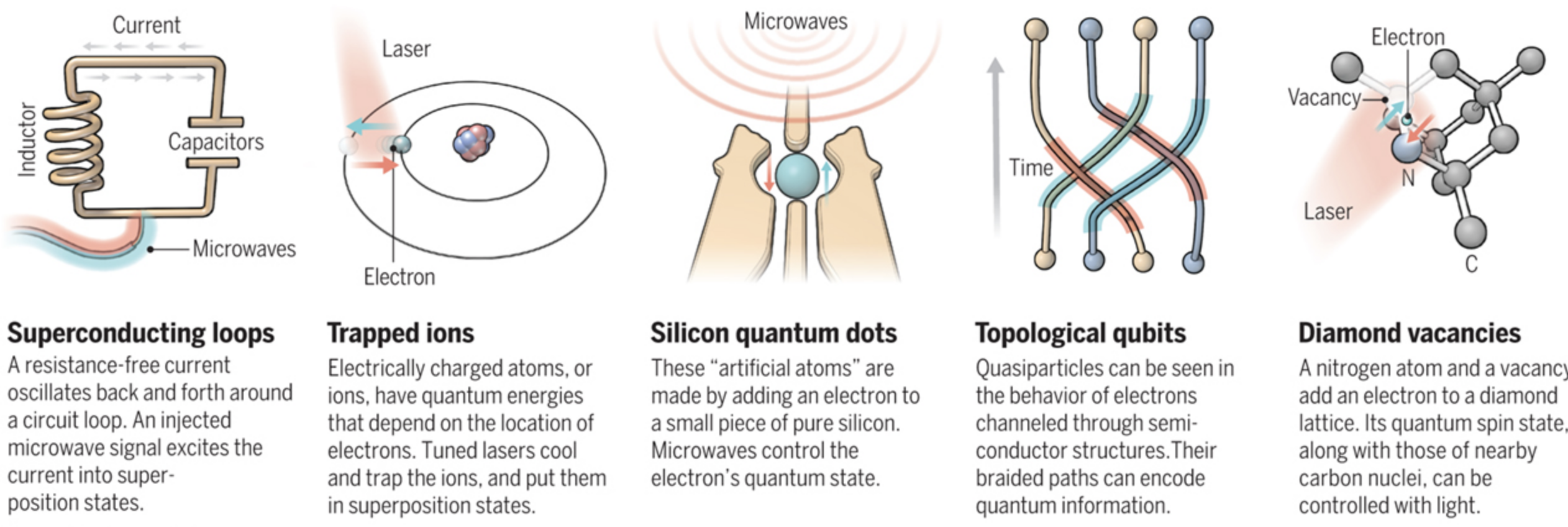
How are qubits physically represented?

Definition of Qubits in Quantum Computing In the realm of quantum computing, the qubit serves as the fundamental unit of quantum information. Unlike classical bits, which are confined to binary states of either 0 or 1, qubits possess the unique ability to exist simultaneously in multiple states through a phenomenon known as superposition. This property […]

Read More →

What is it like to work in quantum computing?

Understanding Quantum Computing Quantum computing signifies a revolutionary advancement in computational technology, harnessing the unique principles of quantum mechanics to process data in ways unattainable by classical computers. Unlike traditional systems that rely on binary bits, quantum computers operate using quantum bits or qubits, which can exist in multiple states simultaneously due to the phenomenon […]

Read More →