
Short Answer
Definition of Force and Its Origin
A force is fundamentally understood as an interaction that alters the motion or rest state of an object. It represents a key concept in physics, describing how objects influence one another through various mechanisms. Investigating the origin of force involves exploring the foundational principles and empirical evidence that explain why and how forces arise in nature. This exploration spans multiple branches of physics, including classical mechanics, electromagnetism, quantum theory, and cosmology, each offering unique insights into the genesis and nature of forces.
Classical Mechanics: Foundations of Force
Within the framework of classical mechanics, forces are primarily described by Newton’s laws of motion. Newton’s second law, expressed as F = ma, establishes that the net force acting on an object equals its mass multiplied by its acceleration. This relationship ties the origin of force to the properties of mass and the changes in motion it undergoes.
- Gravitational Force:
Newton’s law of universal gravitation posits that every mass attracts every other mass with a force proportional to their masses and inversely proportional to the square of the distance between them. This force emerges inherently from the property of mass itself, causing objects to draw toward one another. - Frictional Force:
Friction arises from microscopic interactions between the surfaces of materials in contact. Although observed macroscopically as resistance to motion, its origin lies in atomic and molecular forces at the interface of materials.
Classical physics thus begins to unravel the origins of forces by linking them to tangible properties such as mass, motion, and surface interactions.
Electromagnetism: Forces from Charged Particles
Electromagnetism offers a comprehensive perspective on forces generated by electric charges and magnetic fields. James Clerk Maxwell’s equations unify electricity and magnetism into a single theoretical framework, explaining how forces arise from charged particles and their movements.
- Electric Forces:
Charged objects produce electric fields that exert forces on other charges within their vicinity. - Magnetic Forces:
Moving charges generate magnetic fields, and the Lorentz force law quantifies the force experienced by charges moving through these fields. - Chemical Interactions:
Electromagnetic forces govern electron arrangements and bonding in atoms and molecules, explaining the stability and formation of matter at the microscopic level.
Through electromagnetism, the origin of forces is linked to the presence and dynamics of electric charges, providing a foundation for understanding a wide range of physical and chemical phenomena.
Quantum Mechanics: Fundamental Forces at the Subatomic Scale
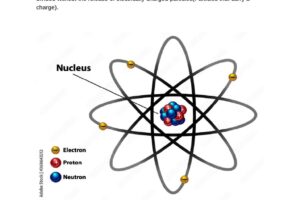
At the quantum level, the concept of force is reframed through the interactions of elementary particles mediated by force-carrying bosons. Quantum field theory and the Standard Model describe these fundamental forces as arising from particle exchanges within fields.
- Electromagnetic Force:
Mediated by photons, this force governs interactions between charged particles. - Strong Nuclear Force:
Gluons transmit this force, which binds quarks together inside protons and neutrons, holding atomic nuclei intact. - Weak Nuclear Force:
Carried by W and Z bosons, it is responsible for certain types of particle decay and nuclear processes.
This quantum perspective reveals that forces emerge from particle interactions rather than being intrinsic properties, deepening our understanding of the fundamental fabric of matter and energy.
Cosmological Insights: Gravity and the Structure of the Universe
On a cosmic scale, gravity is interpreted through Einstein’s general theory of relativity, which describes it not as a conventional force but as a curvature of spacetime caused by mass and energy.
- Spacetime Curvature:
Massive objects distort the geometry of spacetime, and this curvature directs the motion of other masses, effectively producing what we perceive as gravitational attraction. - Dark Matter and Dark Energy:
These mysterious components of the universe suggest the existence of forces or effects beyond current observational capabilities, indicating that our understanding of force remains incomplete and evolving.
General relativity thus expands the concept of force by linking it to the fundamental structure of the universe, challenging classical notions and opening new avenues for exploration.
Philosophical Considerations on the Nature of Force
The investigation into the origin of forces also raises profound philosophical questions about the essence of reality. Are forces fundamental entities existing independently, or do they arise from deeper underlying phenomena? This inquiry bridges physics and metaphysics, prompting reflection on the nature of existence and the limits of scientific knowledge.
Moreover, the continuous development of theoretical frameworks, such as attempts to unify quantum mechanics and general relativity, underscores the provisional nature of our understanding. The quest for a comprehensive theory of force exemplifies the dynamic interplay between empirical evidence and conceptual innovation.
Why Understanding the Origin of Forces Is Crucial
Comprehending the origins of forces is vital for advancing science and technology. It enables the prediction and manipulation of physical phenomena, from engineering applications to understanding the universe’s evolution. Insights into forces underpin innovations in energy, materials science, and quantum technologies, while also informing cosmological models that explain the large-scale structure and fate of the cosmos.
Summary
Physics offers a multifaceted explanation of the origin of forces, spanning classical mechanics, electromagnetism, quantum theory, and cosmology. Each domain contributes unique perspectives, from mass-induced gravitational attraction to particle-mediated quantum forces and spacetime geometry. Beyond technical descriptions, this exploration invites ongoing philosophical reflection and scientific inquiry, highlighting the profound and evolving nature of our understanding of forces in the universe.
FAQ
What is the Newtonian view of force?
Newtonian physics defines force as mass times acceleration, with forces like gravity acting between masses.
How do electromagnetic forces originate?
They originate from electric charges and their movement, described by Maxwell's equations and the Lorentz force.
What role do elementary particles play in forces?
Elementary particles such as photons and gluons mediate forces at the quantum level.
Why is gravity different from other forces?
Gravity is explained by general relativity as spacetime curvature rather than a conventional force.



Leave a Reply