

Short Answer
Understanding Dark Matter
Dark matter constitutes a mysterious and dominant component of the universe, accounting for roughly 85% of all matter. Unlike ordinary matter, it neither emits nor absorbs electromagnetic radiation, making it invisible to traditional telescopes. Despite its elusive nature, dark matter exerts a significant gravitational influence, shaping galaxy rotation curves, large-scale cosmic structures, and the anisotropies observed in the cosmic microwave background. This invisible substance forms vast halos around galaxies, yet its fundamental properties and behaviors remain largely speculative.
Can Dark Matter Collapse into Compact Objects?
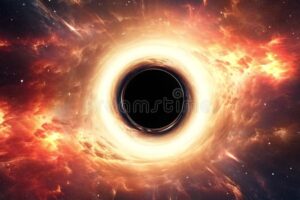
A compelling question in modern astrophysics is whether dark matter can gravitationally collapse to form compact entities analogous to stars or black holes. While baryonic matter readily condenses into stars through radiative cooling and nuclear fusion, dark matter’s inability to emit or absorb light complicates this process. Without mechanisms to dissipate energy, dark matter particles cannot easily lose heat and contract into dense configurations like gas clouds or stellar bodies. This fundamental difference challenges the possibility of dark matter forming star-like or black hole-like objects through conventional pathways.
Theoretical Models of Dark Matter Compact Objects
Primordial Black Holes
One hypothesis suggests that primordial black holes (PBHs) formed in the early universe due to density fluctuations during the inflationary epoch. These black holes would have originated independently of baryonic matter and could potentially constitute a fraction of dark matter. The mass distribution, formation mechanisms, and abundance of PBHs remain active areas of research, with ongoing debates about their role in cosmic evolution and dark matter composition.
Boson Stars and Quantum Effects
Another intriguing possibility involves ultralight bosonic dark matter candidates capable of forming Bose-Einstein condensates under certain conditions. These condensates could give rise to “boson stars,” compact objects stabilized by quantum mechanical principles such as the Heisenberg uncertainty principle and self-interactions rather than thermal pressure. Boson stars might mimic some gravitational characteristics of black holes, potentially producing observable astrophysical signatures that differ from conventional stellar remnants.
Self-Interacting Dark Matter (SIDM)
Models incorporating self-interacting dark matter propose that dark matter particles experience collisions or forces beyond gravity. These interactions could redistribute energy within dark matter halos, leading to denser central regions compared to collisionless dark matter scenarios. Such dynamics might enable localized gravitational collapse, possibly forming compact objects. However, whether SIDM can facilitate sufficient energy dissipation to mimic star-like condensation remains uncertain.
Mechanisms Behind Dark Matter Collapse
Unlike baryonic matter, which cools by radiating energy and thus contracts to form stars, dark matter’s lack of electromagnetic interaction prevents similar cooling processes. This absence of radiative cooling inhibits the collapse of dark matter into dense, star-like bodies. Theoretical frameworks explore alternative mechanisms, such as quantum pressure in boson stars or energy redistribution through self-interactions, that might allow dark matter to overcome these limitations and form compact structures.
Detecting Dark Matter Compact Objects
Identifying compact objects formed from dark matter presents significant observational challenges. Traditional black holes reveal themselves through accretion disks emitting electromagnetic radiation or gravitational waves from mergers. Dark stars or boson stars, lacking luminous emissions, would primarily be detectable via their gravitational effects, such as lensing or perturbations in stellar motions.
- Gravitational Wave Astronomy:
Facilities like LIGO, Virgo, and the upcoming LISA mission can detect gravitational waves from mergers involving exotic compact objects. Differences in waveform patterns, inspiral dynamics, and ringdown signals may help distinguish dark matter-origin objects from conventional black holes or neutron stars. - Microlensing Surveys:
Observations of transient brightening events caused by compact objects passing in front of background stars provide a classical method to constrain the presence and mass distribution of dark matter compact objects.
Challenges and Open Questions
The interplay between particle physics and gravitational dynamics complicates the understanding of dark matter’s ability to form compact objects. The absence of known energy dissipation channels limits direct collapse, yet undiscovered interactions-such as hypothetical “dark photons” facilitating energy transport-could alter this picture. The possibility of a hidden sector with novel forces remains an open frontier, potentially revolutionizing our comprehension of cosmic structure formation.
Significance in Cosmology and Astrophysics
The prospect that dark matter might not only shape galaxies but also create its own compact gravitational entities expands the horizons of cosmological research. Whether through primordial black holes or quantum-stabilized boson stars, these concepts challenge existing paradigms and encourage the development of innovative observational and theoretical tools. Understanding these phenomena is crucial for unraveling the universe’s composition, evolution, and the fundamental nature of matter and gravity.
Summary
Dark matter’s enigmatic properties raise profound questions about its potential to form compact astrophysical objects such as black holes or dark stars. While traditional star formation mechanisms do not apply, alternative models involving primordial black holes, boson stars, and self-interacting dark matter offer plausible pathways. Detecting these objects relies heavily on gravitational wave observations and microlensing techniques. Continued interdisciplinary research combining astrophysics, particle physics, and cosmology is essential to uncover the hidden facets of the dark universe and its role in cosmic evolution.
FAQ
What is dark matter?
Dark matter is an invisible substance that makes up about 85% of all matter in the universe, influencing gravitational dynamics.
Can dark matter collapse into stars?
Traditional star formation mechanisms do not apply to dark matter, but some models suggest it could form compact objects under certain conditions.
How can we detect dark matter compact objects?
Techniques include observing gravitational waves from mergers and microlensing effects on background stars.


Leave a Reply