How accurate are watches in comparison to atomic clocks?

Definition of Timekeeping Devices Timekeeping refers to the measurement and tracking of time intervals using various instruments. These devices range from simple mechanical watches to highly advanced atomic clocks, each designed to provide a consistent and reliable indication of time. The evolution of timekeeping technology reflects humanity’s quest for ever-greater precision and accuracy in measuring […]

Read More →

Is there anything beyond quantum computer technology?

Understanding Quantum Computing and Its Evolution Quantum computing represents a transformative leap in computational technology, leveraging the unique phenomena of quantum mechanics such as superposition, entanglement, and interference. These principles enable quantum computers to tackle problems that are currently unsolvable by classical machines. As this cutting-edge technology matures, a critical inquiry emerges: What lies beyond […]

Read More →

How is science relevant to modern environmental ethics?

Definition of Environmental Ethics and Its Scientific Foundations Environmental ethics is a branch of philosophy that examines the moral relationship between humans and the natural environment. It seeks to define our responsibilities toward ecosystems, species, and the planet as a whole. Central to this discipline is the integration of scientific knowledge, which provides a factual […]

Read More →

What are some of the best books to start learning optics?

Understanding Optics: An Overview Optics is the scientific study of light and its interactions with matter, a field that has fascinated scholars and scientists for centuries. As a significant branch of physics, optics intersects with numerous disciplines such as engineering, astronomy, and biology. This multifaceted science explores how light behaves, propagates, and influences various phenomena, […]

Read More →

Why can’t I figure out how a quantum computer would work?

Definition of Quantum Computing Quantum computing is an advanced field at the intersection of computer science and quantum physics, focusing on the development of computers that utilize quantum-mechanical phenomena to perform operations on data. Unlike classical computers that use bits as the smallest unit of information, quantum computers employ quantum bits, or qubits, which can […]

Read More →

How fast can light circle the earth in a fiber optic cable?

Definition of Light Speed in Fiber Optics Light, an essential element of the universe, plays a crucial role in illuminating our surroundings and enabling communication technologies. The speed at which light travels, especially within fiber optic cables, is a significant scientific concept that bridges physics, engineering, and even philosophical thought. Understanding how fast light can […]

Read More →

What are quarks and have we been able to split one yet?

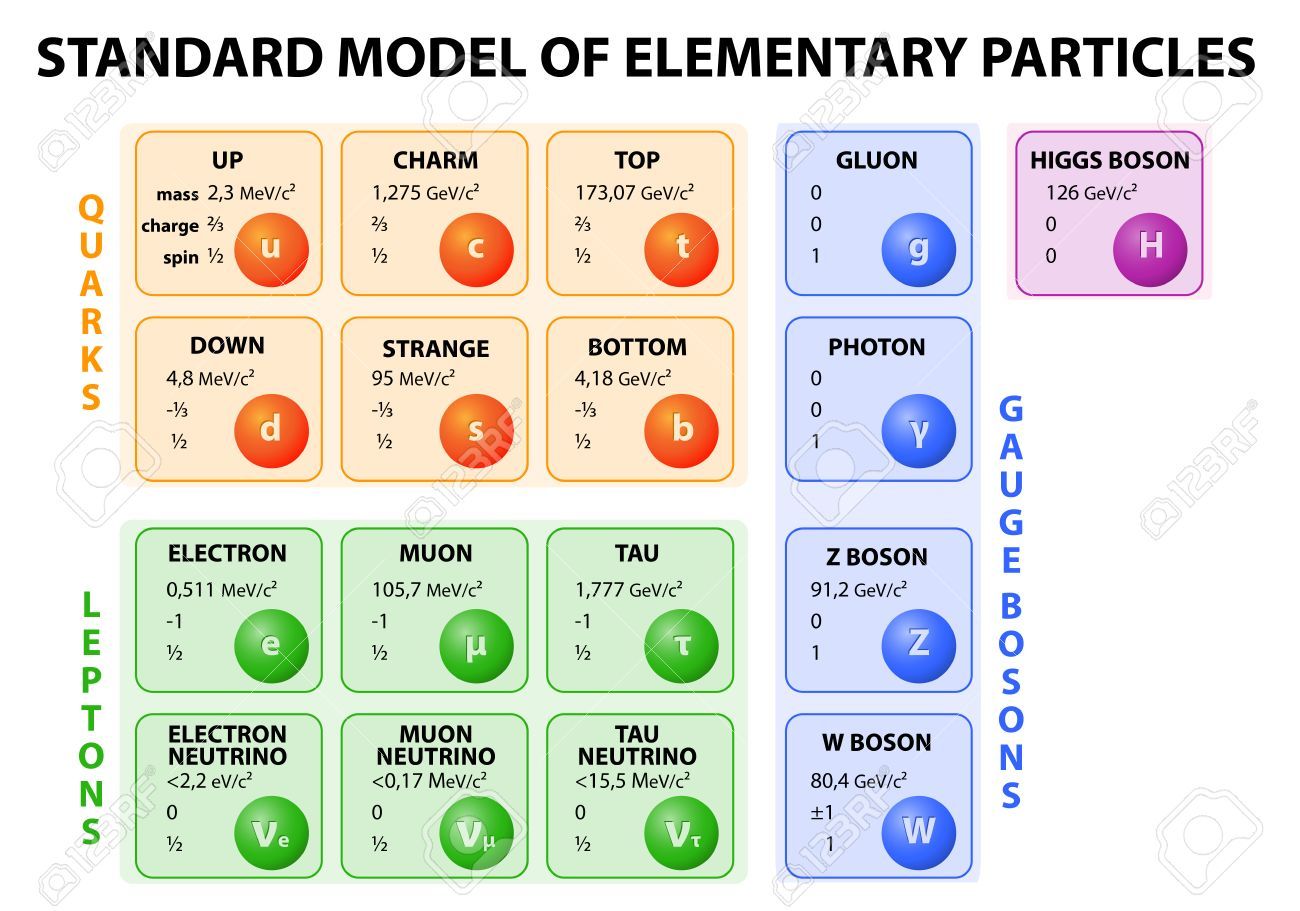
Definition of Quarks Quarks are fundamental particles that serve as the essential components of matter, specifically forming protons and neutrons, which constitute atomic nuclei. As elementary fermions with half-integer spin, quarks come in six distinct types, known as flavors: up, down, charm, strange, top, and bottom. Each flavor exhibits unique characteristics such as mass and […]

Read More →

What is the dispersive power of lens?

Definition of Dispersion in Optics Dispersion is a fundamental optical phenomenon where white light separates into its individual spectral colors upon passing through a medium. This occurs because different wavelengths of light refract, or bend, by varying amounts depending on the material they traverse. In the context of lenses, dispersion describes the lens’s ability to […]

Read More →

Does an atomic force microscope use/require a light source?

Definition of Atomic Force Microscopy (AFM) Atomic Force Microscopy (AFM) is a powerful analytical technique widely employed in nanotechnology and materials science to examine surfaces with atomic-scale precision. Unlike traditional optical microscopes, AFM provides detailed topographical maps by sensing forces between a sharp probe and the sample surface, enabling researchers to study materials that are […]

Read More →

When will graphene be used in computers?

Understanding Graphene and Its Unique Properties Graphene is a single atomic layer of carbon atoms arranged in a two-dimensional honeycomb lattice. This remarkable material boasts extraordinary characteristics that set it apart from conventional substances used in electronics. Notably, graphene exhibits mechanical strength approximately 200 times greater than steel, while retaining exceptional flexibility. Its electrical conductivity […]

Read More →