Why is graphene so light?

Definition of Graphene and Its Lightweight Nature Graphene is a single-atom-thick sheet composed of carbon atoms arranged in a two-dimensional honeycomb lattice. Since its groundbreaking isolation in 2004, this extraordinary material has attracted significant attention from scientists and engineers due to its unique combination of properties. One of the most remarkable features of graphene is […]

Read More →

The Curious Case of Trey Jamison Slauter: Physics Policy and Purpose

Definition and Overview The intriguing phenomenon surrounding Trey Jamison Slauter represents a unique blend of experimental physics, science policy, and philosophical inquiry into the purpose of scientific research. This multifaceted case captivates interest by bridging the gap between rigorous scientific investigation and the broader societal implications of such work. It challenges conventional boundaries and invites […]

Read More →

Why are there protons and neutrons in a nucleus?

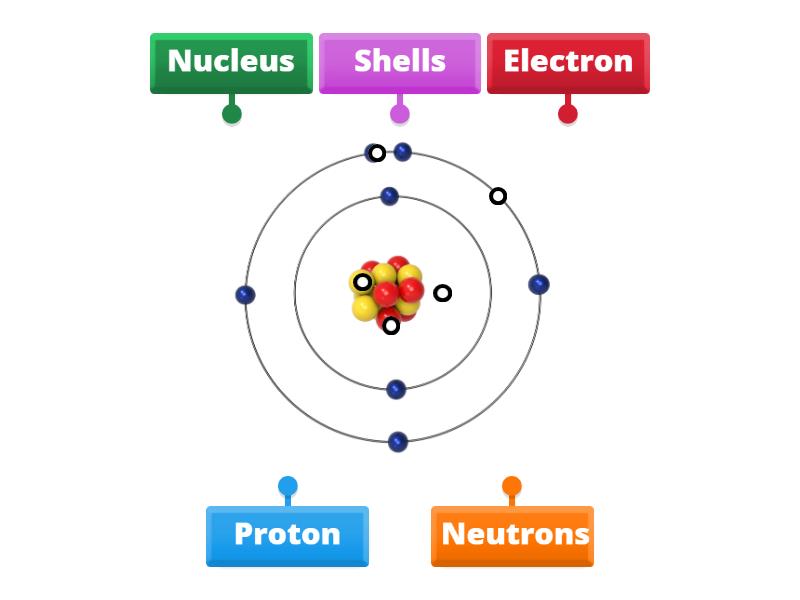
Definition of Atomic Nucleus and Nucleons The atomic nucleus is the dense, central core of an atom, primarily composed of two types of subatomic particles: protons and neutrons. Collectively referred to as nucleons, these particles form the foundation of atomic structure. Protons carry a positive electric charge, while neutrons are electrically neutral. Together, they create […]

Read More →

Notable Alumni of NIT Silchar: Where Are They Now?

Overview of NIT Silchar Alumni Impact The National Institute of Technology (NIT) Silchar, a distinguished engineering college in India, has consistently produced graduates who excel far beyond academic achievements. These alumni have ventured into diverse fields, making significant contributions across industries. This article highlights some of these notable individuals, examining their career trajectories and contemplating […]

Read More →

What is the importance of the 3 subatomic particles?

Definition of Subatomic Particles Subatomic particles are the fundamental constituents that form atoms, the basic units of matter. The three principal subatomic particles-protons, neutrons, and electrons-collectively establish the structure and properties of atoms, thereby shaping the material universe. Protons: Positively charged particles residing in the atomic nucleus, defining the element’s identity through their count. Neutrons: […]

Read More →

What do you need to be a medical device engineer?

Definition of Medical Device Engineering Medical device engineering is a multidisciplinary domain that merges principles from biology, medicine, and engineering to create devices aimed at improving patient health and saving lives. Professionals in this field are responsible for the design, development, testing, and maintenance of medical instruments and equipment that support diagnosis, treatment, and monitoring […]

Read More →

Why is it important to know about errors in measurement?

Definition of Measurement Errors Measurement errors refer to the deviations between the observed values obtained during an experiment and the true values of the quantities being measured. These inaccuracies are inherent in all scientific measurements and can significantly influence the reliability and validity of experimental results. Systematic Errors: These are consistent and repeatable inaccuracies caused […]

Read More →

How do gluons hold together quarks in a proton or neutron?

Definition of Quarks and Gluons Quarks and gluons are fundamental components within the atomic nucleus, playing essential roles in forming protons and neutrons, collectively known as baryons. These particles are central to the Standard Model of particle physics, which describes the fundamental forces and constituents of matter. Quarks: Elementary particles that come in six varieties […]

Read More →

Solid State Physics vs Condensed Matter Physics: Are They the Same?

Definition and Scope Solid state physics and condensed matter physics are closely related branches of physics that study the properties and behaviors of matter, yet they differ in scope and focus. Solid state physics primarily concentrates on the physical characteristics of solid materials, especially crystalline solids, examining their atomic arrangements, electronic structures, and thermal properties. […]

Read More →