What would a one-atom thick sheet of paper look like?

Definition of a One-Atom Thick Sheet A one-atom thick sheet refers to an ultra-thin layer of material that is only a single atom in thickness. This concept challenges traditional perceptions of thickness and material properties, pushing the boundaries of what constitutes a “sheet” or “paper.” Unlike conventional paper made from fibrous substances, a one-atom thick […]

Read More →

Bigger Buckyballs = Better Superconductors: Molecules Meet Magnetism

Understanding Superconductivity Superconductivity is a unique physical phenomenon where certain materials exhibit zero electrical resistance when cooled below a specific critical temperature. This allows electric current to flow without any energy loss, a property that defies classical electrical conduction theories. Since its initial discovery in 1911, superconductivity has captivated researchers, leading to extensive studies that […]

Read More →

What are the physics behind the Hadron Collider?

Overview of the Large Hadron Collider Located at CERN near Geneva, Switzerland, the Large Hadron Collider (LHC) stands as a monumental achievement in contemporary physics. This vast scientific instrument, encircling a tunnel approximately 27 kilometers (16.8 miles) in length, functions as a particle accelerator designed to propel protons and heavy ions to velocities nearing the […]

Read More →

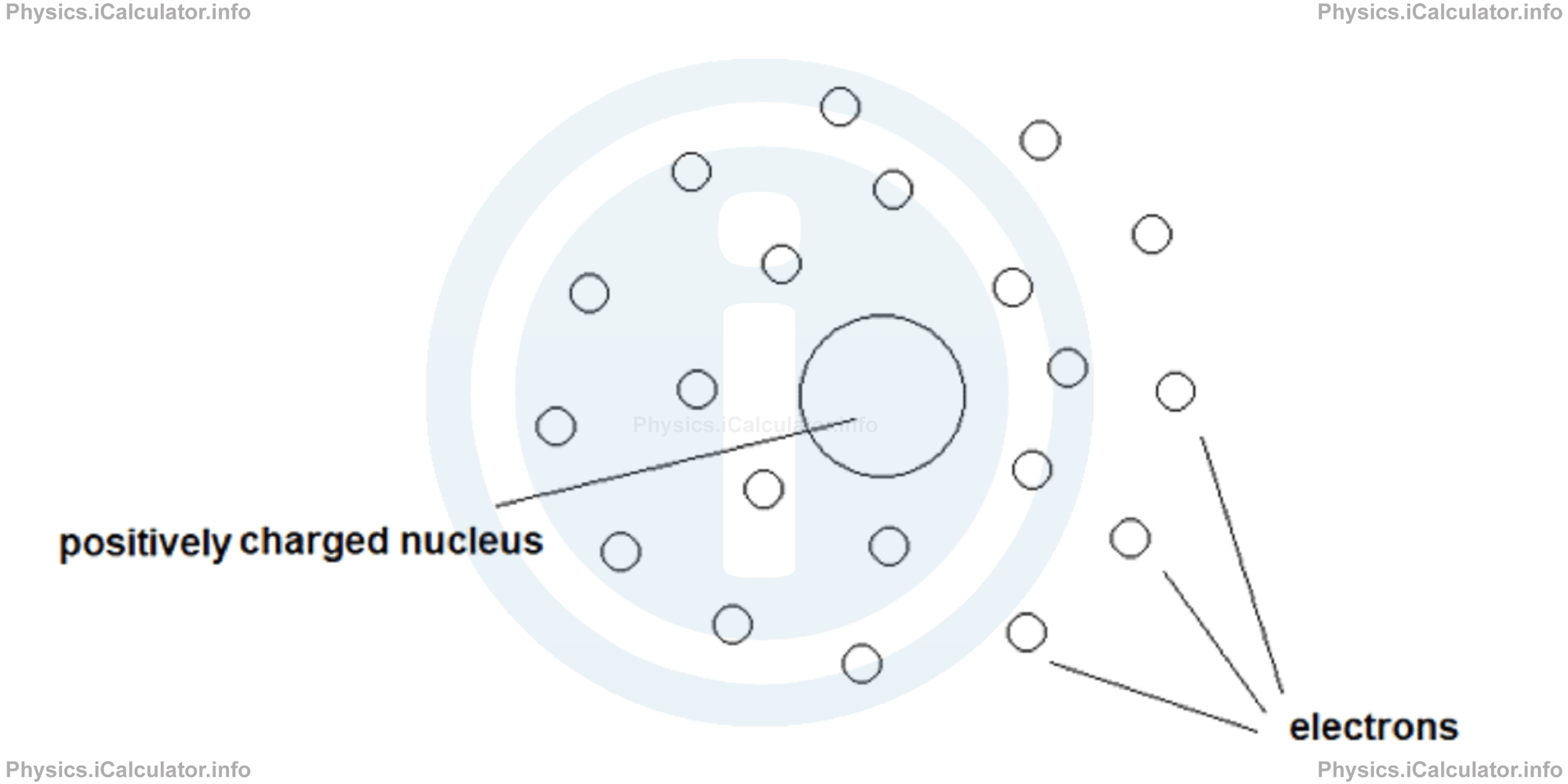
What are the building blocks of atoms?

Definition of Atomic Building Blocks The fundamental components that constitute atoms are far more intricate than the traditional view of indivisible units. Atoms themselves are composed of smaller particles, which form the basis of all matter in the universe. Understanding these building blocks requires delving into the subatomic realm, where particles such as protons, neutrons, […]

Read More →

What observations fall under condensed matter physics?

Definition of Condensed Matter Physics Condensed matter physics is a comprehensive branch of physics dedicated to studying the complex behaviors and properties of solids and liquids. This field investigates phenomena that arise from interactions at scales ranging from individual atoms to large, macroscopic systems. It encompasses a wide array of material states and transitions, providing […]

Read More →

What causes atoms to form molecules?

Definition of Atomic Bonding Atoms serve as the essential units of matter, and their tendency to combine into molecules forms a fundamental principle in both chemistry and physics. This phenomenon explains why atoms rarely exist in isolation and instead prefer to associate with one another, creating the diverse substances that compose the universe. Understanding why […]

Read More →

Carbon Sheets Keep Computers Cool: Heat Meets Its Match

Understanding Thermal Management in Electronics As the need for greater computational capabilities intensifies, managing heat generation in electronic devices becomes increasingly critical. The efficiency and durability of modern computing systems, especially in high-performance computing and data centers, depend heavily on advanced thermal regulation methods. Among emerging solutions, carbon-based sheets-particularly those utilizing graphene-have gained prominence for […]

Read More →

Why does the 5th state of matter matter?

Definition of the Fifth State of Matter Beyond the classical states of matter-solid, liquid, gas, and plasma-scientists have identified a fifth state known as the Bose-Einstein condensate (BEC). This state emerges under extreme conditions where particles behave collectively in ways that defy traditional physical laws. BEC represents a unique phase of matter formed when a […]

Read More →

Will quantum computing ever be available to consumers?

Definition of Quantum Computing Quantum computing represents a cutting-edge computational approach that harnesses the principles of quantum mechanics to process information. Unlike traditional computers that use bits as the smallest unit of data, quantum computers utilize quantum bits or qubits, which can exist simultaneously in multiple states due to superposition. This unique property enables quantum […]

Read More →

How does a knife cut on a molecular level?

Definition of Cutting with a Knife Cutting with a knife is a seemingly straightforward action that involves a complex interplay of physical forces and molecular interactions. This process entails the knife’s sharp edge applying force to a material, causing it to separate into parts. The phenomenon combines principles from physics, chemistry, and material science, revealing […]

Read More →