
Short Answer
Understanding Cosmic Rays and Photons
The universe is filled with a variety of energetic phenomena that spark curiosity and scientific investigation. Among these, cosmic rays and photons stand out as fundamental components of cosmic activity. A common question that arises is whether cosmic rays are photons. To clarify this, it is important to explore the definitions, properties, and roles of both cosmic rays and photons, as well as their interactions within the cosmos.
Definition of Cosmic Rays
Cosmic rays are highly energetic particles that travel through space, originating from diverse astrophysical sources. These sources include supernova explosions, active galactic nuclei, and even our own sun. Unlike electromagnetic radiation, cosmic rays are primarily composed of charged particles such as protons, atomic nuclei, and occasionally heavier ions and electrons. Their energies can reach extraordinarily high levels, often exceeding billions of electron volts, enabling them to interact with matter and magnetic fields as they journey across the universe.
Definition of Photons
Photons are the fundamental quanta of electromagnetic radiation, playing a crucial role in the transmission of energy across the electromagnetic spectrum. They are massless particles that travel at the speed of light in a vacuum and exhibit dual wave-particle characteristics, a cornerstone concept in quantum physics. Photons mediate electromagnetic forces and are essential in numerous natural and technological processes, including photosynthesis and optical communication.
Distinguishing Cosmic Rays from Photons
At the heart of the question lies a fundamental distinction between matter and energy. Cosmic rays are particles of matter, predominantly charged nuclei, whereas photons are pure energy quanta without rest mass. This difference is critical in understanding their nature and behavior. While cosmic rays can interact with photons during their propagation, they are not themselves photons. The production of cosmic rays often involves mechanisms where photons play a role, such as synchrotron radiation and pair production, but the two remain distinct entities.
Interactions Between Cosmic Rays and Photons
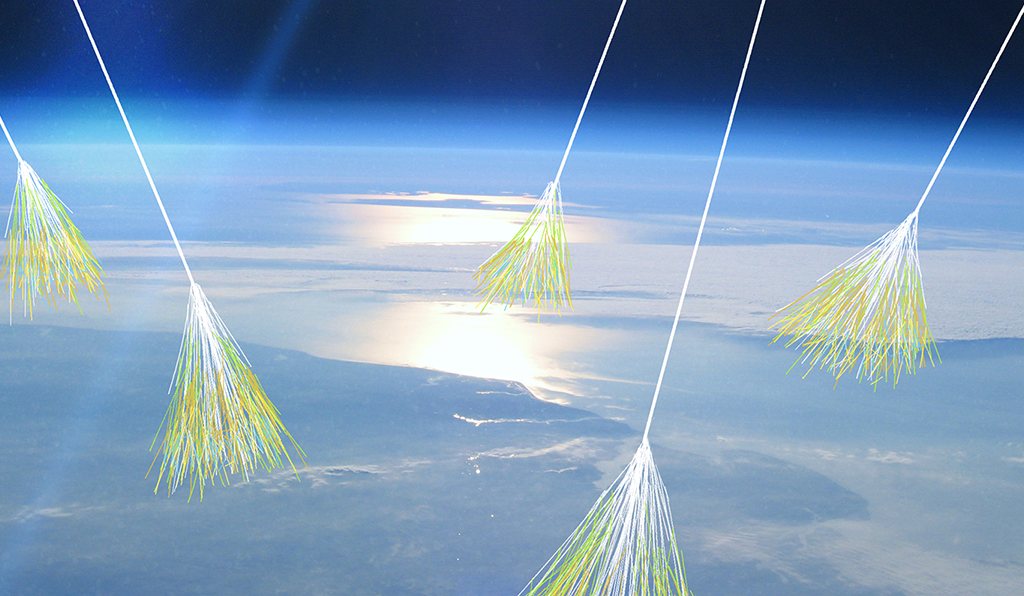
Cosmic rays and photons engage in complex interactions that influence cosmic phenomena. When cosmic rays collide with particles in the Earth’s atmosphere, they generate cascades of secondary particles, including gamma-ray photons. These interactions highlight the dynamic relationship between high-energy particles and electromagnetic radiation. Phenomena such as gamma-ray bursts exemplify the interplay between cosmic rays and photons, revealing the energetic processes shaping the universe.
Origins and Astrophysical Significance of Cosmic Rays
The sources of cosmic rays provide insight into the energetic events that sculpt the cosmos. Supernovae, neutron star mergers, and active galactic nuclei are among the primary astrophysical sites responsible for accelerating particles to cosmic ray energies. Studying cosmic rays offers a window into these violent processes, contributing to our understanding of cosmic evolution and the forces governing the universe.
Impact of Cosmic Rays on Earth and Technology
Cosmic rays continuously bombard the Earth, influencing both natural and technological systems. Their interactions with the atmosphere produce radiation showers detectable at the surface, which can affect electronic devices and pose risks to biological organisms. Research into cosmic rays spans multiple disciplines, including astrophysics and space weather forecasting, underscoring their importance in both scientific inquiry and practical applications.
Common Misconceptions About Cosmic Rays and Photons
Cosmic rays are a form of electromagnetic radiation.
Cosmic rays are charged particles, not electromagnetic waves or photons.
Photons have mass and behave like particles of matter.
Photons are massless energy quanta exhibiting wave-particle duality but do not possess rest mass.
Why Understanding the Difference Matters
Recognizing the distinction between cosmic rays and photons is essential for advancing our comprehension of astrophysical processes and cosmic phenomena. This knowledge aids in interpreting observations of high-energy events, understanding the mechanisms of particle acceleration, and assessing the effects of cosmic radiation on Earth. Ultimately, it enriches our grasp of the universe’s intricate design and the fundamental forces at work.
FAQ
What are cosmic rays?
Cosmic rays are highly energetic particles from space, primarily composed of protons and atomic nuclei.
What are photons?
Photons are massless particles that carry electromagnetic energy and travel at the speed of light.
Are cosmic rays photons?
No, cosmic rays are charged particles, while photons are massless energy quanta.


Leave a Reply