What is a qubit in quantum computing?

Definition of a Qubit A qubit, or quantum bit, is the fundamental unit of information in quantum computing, representing a significant departure from classical bits. Unlike classical bits that exist strictly as 0 or 1, qubits harness the principles of quantum mechanics to exist in multiple states simultaneously. This unique property enables quantum computers to […]

Read More →

Why is Google’s quantum supremacy over-hyped?

Definition of Quantum Supremacy Quantum supremacy denotes the milestone at which a quantum computer performs a computational task that is infeasible for classical computers to complete within a reasonable timeframe. This concept highlights a pivotal moment in computational history, where quantum processors demonstrate capabilities beyond the reach of even the most advanced classical supercomputers. Quantum […]

Read More →

How much does a particle accelerator cost?

Definition of Particle Accelerators Particle accelerators are sophisticated devices engineered to propel charged particles, such as electrons or protons, to extremely high velocities, often approaching the speed of light. These machines are fundamental tools in modern physics, enabling scientists to explore the fundamental components of matter and the forces governing the universe. Beyond pure research, […]

Read More →

What is the difference between optics and photonics?

Understanding Optics and Photonics In the fields of physics and engineering, the terms optics and photonics often spark debate due to their close relationship with light. Although both disciplines focus on the study and manipulation of light, they differ considerably in their approaches, applications, and technological implications. This article aims to clarify these distinctions, offering […]

Read More →

What is atomic spectroscopy?

Definition of Atomic Spectroscopy Atomic spectroscopy is a sophisticated analytical technique that explores the structure of atoms and identifies elemental composition by examining the interaction between electromagnetic radiation and matter. This method dissects the electromagnetic spectrum to detect the unique spectral signatures-often called atomic fingerprints-of different elements, providing a window into the microscopic world of […]

Read More →

How does the light tell us about the structure of atom?

Definition of Light-Matter Interaction in Atomic Structure The study of how light interacts with matter is fundamental to understanding the detailed composition and behavior of atoms. This interaction encompasses processes such as absorption, emission, and scattering of electromagnetic radiation, which collectively reveal critical information about the internal structure of atoms. By analyzing these phenomena, scientists […]

Read More →

Tiny Titans: Artificial Atoms That Supercharge Light

Definition of Artificial Atoms Artificial atoms are engineered nanoscale structures that mimic the discrete energy levels found in natural atoms. These constructs, often realized as quantum dots or similar semiconductor nanostructures, confine electrons and holes to create bound states known as excitons. Through advanced fabrication methods such as epitaxial growth, layers of semiconductor materials are […]

Read More →

What are the different types of quarks?

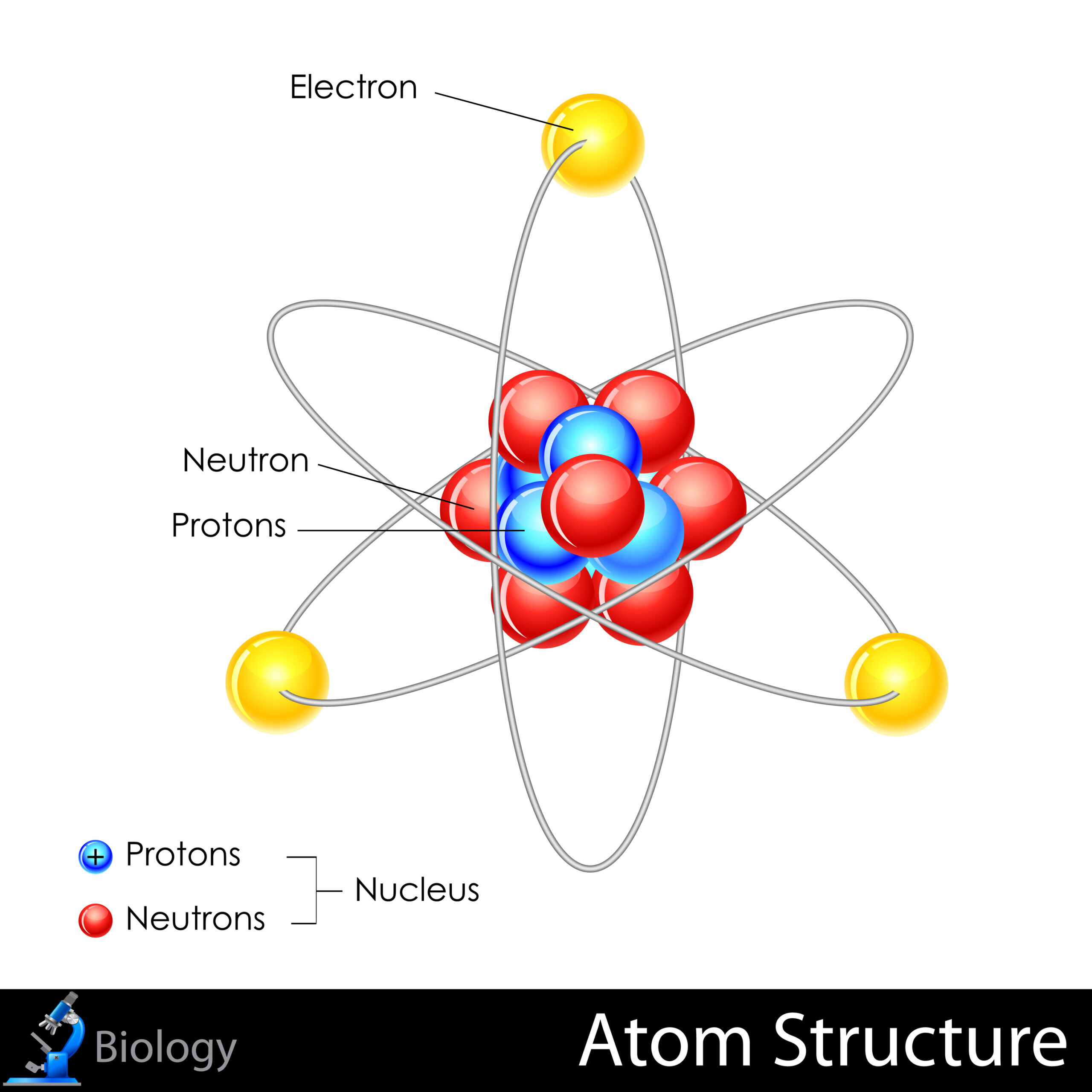
Definition of Quarks Quarks are elementary particles that serve as the fundamental building blocks of matter within the framework of particle physics. They are the essential constituents of protons and neutrons, which themselves form the nuclei of atoms found in all known elements. Quarks are never observed as free particles in nature; instead, they combine […]

Read More →

Can Crystals Be Flat? The Physics Behind 2D Materials

Definition of Two-Dimensional (2D) Materials Two-dimensional materials are crystalline solids characterized by their atomic-scale thickness, typically consisting of a single or few layers of atoms arranged in a planar structure. Unlike traditional crystals that extend their periodic atomic arrangement in three dimensions, 2D materials exhibit order primarily within a two-dimensional plane, resulting in unique physical […]

Read More →