
Short Answer
Definition of Particle Accelerator Miniaturization
Miniaturization refers to the process of scaling down complex technological systems into smaller, more efficient, and manageable forms. In the context of particle accelerators, it involves designing compact devices capable of accelerating charged particles-such as electrons and protons-to high energies within significantly reduced physical footprints compared to traditional large-scale accelerators.
- Particle Accelerators:
Machines that propel charged particles to near-light speeds, enabling collisions that reveal fundamental particles and forces. - Miniaturization:
The effort to reduce the size and complexity of these accelerators while maintaining or enhancing their performance.
Historical Context and Current Scale of Particle Accelerators
Conventional particle accelerators are typically vast and complex installations. For example, the Large Hadron Collider (LHC) at CERN spans approximately 27 kilometers (17 miles) in circumference, buried underground along the Franco-Swiss border. These colossal machines have been instrumental in advancing particle physics, including the discovery of the Higgs boson. However, their enormous size, high costs, and operational demands limit accessibility, especially for smaller research institutions and countries with limited resources.
Technological Foundations of Miniaturized Accelerators
Understanding the timeline for developing compact accelerators requires familiarity with the technologies involved. Traditional accelerators use electromagnetic fields to accelerate particles along extensive beamlines, necessitating large infrastructures. Emerging approaches leverage novel physics and materials to achieve acceleration in much smaller devices.
Laser Wakefield Acceleration (LWFA)
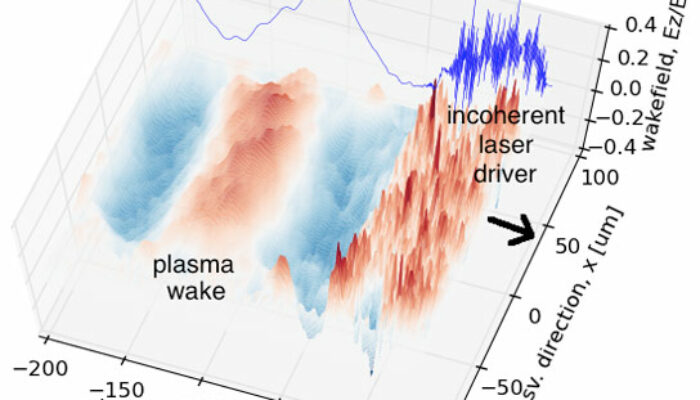
One of the most promising methods is laser wakefield acceleration, which uses intense laser pulses to generate plasma waves in a medium. Charged particles “surf” these plasma waves, gaining energy rapidly over very short distances. Laboratory experiments have demonstrated that LWFA can reach particle energies comparable to those of conventional accelerators but within centimeters rather than kilometers.
Dielectric Laser Acceleration (DLA)
Another innovative technique involves dielectric laser acceleration, where high-frequency electromagnetic fields are produced within thin dielectric materials to accelerate particles. Early experiments have shown that DLA can effectively accelerate electrons over short distances, and ongoing improvements in material science and engineering are expected to enhance its efficiency and power.
Mechanisms Behind Compact Particle Acceleration
Both LWFA and DLA rely on manipulating electromagnetic fields at very small scales to impart energy to charged particles. LWFA creates plasma waves by ionizing a gas with a laser, forming a wake that accelerates particles. DLA uses micro-structured dielectric materials to generate accelerating fields when illuminated by lasers, enabling precise control over particle acceleration in compact setups.
Mathematical Framework and Key Parameters
The acceleration gradient, which measures the energy gain per unit length, is a critical parameter in miniaturized accelerators. Conventional accelerators typically achieve gradients of 10-100 MV/m (megavolts per meter), whereas LWFA and DLA can reach gradients in the range of several GV/m (gigavolts per meter), enabling much shorter acceleration distances.
- Acceleration Gradient (E):
The electric field strength accelerating the particles, measured in volts per meter (V/m). - Particle Energy (E_p):
The kinetic energy gained by particles, often expressed in electronvolts (eV), giga-electronvolts (GeV), or tera-electronvolts (TeV). - Laser Intensity (I):
The power per unit area of the laser used, influencing the strength of plasma waves or electromagnetic fields.
Applications and Real-World Impact
Miniaturized particle accelerators hold transformative potential across various sectors:
- Medical Physics:
Compact accelerators can enable proton therapy for cancer treatment in smaller clinics, improving accessibility and reducing costs. - Materials Science:
Portable accelerators facilitate advanced materials analysis and testing without the need for large facilities. - Fundamental Research:
Smaller, affordable accelerators democratize particle physics research, allowing universities and developing countries to participate in cutting-edge experiments.
Challenges and Timeline for Development
Despite promising advances, several obstacles remain before compact accelerators become widely operational. These include ensuring laser precision, system reliability, long-term stability, and adherence to stringent safety and regulatory standards. Experts estimate that specialized compact accelerators could be functional within the next 10 years, particularly for medical and industrial uses, while broader adoption in fundamental research may take 20 to 30 years of continued development.
Market Demand and Technological Synergies
The growing need for accessible particle therapy and advanced research tools drives investment in miniaturization. Additionally, integrating artificial intelligence and machine learning into accelerator design and operation can optimize performance, enhance troubleshooting, and accelerate development timelines by enabling real-time system adjustments and predictive maintenance.
Common Misconceptions About Miniaturized Accelerators
Miniaturized accelerators will immediately replace large-scale facilities.
While compact accelerators offer many advantages, large facilities remain essential for high-energy physics experiments requiring extreme energies and luminosities.
Smaller accelerators are inherently less powerful.
Emerging technologies like LWFA and DLA can achieve comparable particle energies over much shorter distances, challenging traditional assumptions about size and power.
Significance of Miniaturized Particle Accelerators
The pursuit of compact particle accelerators represents a convergence of advanced physics, innovative engineering, and strategic planning. Achieving miniaturization will not only broaden access to powerful research tools but also revolutionize medical treatments and industrial processes. This progress promises to foster scientific inclusivity, accelerate discovery, and inspire future generations of physicists and engineers worldwide.
FAQ
What are miniaturized particle accelerators?
They are compact devices designed to accelerate charged particles efficiently, making advanced research tools more accessible.
What technologies are used in miniaturized accelerators?
Technologies such as Laser Wakefield Acceleration and Dielectric Laser Acceleration are key to achieving miniaturization.
What are the challenges in developing miniaturized accelerators?
Challenges include ensuring system reliability, long-term stability, and compliance with safety standards.






Leave a Reply