
Short Answer
Definition of Atomic Attraction
Atomic attraction refers to the fundamental forces that govern the interactions between atoms and molecules, driving them toward stable configurations. These forces are responsible for the cohesion of matter at the microscopic scale, influencing the structure and properties of all substances. At its core, atomic attraction encompasses the electromagnetic and nuclear forces that dictate how atoms bond and interact.
- Electromagnetic Force:
The attraction between positively charged protons in the nucleus and negatively charged electrons surrounding it. - Nuclear Force:
The strong interaction that holds protons and neutrons together within the atomic nucleus.
Fundamental Forces Behind Atomic Interactions
Atoms consist of protons, neutrons, and electrons, each contributing to the forces that define atomic behavior. The electromagnetic force, particularly, plays a crucial role in atomic attraction by mediating the interactions between charged particles. Coulomb’s Law mathematically describes this force, explaining how opposite charges attract and like charges repel, thereby stabilizing atoms and molecules.
Types of Atomic Bonds and Their Characteristics
Atomic attraction manifests in various bonding types, each with distinct properties and implications for material behavior:
- Ionic Bonds:
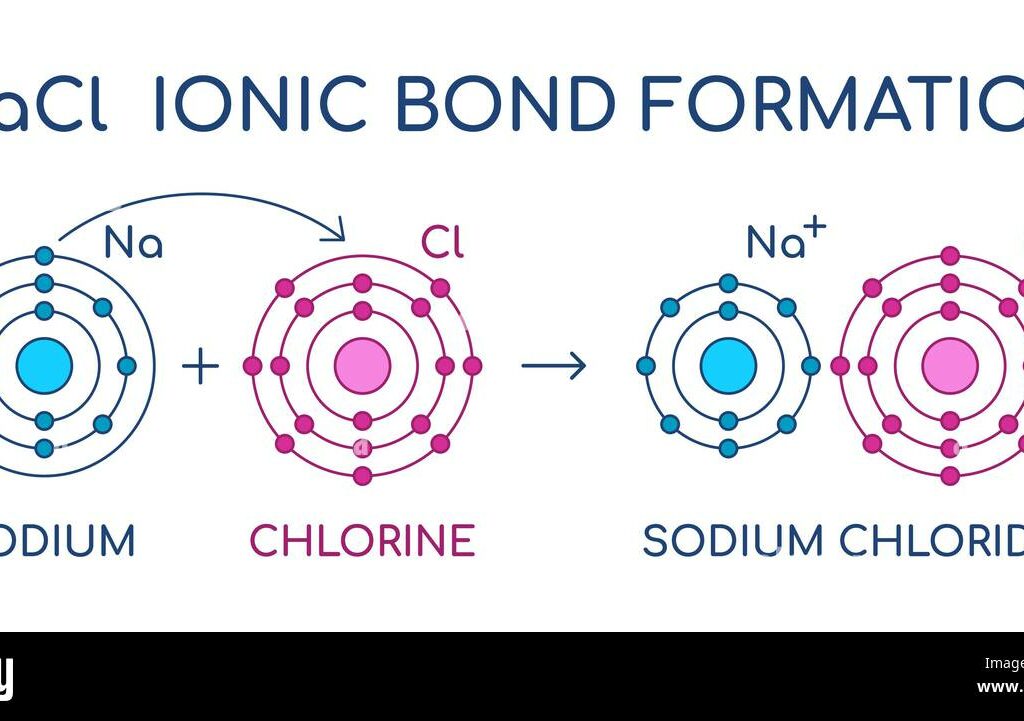
Formed through the transfer of electrons between atoms, resulting in oppositely charged ions that attract each other. For example, sodium chloride (NaCl) forms when sodium donates an electron to chlorine, creating Na+ and Cl– ions. This electrostatic attraction leads to the formation of crystalline solids with high melting and boiling points. - Covalent Bonds:
Occur when atoms share electrons, creating localized bonds. Water (H2O) is a classic example, where shared electrons produce molecules with specific reactivity and volatility. - Metallic Bonds:
Characterized by a “sea of electrons” that are delocalized across metal atoms, enabling properties such as electrical conductivity, malleability, and ductility.
Quantum Mechanical Perspective on Atomic Attraction
At the quantum level, atomic attraction transcends classical descriptions. Electrons do not orbit the nucleus in fixed paths but exist within probabilistic regions called electron clouds. When atoms approach each other, these clouds overlap, leading to electron-electron repulsion known as shielding. This interplay of forces determines whether atoms will bond, share electrons, or remain separate, highlighting the complexity of atomic interactions beyond simple attraction and repulsion.
Intermolecular Forces and Their Role
Beyond atomic bonds, intermolecular forces influence the physical properties of substances. These include:
- Hydrogen Bonding:
A strong dipole-dipole interaction, especially significant in water, contributing to its high specific heat and surface tension. - Dipole-Dipole Interactions:
Attractions between polar molecules that affect boiling points and solubility. - London Dispersion Forces:
Weak, temporary attractions arising from momentary dipoles in molecules, important in nonpolar substances.
Atomic Attraction and Material Properties
The nature of atomic attraction directly influences the physical characteristics of materials. For instance, ionic compounds like NaCl exhibit high melting points due to strong electrostatic forces, while covalent compounds may have lower melting points and different reactivities. Metallic bonding imparts metals with unique mechanical and electrical properties. Additionally, atomic attraction underlies phase transitions; as temperature rises, increased atomic vibrations can overcome these forces, causing solids to melt or liquids to vaporize.
Thermal Effects and Phase Changes
Temperature changes affect atomic attraction by altering atomic kinetic energy. Increased heat causes atoms to vibrate more vigorously, which can weaken the attractive forces holding them together. This process explains phase transitions such as melting and boiling. For example, when ice melts, the structured hydrogen bonds between water molecules break down, demonstrating the dynamic balance of atomic and intermolecular forces.
Thought Experiment: Experiencing Atomic Forces
Imagine if humans could directly sense the attractions and repulsions between atoms and molecules. Such an ability would revolutionize our understanding of material properties and could transform fields like materials science by providing intuitive insights into atomic-scale phenomena. This concept challenges us to bridge the gap between macroscopic perception and the quantum mechanical realities governing matter.
Common Misconceptions About Atomic Attraction
Electrons orbit the nucleus in fixed paths.
Electrons exist in probabilistic clouds rather than defined orbits, as described by quantum mechanics.
Atomic attraction is solely due to gravitational forces.
Gravitational forces are negligible at the atomic scale; electromagnetic forces primarily govern atomic attraction.
Significance of Atomic Attraction
Understanding atomic attraction is vital for comprehending the structure and behavior of matter. It underpins chemical bonding, material properties, and phase changes, influencing fields from chemistry and physics to materials engineering and biology. Insights into atomic forces enable advancements in technology, such as the design of new materials and nanotechnology, highlighting the profound impact of these fundamental interactions on science and everyday life.
FAQ
What is atomic attraction?
Atomic attraction refers to the fundamental forces that govern the interactions between atoms and molecules.
What are the types of atomic bonds?
The main types of atomic bonds are ionic, covalent, and metallic bonds, each with distinct characteristics.
How does temperature affect atomic attraction?
Increased temperature raises atomic kinetic energy, potentially weakening the attractive forces between atoms.






Leave a Reply