
Short Answer
Definition of Qubits
A qubit, short for “quantum bit,” is the fundamental unit of quantum information, serving as the quantum counterpart to the classical bit. Unlike classical bits, which exist strictly as either 0 or 1, qubits operate under the principles of quantum mechanics, enabling them to exist in multiple states simultaneously. This unique characteristic distinguishes qubits from classical bits and classical analog systems, positioning them as the cornerstone of quantum computing.
- Classical Bit:
A binary unit that can only be in one of two states: 0 or 1. - Qubit:
A quantum unit capable of existing in a superposition of both 0 and 1 states simultaneously.
Fundamental Quantum Properties of Qubits
Superposition
Superposition is a core quantum principle allowing a qubit to be in a linear combination of the basis states |0⟩ and |1⟩ at the same time. This means a qubit can represent multiple possibilities concurrently, unlike a classical bit which is restricted to a single definite state. The computational power of quantum systems grows exponentially with the number of qubits due to this property, enabling quantum computers to process vast amounts of information simultaneously.
Entanglement
Entanglement is a uniquely quantum phenomenon where two or more qubits become interconnected such that the state of one instantly influences the state of another, regardless of the distance separating them. This non-local correlation defies classical explanation and is fundamental to quantum communication protocols, quantum cryptography, and quantum teleportation.
Coherence and Decoherence
Coherence refers to the maintenance of quantum states over time, which is essential for reliable quantum computation. However, qubits are susceptible to decoherence, where interactions with the environment cause the loss of quantum information. This fragility necessitates sophisticated quantum error correction techniques to preserve the integrity of quantum data.
Physical Implementations of Qubits
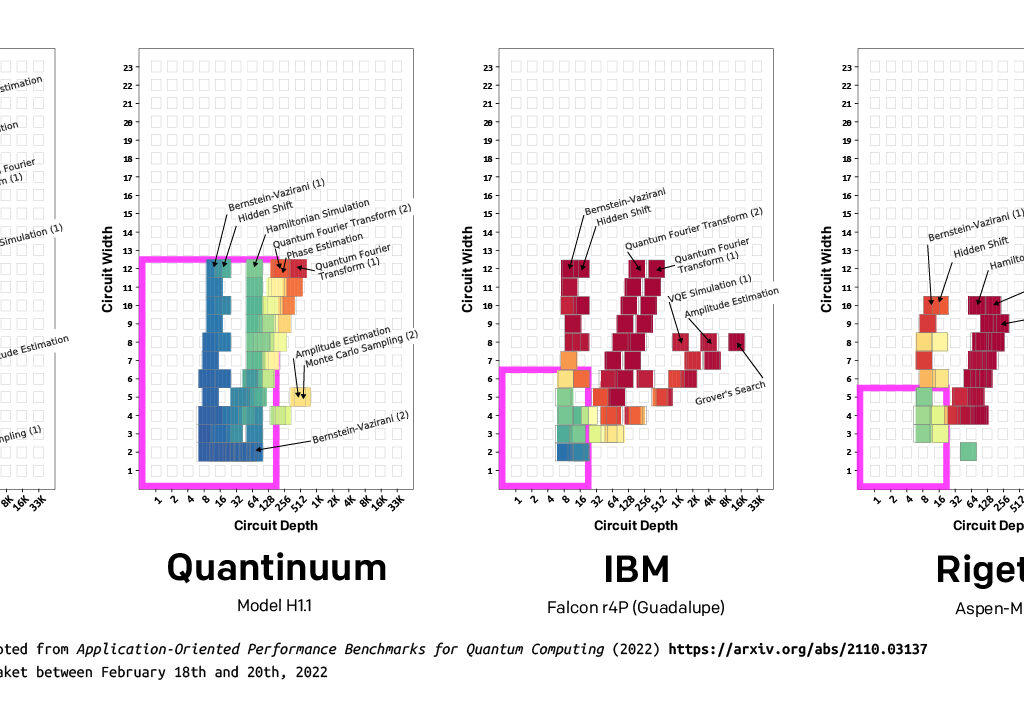
Qubits can be realized through various physical systems, each with distinct advantages and challenges. These implementations highlight the diversity and complexity of qubit technology beyond classical analogies.
- Superconducting Qubits:
Utilize superconducting circuits and Josephson junctions operating at cryogenic temperatures. They enable rapid quantum gate operations and are prominent in many current quantum computing platforms. - Trapped Ion Qubits:
Employ electromagnetic fields to trap charged ions, with quantum states manipulated via laser pulses. Known for high precision and long coherence times. - Topological Qubits:
Based on exotic quasiparticles that are less prone to decoherence, offering potential for more stable quantum computation. - Photonic Qubits:
Use photons as carriers of quantum information, advantageous for quantum communication due to their speed and low interaction with the environment.
Measurement and Its Impact on Qubits
Measurement in quantum mechanics fundamentally differs from classical observation. Observing a qubit causes its superposition to collapse into one of the definite basis states, either 0 or 1, irreversibly altering its state. This contrasts with classical bits, which can be measured without changing their value. The probabilistic nature of quantum measurement introduces inherent uncertainty and challenges in quantum computation and information retrieval.
Quantum Error Correction
Due to the delicate nature of qubits and their susceptibility to decoherence and noise, quantum error correction is vital. Unlike classical error correction, which deals with bit flips, quantum error correction must preserve superposition and entanglement while correcting errors. This requires complex encoding schemes and redundancy to maintain quantum coherence over computational processes.
Quantum Supremacy and Quantum Advantage
These concepts define milestones in quantum computing capabilities:
- Quantum Supremacy:
The theoretical point at which a quantum computer can perform a task that is infeasible for any classical computer within a reasonable timeframe. - Quantum Advantage:
Practical scenarios where quantum computers outperform classical counterparts on specific problems, such as optimization, simulation, or cryptography.
These distinctions emphasize the transformative potential of qubits and their computational power beyond classical analogies.
Common Misconceptions About Qubits
Qubits are just like classical bits but with more states.
Qubits fundamentally differ due to superposition and entanglement, properties with no classical equivalent.
Measuring a qubit is the same as reading a classical bit.
Measurement collapses a qubit’s state, altering it irreversibly, unlike classical bits which can be read nondestructively.
Qubits are immune to errors.
Qubits are highly sensitive to environmental noise and require complex error correction methods.
Significance of Qubits in Modern Technology
Qubits represent a paradigm shift in computation, enabling capabilities unattainable by classical systems. Their unique quantum properties facilitate breakthroughs in cryptography, optimization, material science simulations, and artificial intelligence. As quantum technologies mature, qubits will play a pivotal role in advancing scientific research, secure communication, and solving complex problems across various industries.
FAQ
What is a qubit?
A qubit is the quantum equivalent of a classical bit, capable of existing in multiple states simultaneously due to quantum superposition.
How does qubit measurement differ from classical bit measurement?
Measuring a qubit collapses its superposition into a definite state, whereas classical bits can be measured without changing their state.
What are the main quantum properties of qubits?
Superposition, entanglement, and coherence are key properties that enable qubits to perform complex quantum computations.
Why is quantum error correction necessary?
Qubits are fragile and prone to errors from environmental noise, so quantum error correction protects quantum information during processing.
What physical systems are used to implement qubits?
Common implementations include superconducting circuits, trapped ions, topological systems, and photonic qubits.






Leave a Reply