
Short Answer
Understanding Photonic and Quantum Computing
In the evolving realm of computational technology, a fascinating debate centers on the comparative capabilities of photonic computers versus quantum computers. Both technologies emerge from the foundations of classical computing but diverge significantly in their operational principles and prospective uses. This article delves into whether photonic computing can outperform quantum computing in terms of speed and efficiency.
Defining Photonic and Quantum Computing
Photonic Computing:
This approach utilizes photons, the elementary particles of light, to encode and process information. Photons travel at the speed of light and are less prone to environmental disturbances, offering potential advantages in speed and stability.
Quantum Computing:
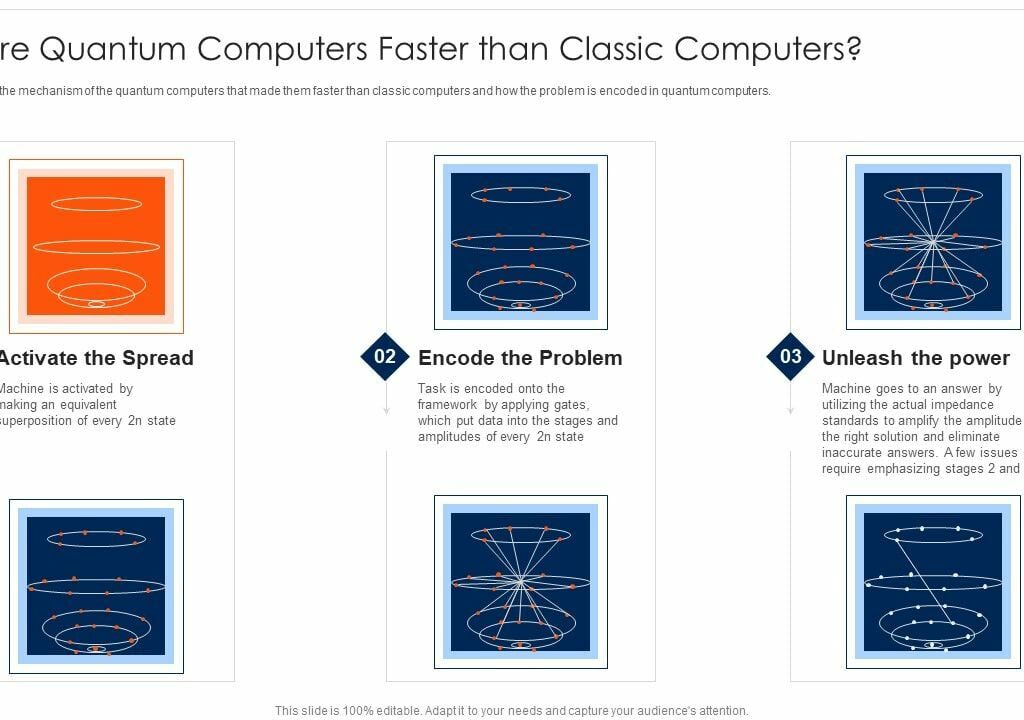
Quantum computers operate using qubits, which exploit quantum phenomena such as superposition and entanglement. Unlike classical bits that represent either 0 or 1, qubits can exist in multiple states simultaneously, enabling exponential computational power for certain complex problems.
Mechanisms Behind Each Technology
Quantum computing relies on the unique properties of qubits. Superposition allows qubits to represent multiple states at once, while entanglement links qubits in ways that classical bits cannot replicate. These features enable quantum computers to tackle problems that are infeasible for classical systems, such as factoring large numbers or simulating molecular interactions.
Photonic computing harnesses the speed and robustness of light particles. Photons can transmit data at unparalleled speeds and are less affected by noise and decoherence, common issues in quantum systems. Additionally, photonic systems can process multiple data streams simultaneously through parallelism, enhancing computational throughput.
Comparative Performance and Speed
Photonic computers demonstrate remarkable speed due to the intrinsic velocity of photons and their ability to handle parallel data streams. This allows them to perform certain computations much faster than traditional electronic systems, especially in tasks involving real-time data processing and high-bandwidth communication.
Quantum computers, while potentially slower in raw data transmission, excel in solving specific classes of problems that scale exponentially with size. Their quantum algorithms can outperform classical and photonic methods in areas like cryptography, optimization, and quantum simulations.
Applications and Use Cases
- Photonic Computing Applications:
Ideal for image processing, telecommunications, and some artificial intelligence tasks that benefit from rapid data throughput and parallel processing. - Quantum Computing Applications:
Suited for complex problem-solving such as integer factorization, database searching, and modeling quantum systems, where classical and photonic approaches face limitations.
Integration and Future Prospects
Rather than viewing photonic and quantum computing as competitors, their future may lie in integration. Hybrid systems combining photonic components with quantum architectures could leverage the high-speed data transfer of photons alongside the computational advantages of qubits. Such synergy promises advancements in secure communications, optimization challenges, and pharmaceutical research.
Common Misconceptions
Photonic computers will completely replace quantum computers.
Both technologies have distinct strengths and are likely to coexist, complementing each other in various applications.
Quantum computers are universally faster than photonic systems.
Quantum computers excel in specific problem domains, while photonic computers offer superior speed in data transmission and parallel processing tasks.
Significance in Modern Computing
The exploration of photonic and quantum computing represents a pivotal chapter in the evolution of technology. Their development could revolutionize fields ranging from secure data transmission to complex scientific simulations. Understanding their unique capabilities and potential collaboration is essential for driving innovation and overcoming current computational limitations.
Conclusion: A Collaborative Future
The question of whether photonic computers can outpace quantum computers in speed reveals a complex landscape of technological possibilities. Both paradigms possess unique advantages and challenges, suggesting that the future of computing may not be dominated by one but enriched by the coexistence and integration of both. This dynamic interplay holds the promise of ushering in a new era of computational power, transcending traditional boundaries and redefining what is achievable in science and technology.
FAQ
What are the main differences between photonic and quantum computers?
Photonic computers use photons to process information, allowing for high-speed data transmission and parallel processing, while quantum computers utilize qubits for exponential computational power in specific problem domains.
Can photonic computers outperform quantum computers?
Photonic computers may excel in speed for data transmission and real-time processing, but quantum computers are superior for solving complex problems involving large datasets.






Leave a Reply