
Short Answer
Definition of the Higgs Boson and Its Role in Particle Physics
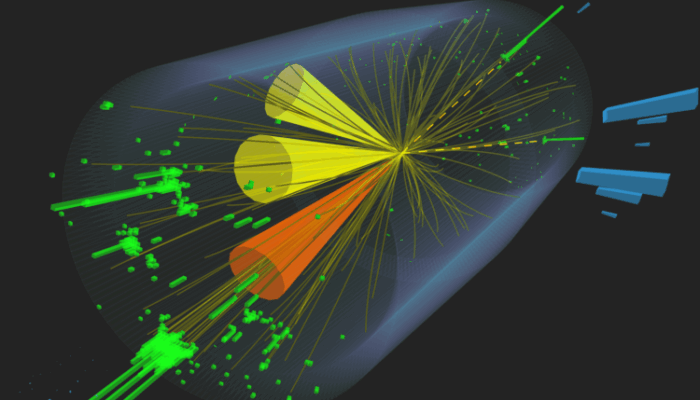
The Higgs boson is a fundamental particle within the Standard Model of particle physics, crucial for explaining how other particles acquire mass. It emerges from the Higgs field, an omnipresent quantum field that interacts with particles, imparting mass through this interaction. This particle is elementary, meaning it is not composed of smaller constituents, and its discovery marked a significant milestone in understanding the universe’s fundamental structure.
The Standard Model: Framework for Fundamental Particles
The Standard Model is a comprehensive theoretical framework that describes three of the four fundamental forces-electromagnetic, weak, and strong interactions-and categorizes all known elementary particles. These particles include:
- Quarks:
Building blocks of protons and neutrons, possessing properties like flavor and color charge. - Leptons:
A family of particles including electrons and neutrinos, fundamental constituents of matter. - Gauge Bosons:
Force carriers such as photons, W and Z bosons, and gluons. - Higgs Boson:
The particle associated with the Higgs field, responsible for mass generation.
This model underpins much of modern physics, explaining particle interactions and the behavior of matter at the smallest scales.
Understanding Particle Size and Elementary Nature
In particle physics, the concept of “smallest” particle is nuanced. The Higgs boson is classified as elementary because it lacks internal structure, similar to quarks and leptons. However, these particles differ in their intrinsic properties and interactions:
- Quarks and Leptons:
Exhibit diverse characteristics such as flavor types and charges, making them fundamental yet distinct. - Higgs Boson:
Unique in its role and properties, particularly its interaction with the Higgs field and its fleeting existence.
Thus, while the Higgs boson is elementary, it is not necessarily the “smallest” in a conventional sense, as size is not a straightforward attribute at quantum scales.
Lifetime and Observability of the Higgs Boson
The Higgs boson is characterized by an extremely brief lifespan, decaying almost instantaneously into other particles after its creation in high-energy environments like the Large Hadron Collider (LHC). This ephemeral nature means it is rarely found naturally and must be inferred through its decay products and interactions, posing challenges for direct observation and study.
Beyond the Standard Model: Hypothetical Particles and Theories
Current physics research explores particles and concepts that extend beyond the Standard Model, suggesting that the Higgs boson may not be the ultimate fundamental particle:
- Supersymmetry (SUSY):
Proposes a symmetry linking known particles to heavier “superpartners,” potentially revealing new fundamental particles. - Dark Matter Candidates:
Hypothetical particles that could explain the unseen mass in the universe, undetectable by current instruments. - String Theory:
Suggests that particles are not point-like but rather one-dimensional vibrating strings, implying substructures beneath the Standard Model particles.
These theories indicate a deeper layer of complexity, where the Higgs boson is one piece of a much larger puzzle.
Quantum Mechanics and the Challenge of Defining “Smallest”
Quantum mechanics introduces fundamental uncertainties and fluctuations that complicate the notion of particle size. The vacuum state and quantum fluctuations imply that particles, including the Higgs boson, exist within a probabilistic framework rather than as fixed, discrete entities. This challenges classical ideas of size and structure, suggesting that the concept of a “smallest particle” may be inherently limited or even misleading.
Significance of the Higgs Boson in Modern Physics
The discovery and study of the Higgs boson have been pivotal in confirming the mechanism by which particles gain mass, a cornerstone of the Standard Model. Its existence validates key theoretical predictions and enhances our understanding of fundamental forces and matter. Despite its importance, the Higgs boson’s status as the smallest or most fundamental particle remains open to interpretation and ongoing research.
Summary and Future Perspectives
While the Higgs boson is an essential elementary particle that deepens our grasp of mass and particle interactions, it is not definitively the smallest particle known. Advances in experimental physics and theoretical models continue to probe the subatomic world, potentially uncovering new particles and principles. The quest to fully comprehend the universe’s fundamental constituents is ongoing, reflecting the dynamic and evolving nature of scientific inquiry.
FAQ
What is the Higgs boson?
The Higgs boson is a fundamental particle in the Standard Model of particle physics that is responsible for giving mass to other particles through its interaction with the Higgs field.
Is the Higgs boson the smallest particle?
While the Higgs boson is classified as an elementary particle, the concept of the ‘smallest’ particle is complex and may not apply directly at quantum scales.
What is the significance of the Higgs boson?
The discovery of the Higgs boson confirmed key aspects of the Standard Model and enhanced our understanding of the fundamental forces and mass in the universe.






Leave a Reply