
Short Answer
Definition of Atomic Bonding in Elements
Atomic bonding refers to the forces that connect atoms within a substance, whether in compounds or pure elements. In chemistry, understanding whether atoms within an element are chemically bonded is essential for grasping the element’s structure and properties. This concept explores how atoms interact and combine, influencing the physical and chemical characteristics of the element.
Fundamental Atomic Structure
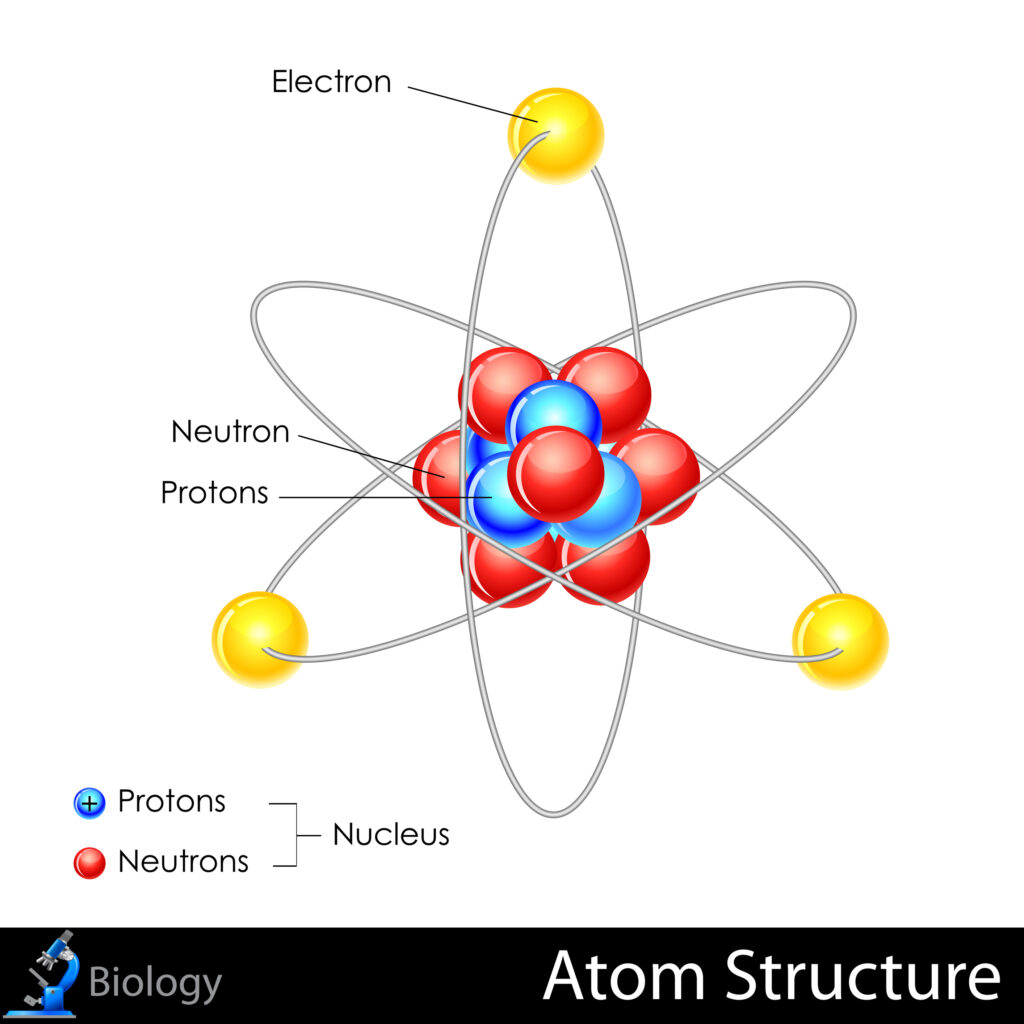
Atoms, the smallest units of matter, consist of three main subatomic particles: protons, neutrons, and electrons. The nucleus, containing protons and neutrons, is surrounded by electrons in defined regions called electron clouds. This atomic configuration is crucial for determining how atoms bond with one another. For example, metals exhibit a distinctive bonding style where valence electrons are free to move, creating a “sea of electrons” that imparts unique properties such as electrical conductivity and malleability.
Types of Atomic Bonds Within Elements
Covalent Bonds in Diatomic Elements
Some elements naturally exist as molecules composed of two atoms bonded together. Oxygen (O2) and nitrogen (N2) are prime examples, where atoms share electrons through covalent bonds to achieve stable electron configurations. This intramolecular bonding confirms that atoms within these elemental molecules are chemically connected.
Metallic Bonding in Metals
In metallic elements, atoms are arranged in a crystalline lattice where valence electrons are delocalized and free to move throughout the structure. This metallic bonding results from the electrostatic attraction between positively charged metal ions and the surrounding electron cloud. Such bonding accounts for metals’ characteristic strength, electrical conductivity, and ability to be deformed without breaking.
Allotropes and Variations in Bonding
Many elements can exist in different structural forms called allotropes, which differ in atomic bonding and arrangement. Carbon is a notable example, with allotropes such as diamond, graphite, and graphene:
- Diamond:
Each carbon atom forms four strong covalent bonds in a three-dimensional tetrahedral network, resulting in exceptional hardness. - Graphite:
Carbon atoms bond in planar layers with weaker forces between layers, allowing them to slide and provide lubricating properties. - Graphene:
A single layer of carbon atoms arranged in a hexagonal lattice, exhibiting remarkable electrical and mechanical properties.
These variations illustrate how differences in atomic bonding within the same element can lead to vastly different material characteristics.
Quantum Mechanical Perspective on Atomic Bonding
Quantum mechanics offers a detailed framework for understanding chemical bonds by describing electron behavior in terms of quantum states. Electrons occupy orbitals with specific energies, and bonding occurs through the overlap of these electron clouds, either by sharing or transferring electrons. The quantum nature of electrons determines bond strength, type, and stability, providing a fundamental explanation for the diversity of atomic interactions within elements.
Significance of Atomic Bonding in Science and Technology
Grasping how atoms bond within elements is vital across multiple scientific fields. The properties of materials, from metals to biological molecules, depend heavily on atomic bonding:
- Materials Science:
Bonding influences mechanical strength, conductivity, and reactivity of materials. - Biology:
Covalent bonds in organic molecules underpin the complexity of life’s chemistry. - Chemistry:
Understanding bonding guides the synthesis and behavior of compounds.
Thus, atomic bonding is foundational to innovations in engineering, medicine, and environmental science.
Common Misunderstandings About Atomic Bonding in Elements
- Misconception: Atoms in all elements are always bonded in the same way.
Correction: Bonding varies widely depending on the element and its physical state, ranging from metallic bonds to covalent bonds in diatomic molecules. - Misconception: Gaseous elements do not have bonded atoms.
Correction: Many gaseous elements, such as oxygen and nitrogen, exist as bonded diatomic molecules.
Practical Examples of Atomic Bonding in Elements
Real-world instances of atomic bonding within elements include:
- Oxygen Gas (O2): Two oxygen atoms share electrons via a double covalent bond, enabling respiration and combustion processes.
- Metallic Copper: Copper atoms form a lattice with delocalized electrons, making it an excellent conductor used in electrical wiring.
- Diamond: Carbon atoms bonded tetrahedrally create one of the hardest known materials, used in cutting tools and jewelry.
Conclusion: The Complexity and Importance of Atomic Bonds in Elements
Atoms within elements are indeed chemically bonded, but the nature of these bonds varies significantly depending on the element’s type and structure. From the delocalized electrons in metals to the covalent bonds in diatomic gases and the diverse bonding in allotropes, atomic interactions define the physical and chemical properties of matter. Continued research into atomic bonding deepens our understanding of material science and the fundamental nature of matter, highlighting the essential role of these bonds in both natural phenomena and technological advancements.
FAQ
What types of bonds exist in elements?
Elements can have covalent, metallic, and ionic bonds, depending on their structure and type.
Do all atoms in an element bond in the same way?
No, bonding varies widely depending on the element and its physical state.






Leave a Reply