
Short Answer
Understanding Aerosols and Their Climatic Role
Aerosols are minute particles or droplets suspended in the atmosphere, originating from both human activities and natural sources. Their presence in the air influences Earth’s climate system through complex interactions with solar radiation and cloud formation processes. These particles can either scatter or absorb sunlight, thereby affecting the planet’s energy balance and temperature regulation.
- Anthropogenic Sources:
Emissions from combustion engines, industrial processes, and agricultural activities release various aerosols into the atmosphere. - Natural Sources:
Volcanic eruptions, sea spray, and dust storms contribute naturally occurring aerosols.
Mechanisms of Aerosol Influence on Climate
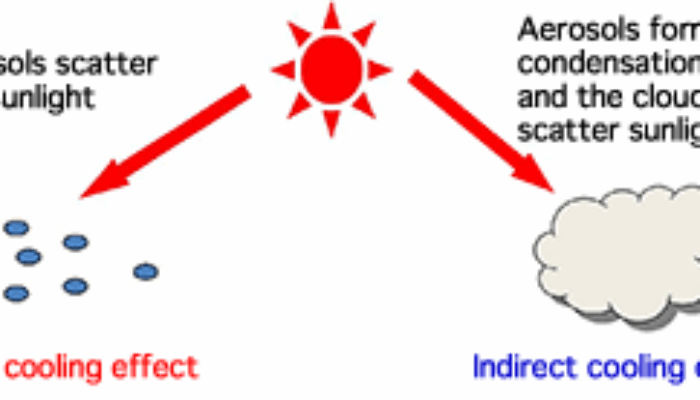
Aerosols impact climate primarily by modifying the way sunlight interacts with the atmosphere and clouds. They can directly scatter sunlight back into space, producing a cooling effect, or absorb solar energy, which can lead to localized warming. Additionally, aerosols serve as cloud condensation nuclei, altering cloud properties such as reflectivity (albedo) and lifetime, which further influences Earth’s radiative balance.
Complexities in Assessing Aerosol Effects
The climatic influence of aerosols is challenging to quantify due to their heterogeneous nature, uneven spatial distribution, and temporal variability. Unlike greenhouse gases that uniformly trap heat, aerosols exert regionally and seasonally variable effects. This variability complicates efforts to determine their net impact on global climate, necessitating sophisticated observational and modeling approaches.
Reevaluating Aerosol Cooling Potential
Recent scientific investigations indicate that the previously assumed cooling effect of aerosols may have been overestimated. Earlier models suggested that aerosols partially offset warming caused by greenhouse gases, creating an illusion of climate stability. However, with improved data integration and refined climate simulations, it appears that aerosols’ net cooling influence is less significant than once thought. This insight prompts a reassessment of climate sensitivity-the degree to which global temperatures respond to increased greenhouse gas concentrations.
Implications of Reduced Aerosol Cooling
If aerosols are less effective at counteracting warming, the pace of global temperature rise could accelerate beyond prior projections. This scenario heightens the urgency for comprehensive climate mitigation strategies, as faster warming intensifies threats such as extreme weather events, rising sea levels, and disruptions to ecosystems. Recognizing this potential shift underscores the critical need for accurate climate modeling and proactive policy measures.
Interactions Between Aerosols and Climate Feedbacks
The relationship between aerosols and other climate components is intricate, involving feedback loops that complicate predictions. For example, temperature changes can influence cloud formation and precipitation patterns, which in turn affect aerosol concentrations through chemical and biogeophysical processes. These dynamic interactions make isolating aerosol effects from other climatic variables a formidable scientific challenge.
Distinct Roles of Aerosol Types
Different aerosol species exert contrasting effects on climate:
- Black Carbon:
Produced by incomplete combustion, black carbon absorbs sunlight, contributing to atmospheric warming. When deposited on snow and ice, it reduces surface reflectivity, accelerating melting. - Sulfate Aerosols:
Originating mainly from sulfur dioxide emissions, sulfate aerosols reflect sunlight, producing a cooling effect that partially offsets greenhouse gas warming.
The interplay between these and other aerosol types results in a complex net effect on climate, complicating efforts to aggregate their overall impact.
Advancements in Aerosol Observation and Modeling
Progress in satellite remote sensing and ground-based monitoring has enhanced the ability to track aerosol sources, concentrations, and lifespans across diverse regions. These technological improvements enable more precise incorporation of aerosol data into climate models. Nevertheless, capturing the subtleties of aerosol-cloud interactions remains a significant hurdle, requiring ongoing empirical research and model refinement.
Policy Considerations in Light of Aerosol Research
The evolving understanding of aerosol effects presents challenges for climate policy formulation. While reducing aerosol emissions improves air quality and public health, it may inadvertently diminish their cooling influence, potentially accelerating global warming if greenhouse gas reductions do not keep pace. Effective climate strategies must therefore balance these competing factors through integrated approaches that address both aerosol and greenhouse gas emissions.
Integrating Multidisciplinary Research for Climate Resilience
Addressing the complexities of aerosol-climate interactions demands collaboration across atmospheric science, chemistry, environmental policy, and related fields. Bridging fundamental research with applied science enhances climate modeling accuracy and informs policy decisions. Public engagement and transparent communication of scientific findings are essential to foster societal understanding and resilience amid ongoing environmental changes.
Conclusion: The Path Forward in Aerosol Climate Science
The potential overestimation of aerosol-induced cooling highlights the necessity for continuous refinement in climate research. As new evidence emerges, the scientific community must adapt models and theories to reflect a more accurate depiction of Earth’s climate system. This endeavor not only advances knowledge but also supports informed decision-making aimed at safeguarding ecosystems and future generations from the multifaceted impacts of climate change.
Frequently Asked Questions (FAQ)
What are aerosols and how do they influence the climate?
Aerosols are tiny particles suspended in the atmosphere that affect climate by scattering and absorbing sunlight and by modifying cloud characteristics, thereby influencing Earth’s energy balance.
Why is the cooling effect of aerosols considered to be overestimated?
Improved climate models and observational data reveal that earlier assessments exaggerated aerosols’ capacity to mask greenhouse gas warming due to complexities in aerosol types, distribution, and cloud interactions.
What consequences arise if aerosol cooling is less effective than previously believed?
A diminished aerosol cooling effect could lead to faster global warming, increasing the frequency and severity of extreme weather, sea level rise, and ecological disturbances, thus necessitating urgent climate mitigation efforts.
How do different aerosol types affect climate differently?
Black carbon aerosols absorb sunlight and contribute to warming, especially when deposited on ice, while sulfate aerosols reflect sunlight and induce cooling, making their combined climatic impact complex.
How does aerosol research influence climate policy?
Understanding aerosol impacts is vital for balanced climate policies because reducing aerosols improves air quality but may reduce their cooling effect, potentially accelerating warming if greenhouse gas emissions are not simultaneously curtailed.
FAQ
What are aerosols and how do they affect climate?
Aerosols are tiny particles suspended in the atmosphere that can influence climate by scattering and absorbing sunlight and affecting cloud properties, which in turn impacts Earth's energy balance.
Why might the cooling effect of aerosols be overestimated?
Advances in climate modeling and observational data suggest that earlier estimates overstate aerosols' ability to mask greenhouse gas warming due to complexities in aerosol types, distribution, and interactions with clouds.
What are the implications if aerosol cooling is less effective than previously thought?
If aerosol cooling is overstated, global warming could accelerate more rapidly than expected, increasing risks from extreme weather, sea level rise, and ecosystem disruptions, and requiring urgent climate action.
How do different types of aerosols influence climate differently?
Black carbon aerosols absorb sunlight and contribute to warming, especially when deposited on ice, while sulfate aerosols reflect sunlight and have a cooling effect, making their combined impact complex.
How does aerosol research affect climate policy?
Understanding aerosol impacts is critical for balanced climate policies because reducing aerosols improves air quality but might reduce their cooling effect, potentially accelerating warming if greenhouse gases are not simultaneously controlled.




Leave a Reply