
Short Answer
Definition of Quantum Gravity and Gamma-Ray Bursts
Quantum gravity represents a theoretical framework aimed at unifying the principles of general relativity with those of quantum mechanics. This unification seeks to describe gravity according to the laws governing the quantum realm, resolving inconsistencies between the macroscopic and microscopic descriptions of the universe.
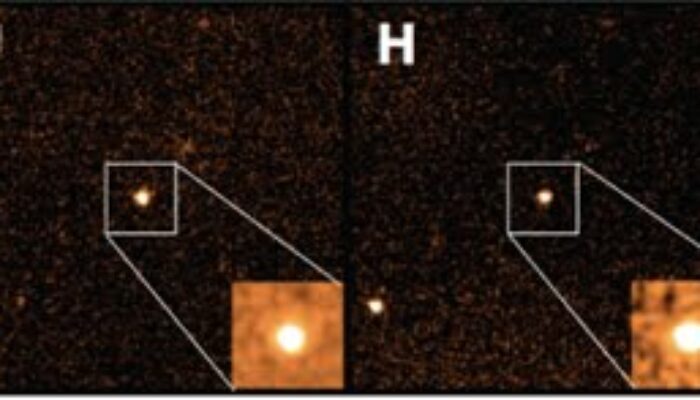
Gamma-ray bursts (GRBs) are intense, short-lived flashes of gamma radiation originating from distant cosmic events. These bursts are among the most energetic phenomena observed in the universe, often linked to catastrophic astrophysical processes such as the collapse of massive stars or the merger of neutron stars.
Astrophysical Origins and Characteristics of Gamma-Ray Bursts
GRBs arise from highly energetic cosmic occurrences that release enormous amounts of energy in brief intervals, sometimes outshining entire galaxies. Their transient nature and immense luminosity make them observable across vast cosmological distances, providing unique windows into extreme physical conditions.
- Stellar Collapse:
The death of massive stars can trigger long-duration GRBs, where the core collapses into a black hole, emitting gamma rays in the process. - Neutron Star Mergers:
Short-duration GRBs often result from the collision of neutron stars, producing bursts of gamma radiation detectable across the universe.
Quantum Gravity and the Role of Gamma-Ray Bursts
GRBs serve as natural laboratories for testing theories of quantum gravity. Some models predict that quantum effects at cosmological scales could alter the propagation of light, leading to energy-dependent variations in the speed of photons. This challenges the classical notion of a constant speed of light and suggests that spacetime may have a discrete, granular structure rather than being a smooth continuum.
Mechanisms Behind Energy-Dependent Photon Propagation
In certain quantum gravity frameworks, the dispersion relation for photons is modified, implying that photons of different energies travel at slightly different speeds. By analyzing the arrival times of photons emitted simultaneously from a GRB but detected at varying energies, scientists can investigate potential deviations from Lorentz invariance, a cornerstone of Einstein’s special relativity.
Mathematical Framework and Observational Constraints
The modified dispersion relation can be expressed as:
v(E) ≈ c × [1 – (E / EQG)n]
- v(E): Speed of a photon with energy E
- c: Conventional speed of light in vacuum
- E: Photon energy
- EQG: Quantum gravity energy scale, often near the Planck energy
- n: Model-dependent exponent, typically 1 or 2
By measuring the time delays between high- and low-energy photons from GRBs, researchers place stringent limits on EQG, thereby constraining possible quantum gravity effects.
Case Study: GRB 090510 and Its Implications
The short gamma-ray burst GRB 090510 has been pivotal in refining quantum gravity parameters. Detailed timing analyses of photons across a broad energy spectrum revealed minimal time lags, imposing tight restrictions on any energy-dependent speed variations. These results suggest that if spacetime discreteness exists, its effects on photon propagation are exceedingly subtle, reinforcing the robustness of Lorentz invariance at accessible energy scales.
Significance of Quantum Gravity Research Using GRBs
Exploring quantum gravity through GRB observations is crucial for advancing fundamental physics. It bridges the gap between the cosmic scale governed by gravity and the quantum scale dictating particle interactions. Confirming or refuting modifications to the speed of light has profound implications for our understanding of spacetime structure, the validity of relativity, and the quest for a unified physical theory.
Common Misconceptions About Quantum Gravity and GRBs
Quantum gravity effects should be easily observable in everyday phenomena.
Quantum gravity influences are expected to be extremely subtle and typically manifest only under extreme conditions, such as those found near black holes or during GRBs.
Any observed time delay in photon arrival from GRBs directly proves quantum gravity.
Time delays can arise from various astrophysical processes; rigorous analysis is required to isolate potential quantum gravity signatures.
Challenges and Future Directions in Quantum Gravity Research
Despite significant progress, integrating quantum mechanics with general relativity remains a formidable challenge. Theoretical models such as loop quantum gravity and string theory offer competing frameworks, but a definitive, experimentally verified theory is still elusive. Ongoing and future astrophysical observations, including more precise GRB measurements, are essential to guide and refine these theories.
Conclusion: The Interplay of Cosmic Phenomena and Fundamental Physics
Gamma-ray bursts provide an extraordinary platform for probing the deepest questions about the nature of spacetime and gravity. By scrutinizing the behavior of high-energy photons traveling across the universe, scientists edge closer to unraveling the mysteries of quantum gravity. This endeavor not only enriches our comprehension of the cosmos but also exemplifies humanity’s enduring pursuit of knowledge at the intersection of the infinitely large and the infinitesimally small.
FAQ
What are gamma-ray bursts?
Gamma-ray bursts are intense flashes of gamma radiation from cosmic events, such as the collapse of massive stars or neutron star mergers.
How do gamma-ray bursts relate to quantum gravity?
GRBs provide a natural setting to test theories of quantum gravity, particularly regarding energy-dependent variations in the speed of light.




Leave a Reply