
Short Answer
Understanding Earthshine and Its Astronomical Significance
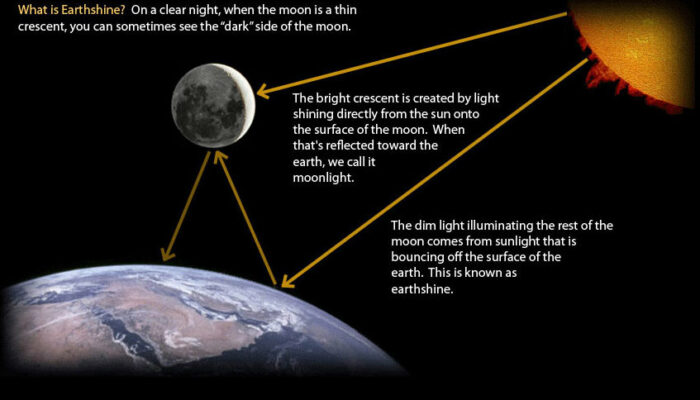
Earthshine is an optical phenomenon where the darkened portion of the Moon is faintly illuminated by sunlight reflected off the Earth’s surface. This subtle glow, visible from our planet, offers valuable insights into Earth’s reflective characteristics, such as its albedo-the measure of how much sunlight the planet reflects. Beyond its aesthetic appeal, earthshine serves as a natural laboratory for studying planetary light interactions, prompting scientists to consider whether similar reflections could reveal details about planets orbiting other stars, known as extrasolar planets or exoplanets.
Definition of Extrasolar Planets and Earthshine
Extrasolar planets (Exoplanets):
Planets that orbit stars outside our solar system, often located many light-years away, which are the focus of modern astrophysical research.
Earthshine:
The faint illumination of the Moon’s night side caused by sunlight reflecting off Earth, providing a unique perspective on Earth’s surface and atmospheric properties.
Mechanism of Earthshine and Its Application to Exoplanet Study
The phenomenon of earthshine arises from the reflection of sunlight by Earth, which then illuminates the Moon’s darkened face. This interplay of light between celestial bodies is fundamental to astronomical observations. By studying earthshine, scientists can infer Earth’s surface reflectivity and atmospheric composition. Extending this concept, researchers hypothesize that analyzing the light reflected or emitted by exoplanets could similarly reveal their atmospheric and geological features.
Spectroscopy: Unlocking Planetary Secrets Through Light
Spectroscopy is a pivotal technique in astrophysics that involves breaking down light into its component wavelengths to analyze its properties. When applied to exoplanet research, spectroscopy enables the detection of specific absorption lines within the light spectrum, which correspond to various atmospheric gases. For example, the presence of water vapor, carbon dioxide, or oxygen can be identified through their unique spectral signatures, offering clues about the planet’s potential habitability and biological activity.
Mathematical and Scientific Principles Behind Spectral Analysis
The analysis of light spectra relies on the interaction of photons with atoms and molecules in a planet’s atmosphere. The fundamental relationship can be expressed as:
I(λ) = I₀(λ) × e-τ(λ)
- I(λ): Intensity of light at wavelength λ after passing through the atmosphere.
- I₀(λ): Initial intensity of the incident light at wavelength λ.
- τ(λ): Optical depth, representing the absorption by atmospheric constituents at wavelength λ.
By measuring the reduction in intensity at specific wavelengths, scientists can deduce the concentration of gases responsible for absorption, thereby characterizing the planet’s atmosphere.
Challenges in Detecting Earthshine from Exoplanets
Despite the promising potential of earthshine as a tool for exoplanet characterization, several obstacles complicate its practical application. The primary difficulty lies in the overwhelming brightness of host stars, which can mask the faint reflected light from orbiting planets. Technologies like coronagraphs are employed to block starlight and isolate planetary signals, but their effectiveness is limited by the immense contrast in brightness.
Additionally, the variability in light conditions across different planetary systems adds complexity. Factors such as the planet’s distance from its star, atmospheric composition, and surface features influence the intensity and quality of reflected light, making it challenging to obtain consistent and interpretable data.
Interdisciplinary Approaches to Exoplanet Exploration
Addressing the complexities of detecting and interpreting exoplanetary light requires collaboration across multiple scientific disciplines. Astrophysics, atmospheric science, geology, and bioinformatics converge to develop comprehensive models that enhance the detection and analysis of light signatures. This integrated approach improves our ability to identify Earth-like planets and assess their potential for supporting life.
Advancements in Telescope Technology and Future Prospects
The advent of next-generation observatories, such as the James Webb Space Telescope, heralds a new era in exoplanet research. These instruments are designed to observe in the far-infrared spectrum, expanding the range of detectable signals and increasing sensitivity to faint planetary light. Enhanced resolution and spectral coverage will enable astronomers to detect subtle earthshine-like reflections from distant rocky planets, bringing us closer to identifying habitable worlds beyond our solar system.
Real-World Implications of Earthshine Research
Studying earthshine not only enriches our understanding of Earth’s own atmospheric and surface properties but also serves as a blueprint for exploring the characteristics of distant planets. By decoding the light reflected from exoplanets, scientists can assess their environments, search for signs of water, and even detect potential biosignatures. This research is crucial for advancing astrobiology and expanding our knowledge of the universe’s capacity to harbor life.
Common Misconceptions About Earthshine and Exoplanet Detection
Earthshine is only a visual curiosity with no scientific value.
Earthshine provides critical data on Earth’s reflectivity and atmospheric composition, serving as a model for studying exoplanetary atmospheres.
Detecting exoplanet light is straightforward with current technology.
The extreme brightness of stars compared to their planets makes isolating planetary light signals highly challenging, requiring advanced instruments and techniques.
Significance of Earthshine in Astrophysics and Beyond
The study of earthshine bridges observational astronomy and planetary science, offering a unique method to probe the characteristics of planets both near and far. Its application extends to the search for extraterrestrial life, informing the design of future missions and telescopes. By harnessing the faint glow of reflected light, humanity takes a crucial step toward unraveling the mysteries of the cosmos and understanding our place within it.
FAQ
What is earthshine?
Earthshine is the faint illumination of the Moon's dark side caused by sunlight reflecting off the Earth.
How does earthshine help in studying exoplanets?
By analyzing light reflected from the Moon, scientists can infer properties of Earth's atmosphere, which can be applied to detect similar characteristics in exoplanets.
What challenges exist in detecting light from exoplanets?
The brightness of host stars often masks the faint light from exoplanets, complicating detection efforts.



Leave a Reply