
Short Answer
Definition of a Neutron Star
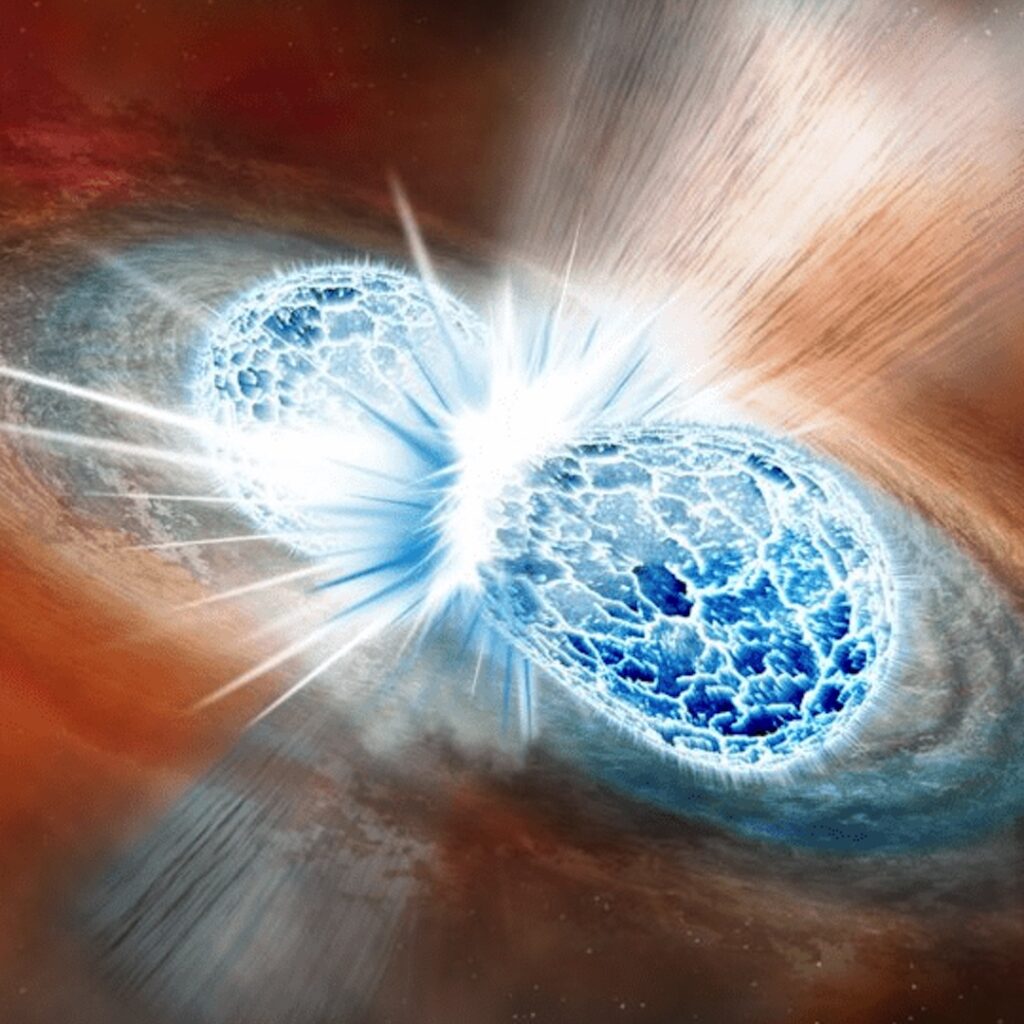
A neutron star is an extraordinarily dense remnant formed from the collapsed core of a massive star following a supernova explosion. Despite having a mass greater than that of our Sun, it is compressed into a sphere roughly 20 kilometers in diameter. This extreme density results in gravitational forces and physical conditions unlike anything encountered on Earth, making neutron stars some of the most fascinating objects in astrophysics.
Gravitational Forces on a Neutron Star
The gravity on the surface of a neutron star is incomprehensibly strong due to its immense mass packed into a tiny volume. This gravitational pull is so powerful that it significantly distorts spacetime around the star. If a human could hypothetically stand on its surface without being destroyed, the force exerted on their body would be equivalent to hundreds of billions of times Earth’s gravity. Such an environment is beyond any terrestrial experience and challenges our understanding of matter under extreme conditions.
Tidal Forces and Spaghettification
The intense gravitational gradient near a neutron star causes a phenomenon known as spaghettification. This effect arises because the gravitational force acting on the feet is vastly stronger than that on the head, stretching objects lengthwise and ultimately tearing them apart. This tidal stretching is a direct consequence of the steep difference in gravitational pull over very short distances, making survival impossible for any conventional matter approaching the surface.
Composition and Surface Characteristics
Unlike Earth’s rocky crust or the gaseous surface of the Sun, a neutron star’s outer layer is composed of an ultra-dense lattice of neutron-rich atomic nuclei. This crust is so compact that a mere teaspoon of its material would weigh more than all humans combined. Additionally, neutron stars possess magnetic fields that can reach quadrillions of gauss, trillions of times stronger than Earth’s magnetic field, profoundly affecting the physical and chemical properties of matter on and near the surface.
Magnetic Field Effects on Matter
The extraordinary magnetic pressures on a neutron star distort atomic and molecular structures. Electrons and protons are displaced, and molecular bonds are broken under these magnetar-level forces. This means that the very concept of standing or existing as we know it becomes meaningless, as conventional matter cannot maintain its integrity under such conditions.
Environmental Conditions and Sensory Experience
In the vacuum surrounding a neutron star, there is no atmosphere to carry sound waves, so auditory perception as experienced on Earth would be impossible. The sky would be dominated by intense radiation, including X-rays and gamma rays, emitted due to the star’s extreme gravitational and magnetic energies. This radiation would overwhelm human senses and biological systems, making any direct experience fatal and alien to terrestrial life.
Relativistic Effects Near a Neutron Star
Neutron stars provide a natural laboratory for observing relativistic physics. One notable effect is time dilation, predicted by Einstein’s theory of general relativity. Time near the surface of a neutron star passes much more slowly compared to a distant observer. This means that seconds experienced on the star could correspond to years elsewhere, illustrating how gravity can warp the flow of time itself.
Philosophical and Scientific Significance
While physically standing on a neutron star is impossible, the concept serves as a powerful metaphor for pushing the boundaries of human curiosity and scientific inquiry. It challenges our anthropocentric views and compels us to rethink the nature of matter, gravity, and time. Neutron stars embody extremes that expand our understanding of the universe’s architecture and inspire awe at the cosmic scale.
Neutron Stars as Cosmic Laboratories
These stellar remnants offer unique insights into quantum states of matter, ultra-strong magnetism, and the effects of general relativity. Although inhospitable to life, neutron stars are invaluable for advancing astrophysics and deepening our comprehension of fundamental physical laws.
Why Understanding Neutron Stars Matters
Studying neutron stars is crucial for multiple scientific disciplines, including nuclear physics, astrophysics, and cosmology. They help scientists explore matter under conditions unattainable on Earth, test theories of gravity, and understand the life cycles of stars. Moreover, contemplating the extreme environments of neutron stars enriches our appreciation for the complexity and diversity of the cosmos, fueling the human quest for knowledge and meaning.
Common Misconceptions About Neutron Stars
Neutron stars have a solid surface similar to Earth.
The surface is an ultra-dense crust of neutron-rich nuclei, vastly different from terrestrial rock, with properties governed by nuclear physics rather than geology.
It is possible to survive standing on a neutron star.
The extreme gravity, magnetic fields, and radiation make survival impossible; any matter would be instantly destroyed or transformed.
Neutron stars emit only visible light.
They primarily emit high-energy radiation such as X-rays and gamma rays, which are invisible and highly dangerous to humans.
FAQ
What is a neutron star?
A neutron star is a dense remnant left after a supernova, comprised mostly of neutrons and featuring incredibly strong gravitational and magnetic fields.
Can anything survive on a neutron star?
No, the extreme gravity, radiation, and magnetic fields make survival impossible for any matter.
What happens to objects near a neutron star?
Objects experience spaghettification due to the intense tidal forces, stretching and tearing them apart.



Leave a Reply