
Short Answer
Definition of Telescopes and the Concept of Habitable Telescopes
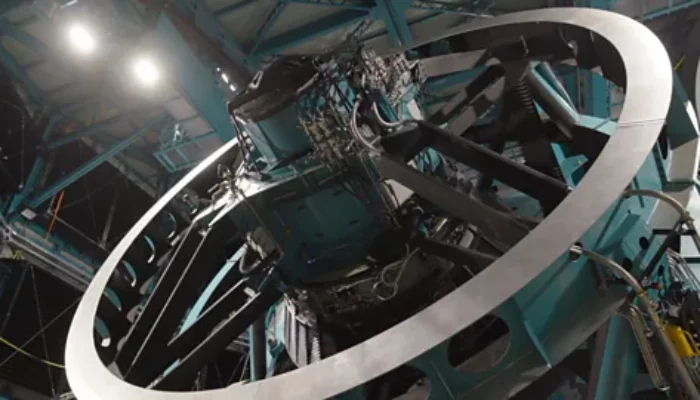
Telescopes are sophisticated optical instruments designed to gather and focus electromagnetic radiation-primarily visible light-to create detailed images of distant celestial bodies. Their primary function is to enhance our ability to observe and study astronomical phenomena far beyond the reach of the naked eye. The idea of a habitable telescope, one large enough to accommodate human occupants within its structure, is a speculative concept that envisions combining observational technology with living quarters. While this notion sparks imagination, it remains a theoretical construct rather than a practical engineering reality.
Fundamental Principles of Telescope Operation
At their core, telescopes operate by collecting light through an aperture-usually a lens or mirror-and focusing it to form an image. The quality of this image depends heavily on the precision of the optical components, which must be manufactured to exacting standards, often with tolerances measured in nanometers. The aperture size directly influences the telescope’s resolving power and light-gathering ability, with larger apertures enabling clearer and more detailed observations of faint and distant objects.
- Optical Precision:
Mirrors and lenses require ultra-smooth surfaces and precise curvature to minimize distortions and aberrations. - Aperture Size:
Larger diameters improve resolution and sensitivity but introduce significant engineering challenges. - Environmental Stability:
Telescopes need vibration-free, thermally stable environments to maintain image clarity.
Challenges in Designing a Habitable Telescope
Integrating human living spaces within a telescope structure introduces a complex array of technical and scientific obstacles. The necessity for life-support systems-such as air circulation, temperature control, radiation shielding, and emergency safety measures-adds substantial mass and complexity. These requirements conflict with the delicate optical elements that must remain stable and uncontaminated to function effectively.
- Scale and Aperture Constraints:
To house humans, the telescope’s aperture would need to be extraordinarily large, far exceeding current engineering capabilities for maintaining optical coherence. - Material Limitations:
Materials optimal for telescope mirrors, like ultra-low expansion glass or beryllium, are fragile and unsuitable for structural support of habitable modules. - Environmental Control:
Life-support demands in space or on Earth introduce thermal and mechanical disturbances detrimental to precise observations. - Operational Stability:
Human presence generates vibrations and heat fluctuations that degrade image quality.
Material Science and Structural Engineering Considerations
The materials used in telescope construction are chosen for their optical properties and stability under environmental stresses. However, these materials are often brittle and cannot withstand the structural loads or environmental conditions required for human habitation. Creating airtight, pressurized living spaces with adequate insulation and radiation protection conflicts with the need to preserve the telescope’s optical surfaces. Any integration of habitable modules risks compromising the telescope’s ability to detect faint cosmic signals.
Environmental and Operational Limitations
Space-based telescopes benefit from the vacuum of space, which eliminates atmospheric distortion and weather interference. However, sustaining human life in such an environment demands complex life-support systems that require significant power, mass, and redundancy. On Earth, ground-based telescopes face challenges such as air turbulence and light pollution, which are incompatible with enclosing humans within the optical apparatus. Additionally, modern telescopes often require frequent maintenance and calibration, tasks increasingly performed remotely or robotically, reducing the necessity for human presence within the instrument.
Alternative Approaches to Astronomical Observation
Rather than combining habitation and observation in a single structure, contemporary astronomy favors modular designs. Habitable facilities such as control centers and living quarters are located separately from the telescope’s optical components. Space observatories like the James Webb Space Telescope operate autonomously in stable orbits without onboard crews, relying on remote operation and robotic maintenance. Interferometric arrays, which link multiple telescopes across vast distances, synthesize the resolving power of a much larger instrument without the need for a single massive aperture or human occupancy within the optical system.
Philosophical Perspective on Human Presence in Astronomy
The romantic vision of physically residing within a telescope to observe the universe firsthand is compelling. Nonetheless, the essence of modern astronomical research lies in the collection and analysis of electromagnetic data transmitted electronically. Scientific progress depends more on the quality and interpretation of this data than on direct human proximity to the instruments. Remote operation and computational analysis have become the norm, enabling astronomers to explore the cosmos without inhabiting the telescopes themselves.
Summary: Why Habitable Telescopes Remain Impractical
Constructing telescopes large enough to support human habitation involves insurmountable challenges related to optical precision, engineering feasibility, environmental control, and operational stability. Current and foreseeable technologies favor remote, autonomous, and distributed observational systems that maximize scientific output without requiring humans to live inside the instruments. While the concept of a habitable telescope remains a powerful metaphor for our desire to connect intimately with the cosmos, practical astronomy advances through innovations that separate habitation from observation, ensuring optimal performance and discovery potential.
FAQ
Why can't we build telescopes that humans can live inside?
Building habitable telescopes poses significant engineering challenges, including the need for life-support systems, which conflict with the delicate optical components required for effective astronomical observation.
What are the main challenges in designing a habitable telescope?
Challenges include scale and aperture constraints, material limitations, and environmental control, all of which make it impractical to integrate human living spaces into telescope structures.

Leave a Reply