
Short Answer
Definition of a Red Giant Star
A red giant star represents a late evolutionary stage of a star’s life cycle, characterized by a significant increase in size and a cooler surface temperature compared to its earlier phases. These stars are enormous, luminous celestial bodies that have expanded and cooled after exhausting the hydrogen fuel in their cores. Their distinctive reddish hue and immense scale make them prominent features in the night sky and subjects of intense astronomical study.
Physical Characteristics and Appearance
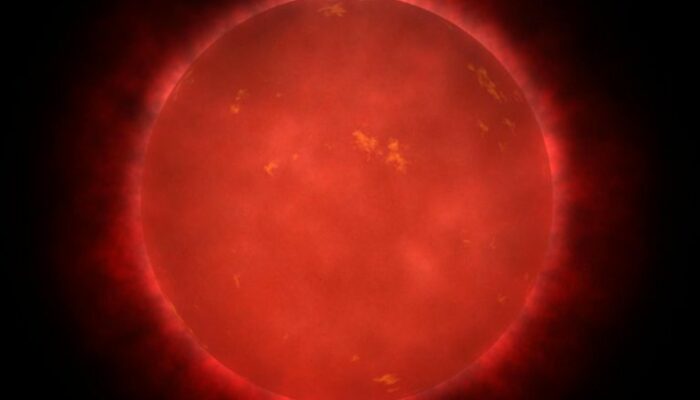
At a glance, red giants appear as large, glowing spheres with a deep red or orange tint. This coloration results from their relatively low surface temperatures, typically ranging between 3,000 and 4,000 Kelvin, which is much cooler than the hotter, younger stars that shine white or blue-white. The cooler temperature causes the star to emit light predominantly in the red part of the spectrum, giving it its signature ruddy glow.
Beyond color, the sheer size of red giants is staggering. These stars can expand to hundreds or even thousands of times their original diameter. For example, if our Sun were to become a red giant, its outer layers might extend beyond the orbit of Mars or even Jupiter. This expansion is driven by changes in the star’s internal processes, particularly the reduced efficiency of hydrogen fusion in the core, which causes the outer layers to swell dramatically.
Surface Features and Atmospheric Phenomena
The surface of a red giant is far from smooth. It exhibits a patchy, quilt-like texture caused by enormous convection cells-vast regions where hot plasma rises and cooler plasma sinks. These cells can cover large portions of the star’s surface, creating a dynamic, mottled appearance that evolves over months or years. This granulated surface is a visual manifestation of the turbulent energy transport occurring within the star’s outer layers.
Surrounding the star is an extended atmosphere filled with dust and molecules expelled by stellar winds. These outflows enrich the surrounding interstellar medium with heavier elements synthesized in the star’s interior, contributing to the cosmic cycle of matter. The circumstellar envelope often glows in infrared wavelengths, adding a subtle halo that envelops the red giant and enhances its visual complexity.
Stellar Pulsations and Variability
Many red giants exhibit pulsations-periodic expansions and contractions of their outer layers. These rhythmic changes cause fluctuations in brightness and size, reflecting the star’s ongoing struggle to balance gravitational forces with internal radiation pressure. The pulsations can alter the star’s color slightly, shifting it between shades of orange and deep maroon, and provide valuable insights into the star’s internal structure and evolutionary status.
Magnetic Activity and Surface Spots
Some red giants display large, cooler regions on their surfaces known as stellar spots, analogous to sunspots but vastly larger. These spots arise from magnetic activity or convective instabilities and contribute to the star’s mottled appearance. The presence of such spots adds complexity to the star’s visual profile and indicates dynamic magnetic processes at work even in these late stellar stages.
Spectral Characteristics and Chemical Composition
When analyzed through spectroscopy, red giants reveal absorption lines from molecules like titanium oxide, which cannot survive in hotter stellar environments. These molecular signatures provide a chemical fingerprint that complements the star’s visual traits. Red giants act as cosmic forges, synthesizing heavier elements and dispersing them into space, thereby playing a crucial role in the chemical evolution of galaxies.
Significance in Stellar Evolution and Astronomy
Red giants embody a critical phase in the life cycle of stars, marking the transition from stable hydrogen burning to more complex nuclear processes. Their study offers profound insights into stellar aging, nucleosynthesis, and the eventual fate of stars similar to our Sun. Observing red giants allows astronomers to understand the mechanisms driving stellar expansion, mass loss, and the enrichment of the interstellar medium.
Real-World Observations and Astrophotography
In telescopic views and astrophotography, red giants stand out as radiant jewels against the dark canvas of space. Their color and brightness can vary depending on observational filters and instruments, sometimes appearing more orange or deeper red. These variations, combined with their pulsations and surface features, make red giants fascinating targets for both professional astronomers and amateur stargazers.
Common Misconceptions About Red Giants
Red giants are simply old stars that have cooled down.
While red giants are indeed older stars, their cooler temperature is a result of their expanded outer layers, not just aging. The core undergoes complex nuclear reactions that drive this transformation.
Red giants will explode as supernovae.
Only very massive stars end their lives as supernovae. Most red giants, including those similar in mass to the Sun, will shed their outer layers and become white dwarfs instead.
Why Understanding Red Giants Is Important
Studying red giant stars is essential for comprehending the broader processes of cosmic evolution. They serve as laboratories for nuclear physics, stellar dynamics, and chemical enrichment. Their mass loss contributes to the formation of new stars and planetary systems, linking the death of one star to the birth of others. Moreover, red giants provide a glimpse into the future of our own Sun, offering a cosmic narrative of transformation, decay, and renewal that resonates across the universe.
FAQ
What is a red giant star?
A red giant star is a large star that has expanded and cooled after exhausting hydrogen in its core, resulting in a distinctive red color.
Will all red giants explode as supernovae?
No, only very massive stars explode as supernovae; most red giants become white dwarfs.


Leave a Reply