
Short Answer
Definition of Cosmic Light
Cosmic light refers to the electromagnetic radiation that permeates the universe, encompassing not only the visible spectrum detectable by the human eye but also wavelengths beyond human perception. It is the fundamental medium through which energy and information travel across space, enabling us to observe and understand the cosmos.
- Electromagnetic Radiation:
Light consists of photons, particles of electromagnetic energy that move through space at the speed of light. - Visible and Invisible Spectra:
While visible light is a small portion, cosmic light includes radio waves, microwaves, infrared, ultraviolet, X-rays, and gamma rays.
Sources and Lifecycle of Cosmic Light
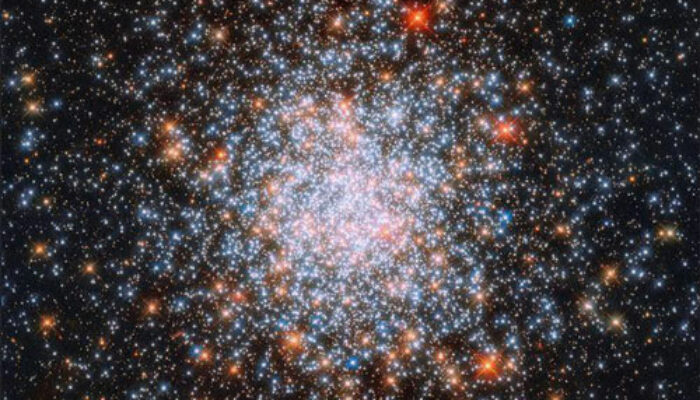
The generation of light in the universe is a continuous process primarily driven by stellar phenomena. Stars act as colossal nuclear reactors, converting hydrogen into helium and releasing vast amounts of electromagnetic radiation throughout their lifetimes. This light production is dynamic, fluctuating with the birth, evolution, and death of stars.
- Star Formation:
Stars emerge from dense clouds of gas and dust, initiating nuclear fusion that produces light. - Stellar Evolution:
Over millions to billions of years, stars emit light steadily until they reach the end of their life cycles. - Supernova Explosions:
The death of massive stars in supernovae releases intense bursts of light and disperses heavy elements, contributing to future star and planet formation.
Impact of Cosmic Expansion on Light
The universe is expanding, a phenomenon that profoundly affects the properties of light traveling through space. As space stretches, the wavelengths of photons elongate in a process called redshift, which reduces their energy and alters the overall brightness observed.
- Redshift:
The increase in photon wavelength decreases the energy each photon carries, diminishing the total radiant energy despite the number of photons. - Energy Dilution:
Expansion causes the energy density of light to decrease over time, influencing the universe’s luminous intensity.
Interactions of Light with Cosmic Matter
Light does not always travel unimpeded; it interacts with various components of the interstellar and intergalactic medium, including gas, dust, and plasma. These interactions can absorb, scatter, or re-emit photons, often changing their wavelengths and energy distribution.
- Absorption:
Certain wavelengths are absorbed more efficiently, converting light energy into heat or other forms. - Scattering and Re-emission:
Photons may be redirected or emitted at different wavelengths, modifying the observable light landscape.
The Cosmic Microwave Background: The Universe’s Primordial Light
The cosmic microwave background (CMB) is the residual radiation from the Big Bang, representing the earliest light that fills the universe. Over billions of years, this ancient light has cooled and stretched into the microwave region due to cosmic expansion, serving as a crucial relic for understanding the universe’s origins.
- Origin:
Emitted approximately 13.8 billion years ago during the recombination epoch. - Current State:
The CMB is a faint microwave glow that permeates all directions in space. - Significance:
It provides evidence for the Big Bang and insights into the early universe’s conditions.
Quantifying Light in the Universe
Astronomers employ extensive surveys and photometric techniques to measure the total light permeating the cosmos. These observations reveal a complex interplay between luminous regions and vast dark voids, shaped by distance, absorption, and cosmic evolution.
- Photometric Surveys:
Instruments measure light intensity across different wavelengths to map cosmic brightness. - Light Distribution:
The universe exhibits regions of intense luminosity interspersed with areas where light is scarce. - Speculative Influences:
Hypotheses such as photon decay or interactions with dark matter may further affect the universe’s light content.
Role of Dark Energy in Light Evolution
Dark energy, the mysterious force driving the accelerated expansion of the universe, indirectly influences the cosmic light budget. By increasing the rate of expansion, it enhances redshift effects and reduces photon energy density, potentially leading to a gradual dimming of universal light over cosmological timescales.
- Acceleration of Expansion:
Dark energy causes space to expand faster, stretching photon wavelengths more rapidly. - Long-Term Consequences:
This may result in a future where the universe becomes increasingly dark as light energy dissipates.
Philosophical and Scientific Implications
Contemplating whether the universe contains a constant amount of light challenges our notions of permanence and change. Light is essential for knowledge, exploration, and life, yet its abundance is subject to cosmic processes that cause continual transformation.
- Dynamic Nature of Light:
The universe does not maintain a fixed photon count; instead, light is continuously created, altered, and extinguished. - Reflection on Permanence:
This understanding invites a deeper appreciation of the universe’s evolving nature and the transient role of light within it.
Summary: The Ever-Changing Cosmic Lightscape
The question of whether the universe always contains the same amount of light reveals a complex balance of astrophysical phenomena. Factors such as stellar life cycles, cosmic expansion, photon interactions, and dark energy contribute to a fluctuating light inventory. Far from static, the universe’s luminous fabric is a dynamic mosaic, reflecting the ongoing interplay between creation and diminution of light across space and time.
FAQ
What is cosmic light?
Cosmic light refers to the electromagnetic radiation present throughout the universe, including all wavelengths from radio waves to gamma rays.
How does cosmic expansion affect light?
Cosmic expansion stretches the wavelengths of light, causing redshift, which reduces the energy of photons and alters their brightness.
What is the role of dark energy in the universe?
Dark energy accelerates the universe’s expansion, influencing the energy density of light and potentially leading to a gradual dimming over time.



Leave a Reply