
Short Answer
Definition of Gravitational Waves
Gravitational waves are disturbances or ripples in the fabric of spacetime, generated by some of the most energetic and violent processes in the universe. These waves propagate outward at the speed of light, subtly altering the distances between objects as they pass through space.
- Origin:
First predicted by Albert Einstein in 1916 as a direct consequence of his general theory of relativity. - Nature:
Unlike electromagnetic waves, gravitational waves are distortions in spacetime itself, not in a medium like air or water. - Sources:
Typically produced by massive accelerating bodies such as merging black holes, neutron star collisions, or supernovae.
Historical Context and Theoretical Foundations
Over a century ago, Einstein’s equations suggested the existence of gravitational waves, but their detection remained beyond reach for decades due to the incredibly subtle effects they produce. The waves cause changes in distance smaller than a proton’s width over kilometers, making their measurement a formidable challenge. Early theoretical work laid the groundwork, but it was only with advances in technology and experimental methods that detection became feasible.
Technological Advances Enabling Detection
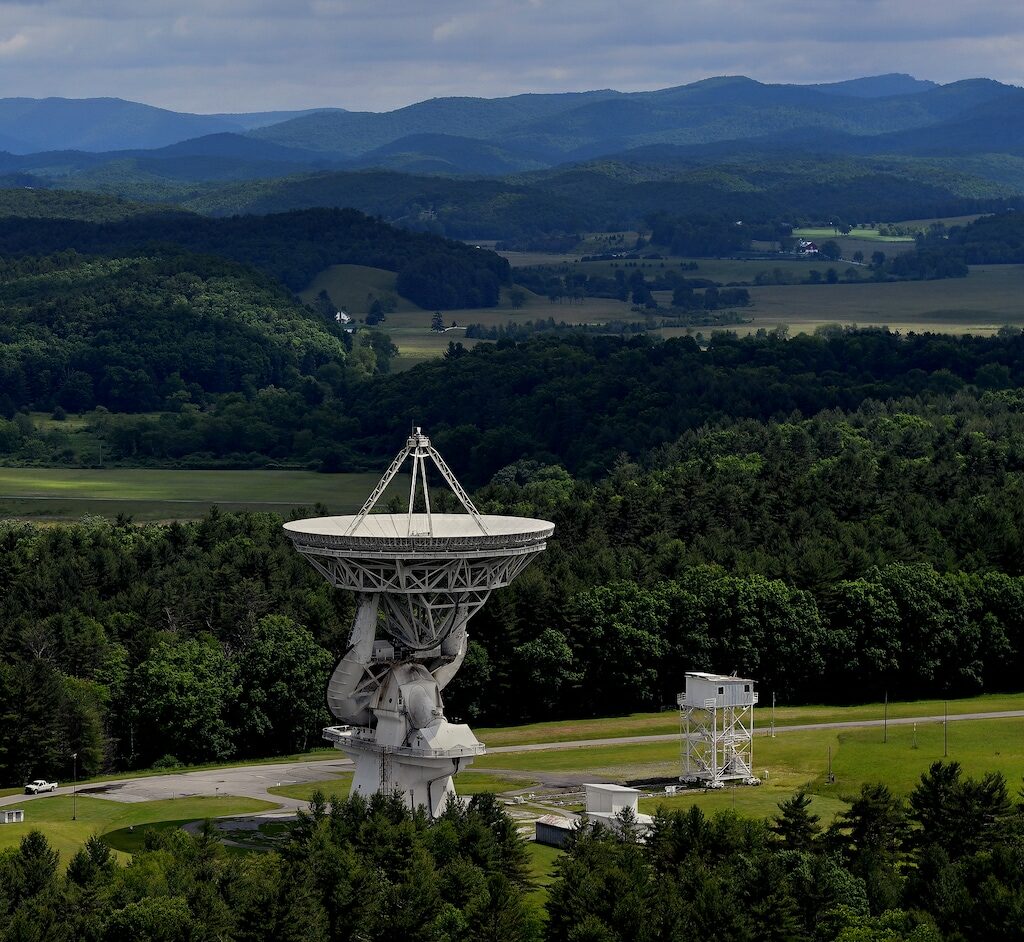
The pursuit of gravitational waves required the development of highly sensitive instruments capable of detecting minuscule spacetime distortions. The Laser Interferometer Gravitational-Wave Observatory (LIGO) epitomizes this effort, combining innovations in laser interferometry, vacuum systems, and noise suppression to transform a theoretical prediction into an observable phenomenon.
- LIGO:
Uses laser beams traveling along perpendicular arms kilometers long to detect tiny changes in length caused by passing gravitational waves. - Noise Reduction:
Advanced techniques minimize environmental and instrumental noise to isolate genuine signals. - Incremental Progress:
Decades of refinement and testing culminated in the first confirmed detection in 2015.
The Significance of the Discovery
The first direct observation of gravitational waves marked a monumental milestone, confirming a key prediction of general relativity and opening a new window into the cosmos. This achievement validated theoretical physics and expanded observational astronomy beyond electromagnetic signals, inaugurating the era of gravitational wave astronomy.
- Confirmation of Theory:
Provided empirical evidence supporting Einstein’s century-old prediction. - New Observational Domain:
Enabled the study of cosmic events invisible to traditional telescopes. - Astrophysical Insights:
Revealed unexpected properties of black hole binaries and neutron star mergers.
Unexpected Aspects and Scientific Surprises
While the existence of gravitational waves was anticipated, many details of their detection were unforeseen. The characteristics of the first observed black hole mergers-such as their masses and rapid inspiral-challenged prior assumptions about black hole populations and dynamics. Additionally, the precise timing and frequency of signals depended on astrophysical phenomena that were previously poorly understood or inaccessible.
How Gravitational Waves Inform Our Understanding of the Universe
Gravitational waves serve as pristine messengers from the most extreme cosmic events, traveling virtually unimpeded through matter. Unlike light, which can be absorbed or scattered, these waves carry unaltered information about their sources, offering unique insights into phenomena such as black hole formation, neutron star collisions, and potentially the conditions of the early universe shortly after the Big Bang.
Philosophical and Scientific Implications
The detection of gravitational waves exemplifies the power of the scientific method, demonstrating how abstract theoretical predictions can be confirmed through persistent experimentation and innovation. It highlights the interplay between theory and observation, underscoring the importance of patience and incremental progress in scientific discovery.
- Theory Meets Experiment:
Validates the predictive power of general relativity. - Human Ingenuity:
Showcases the role of technological advancement in expanding knowledge. - Scientific Perseverance:
Reflects decades of dedication culminating in transformative results.
Broader Impact on Human Curiosity and Culture
Beyond its scientific significance, the discovery of gravitational waves resonates deeply with human curiosity, connecting us to the universe in unprecedented ways. These waves act as silent cosmic messengers, translating the universe’s most dramatic events into signals we can detect and interpret, inspiring both scientists and the public alike.
Future Prospects and Open Questions
As gravitational wave astronomy advances, it promises to unveil new phenomena and deepen our understanding of fundamental physics. Key questions include:
- Dark Matter and Dark Energy:
Could gravitational waves provide clues about these mysterious components of the universe? - Spacetime Structure:
Might observations reveal new aspects of spacetime’s fundamental nature? - Astrophysical Discoveries:
What unknown cosmic events will future detections uncover?
Conclusion: The Transformative Nature of Gravitational Wave Discovery
The detection of gravitational waves represents a pivotal chapter in humanity’s quest to comprehend the cosmos. It was a discovery both anticipated and surprising, confirming long-held theories while simultaneously challenging existing paradigms. By expanding the boundaries of observation and understanding, this breakthrough ushers in a new era of astrophysical exploration and philosophical reflection, inviting us to explore the profound mysteries woven into the universe’s very fabric.
FAQ
What are gravitational waves?
Gravitational waves are ripples in spacetime caused by massive accelerating bodies, predicted by Einstein in 1916.
Why was the detection of gravitational waves significant?
It confirmed a key prediction of general relativity and allowed for the study of cosmic events that are invisible to traditional telescopes.
What technology enabled the detection of gravitational waves?
The Laser Interferometer Gravitational-Wave Observatory (LIGO) utilized advanced laser interferometry to detect tiny changes in distance caused by passing gravitational waves.
Leave a Reply