
Short Answer
Definition of the Sun’s Gravitational Field
The sun’s gravitational field is the invisible force exerted by the sun that governs the motion of all objects within the solar system. It is the fundamental attraction that keeps planets, comets, asteroids, and other celestial bodies in their orbits around the sun, shaping the structure and dynamics of our cosmic neighborhood.
- Gravitational Force:
The attractive force that the sun exerts on other masses, pulling them toward its center. - Gravity Well:
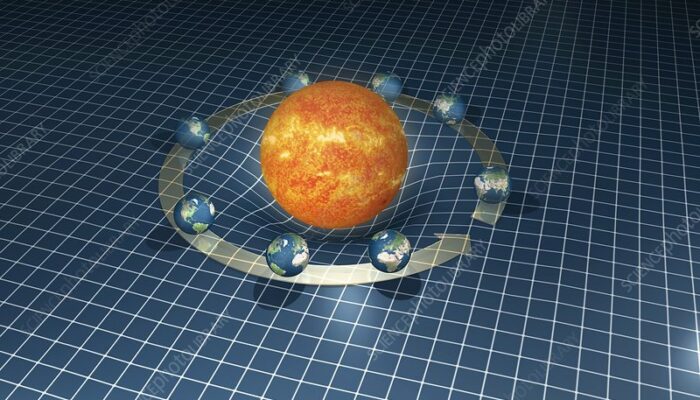
A conceptual model representing how the sun’s mass warps spacetime, creating a “dip” that other bodies fall into, resulting in orbital motion.
Understanding the Sun’s Gravity Well
Imagine a stretched trampoline with a heavy ball placed in the center; this analogy helps visualize the sun’s gravity well. The sun’s immense mass distorts the fabric of spacetime, creating a deep gravitational well that draws smaller bodies into continuous orbits. The depth and steepness of this well correspond to the strength of the sun’s gravitational pull, which is the dominant force maintaining the solar system’s order.
Magnitude and Reach of the Sun’s Gravity
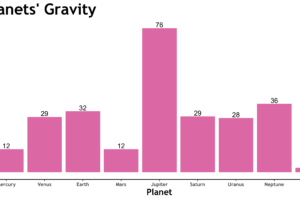
Containing over 99.8% of the solar system’s total mass, the sun’s gravitational influence is overwhelmingly powerful. Its surface gravity measures approximately 274 meters per second squared, nearly 28 times stronger than Earth’s gravity. This means that if one could hypothetically stand on the sun’s surface, their weight would increase twenty-eightfold. However, the sun’s gravitational pull extends far beyond its visible surface, remaining the primary force governing planetary orbits even at Neptune’s distance, over 4 billion kilometers away.
Escape Velocity: A Measure of Gravitational Strength
Escape velocity is the minimum speed an object must reach to break free from a celestial body’s gravitational grip without further propulsion. Earth’s escape velocity is about 11.2 kilometers per second, a speed achievable by spacecraft. In stark contrast, the sun’s escape velocity at its surface is an immense 617.7 kilometers per second, highlighting the sun’s extraordinary gravitational dominance.
Dynamic Nature of the Sun’s Gravitational Field
The sun is not a static mass but a dynamic, rotating sphere of plasma. It exhibits differential rotation, spinning faster at the equator than at the poles. This rotation subtly influences the sun’s gravitational field, causing minor variations and perturbations in the solar system’s gravitational harmony. Additionally, uneven mass distribution and solar oscillations create ripples in spacetime curvature, refining our understanding of gravitational interactions on both large and small scales.
Gravitational Lensing and the Sun
One of the most fascinating phenomena linked to the sun’s gravity is gravitational lensing, predicted by Einstein’s theory of general relativity. The sun’s massive gravitational field bends the trajectory of light from distant stars and galaxies, effectively acting as a giant cosmic lens. This effect has been observed during solar eclipses, providing direct evidence that the sun warps spacetime beyond mere attraction. Gravitational lensing not only confirms the sun’s powerful gravity but also enhances astronomers’ ability to study the distant universe.
Impact of Variations in the Sun’s Gravity Field
The solar system’s stability hinges on the precise balance of the sun’s gravitational force. If the sun’s gravity were weaker, planets could drift into erratic orbits, destabilizing billions of years of celestial order. Conversely, a stronger gravitational pull might draw planets dangerously close, triggering catastrophic interactions. This delicate equilibrium also influences Earth’s climate stability and the habitability of other planets, making the sun’s gravity a critical factor in the search for extraterrestrial life.
Broader Implications in Astrophysics
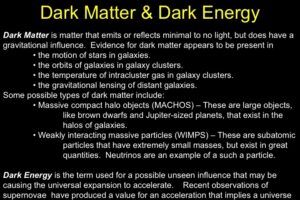
The sun’s gravitational field serves as a microcosm for understanding gravity on a universal scale. The same principles that govern planetary orbits around the sun apply, with appropriate scaling, to galaxies orbiting supermassive black holes and clusters of galaxies moving through space. Studying the sun’s gravity well provides astrophysicists with a natural laboratory to test gravitational theories, potentially shedding light on dark matter, dark energy, and the universe’s expansion.
Role in Space Exploration
Accurate knowledge of the sun’s gravitational influence is essential for modern space missions. Calculations of the sun’s gravity enable spacecraft to utilize gravitational assists or slingshot maneuvers, allowing them to gain speed and alter trajectories efficiently. Understanding the sun’s gravity well transforms theoretical knowledge into practical tools for navigating and exploring the solar system’s vast frontiers.
Conclusion: The Sun’s Gravity as a Cosmic Architect
The sun’s gravitational field is far more than a simple force; it is the invisible framework that shapes the cosmic environment we inhabit. Its immense strength governs planetary motions and influences the flow of time nearby. Reflecting on the depth of the sun’s gravity well invites a profound reconsideration of Earth’s place in the cosmos, portraying our planet as a traveler within a complex gravitational dance. This powerful yet often overlooked force continues to inspire exploration and promises to reveal deeper mysteries about the universe and our role within it.
FAQ
What is the sun's gravitational influence?
The sun's gravitational influence keeps planets and other celestial bodies in their orbits, shaping the dynamics of the solar system.
How does the sun's gravity affect space exploration?
Understanding the sun's gravity allows spacecraft to use gravitational assists to gain speed and alter trajectories.

Leave a Reply