
Short Answer
Definition of Gravity-Based Space Energy
Gravity-based space energy refers to the innovative concept of utilizing gravitational forces and interactions in outer space as a source of continuous power generation. Unlike traditional energy sources that rely heavily on solar radiation, this approach envisions harnessing the gravitational pull between celestial bodies to produce sustainable energy for spacecraft, satellites, and space stations.
- Gravity:
A fundamental force of attraction between masses that governs the motion of planets, moons, and stars. - Space Energy:
Energy generated or harvested beyond Earth’s atmosphere, typically from solar radiation or other cosmic phenomena. - Gravity-Based Energy:
Energy derived from the dynamic gravitational interactions and gradients present in space environments.
Background and Current Challenges in Space Energy
Currently, space energy generation is predominantly reliant on photovoltaic cells and solar arrays. While sunlight is abundant in space, its availability is intermittent due to factors such as orbital eclipses, varying distances from the Sun, and the need for extensive infrastructure. These limitations create significant obstacles for long-duration missions and continuous power supply in shadowed or distant regions of space.
Gravity, by contrast, is a constant and omnipresent force throughout the cosmos. Its unchanging presence offers a promising alternative or complementary energy source that could overcome the episodic nature of solar power in space.
How Gravity Can Be Harnessed for Energy in Space
Gravity manifests as the mutual attraction between masses, influencing orbital paths, tidal forces, and the structural integrity of galaxies. On Earth, gravitational potential energy is already exploited in hydropower systems, where water flow driven by gravity is converted into electricity. Extending this principle to space involves leveraging gravitational interactions among celestial bodies such as Earth, the Moon, and the Sun to generate continuous energy.
One emerging method involves exploiting gravitational gradients-variations in gravitational field strength depending on proximity to massive objects. Specialized spacecraft or satellites could be engineered to oscillate within these gradients, similar to pendulums or tidal generators. These oscillations would convert subtle gravitational shifts into mechanical motion, which can then be transformed into electrical energy.
Gravitational Tether Systems
Another promising technology is the gravitational tether, which consists of long, durable cables stretched between orbiting bodies. These tethers capitalize on tidal forces and differential gravitational pulls to generate electricity through electrodynamic interactions with Earth’s magnetic field. As the tether stretches and contracts in response to gravitational forces, it induces electric currents that can power spacecraft or relay stations.
Beyond propulsion, gravitational tethers have the potential to become critical components of off-Earth power grids, enabling extended missions with reduced reliance on solar or fuel-based energy sources.
Advantages of Gravity-Powered Energy Systems
- Continuous Operation:
Unlike solar arrays that experience downtime during eclipses, gravity-based systems can provide a steady and uninterrupted energy supply due to the constant gravitational interplay of celestial bodies. - Energy Stability:
These systems can stabilize power grids aboard satellites and space stations, reducing risks associated with energy shortages in shadowed or remote environments. - Complementary to Solar Power:
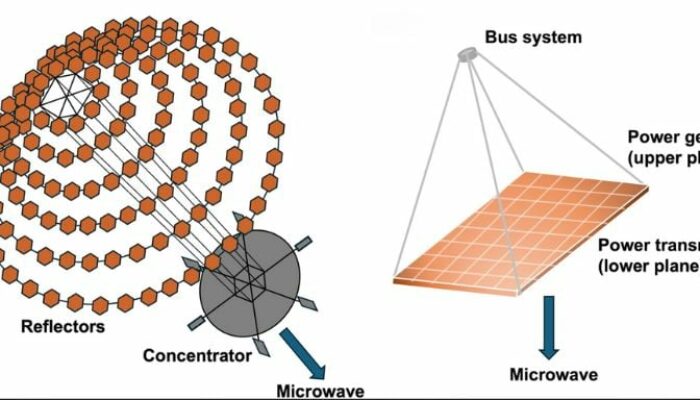
Gravity-powered modules can enhance space-based solar power (SBSP) initiatives by smoothing out power fluctuations and increasing overall system resilience.
Technical and Engineering Challenges
Despite their potential, gravity-based energy systems face significant hurdles. Developing materials with sufficient tensile strength to withstand the stresses on gravitational tethers is a major engineering challenge. The harsh space environment exposes these materials to micrometeoroid impacts and radiation damage, which can degrade performance over time.
Maintaining precise control and navigation of tethered systems is essential to optimize energy generation and prevent catastrophic failures. Additionally, efficient conversion of mechanical energy into usable electrical power at scale remains a critical technological barrier.
Economic and Practical Considerations
The initial costs associated with launching, deploying, and maintaining gravitational energy systems are substantial. Complex logistics and high expenses may limit early adoption. However, advancements in space manufacturing, robotics, and nanotechnology are expected to reduce these costs, potentially making gravity-based energy a viable option within the coming decades.
Broader Implications and Future Prospects
Embracing gravity as a source of energy represents a paradigm shift in our relationship with the cosmos. It encourages a holistic perspective that views interplanetary dynamics as a continuous and exploitable resource. This mindset could inspire innovations in propulsion technologies, habitat design, and planetary defense strategies.
Harnessing gravitational forces not only as obstacles but as active energy contributors may unlock new frontiers in space exploration and sustainability, fostering resilient infrastructures for humanity’s expansion beyond Earth.
Conclusion: The Significance of Gravity in Space Energy
The untapped potential of gravity to serve as a reliable and pervasive energy source in space challenges conventional energy paradigms. The ceaseless gravitational interactions among celestial bodies offer a latent reservoir of power that could revolutionize energy generation across the solar system.
While technical and economic challenges remain, the pursuit of gravity-powered energy systems promises to redefine extraterrestrial energy production, shifting focus from Earth-centric resources to a cosmic network of energy interconnectivity. This evolution could mark a transformative chapter in humanity’s journey through space.
Leave a Reply