
Short Answer
Understanding Gravity Wells
Gravity wells represent the distortions in spacetime caused by the gravitational pull of massive objects. These distortions can be visualized as depressions or “wells” in the fabric of space, where the presence of mass causes a curvature that influences the motion of nearby objects. A common analogy is to imagine placing a heavy ball on a stretched rubber sheet, causing the sheet to dip around the ball. Smaller objects rolling on the sheet will naturally move toward the dip, similar to how planets orbit stars or how light bends near massive bodies.
- Spacetime Curvature:
Gravity wells are manifestations of how mass warps spacetime, a concept central to Einstein’s General Theory of Relativity. - Dynamic Nature:
These wells are not fixed; they fluctuate as mass and energy distributions change throughout the universe.
Principles Behind Gravity Well Mapping
Mapping gravity wells in three dimensions involves capturing the complex gravitational fields that extend across various cosmic scales-from planets to entire galaxy clusters. Traditional methods rely on indirect observations such as tracking planetary orbits, spacecraft trajectories, and the bending of light (gravitational lensing) around massive objects. However, modern astrophysics aims to go beyond these approaches by creating detailed, volumetric maps of gravitational influences.
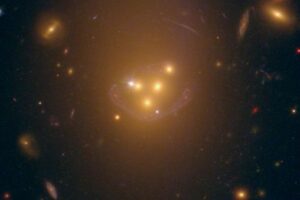
One key technique is gravitational lensing, where massive bodies act as natural lenses, bending and magnifying light from distant sources. This effect allows scientists to infer the presence and distribution of mass, including invisible components like dark matter, by analyzing distortions in the light paths.

Technological Advances in Gravity Mapping
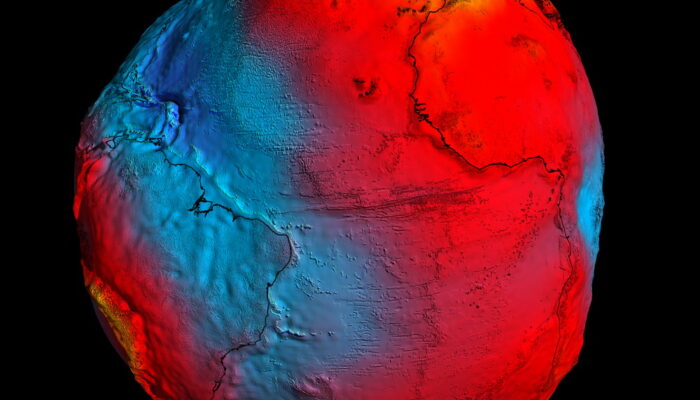
Recent satellite missions have pioneered the precise measurement of gravitational variations. For example, the GRACE (Gravity Recovery and Climate Experiment) mission utilized twin satellites to detect subtle changes in Earth’s gravity by monitoring the distance between them as they orbited. This method reveals variations caused by factors such as shifting water masses and geological activity.
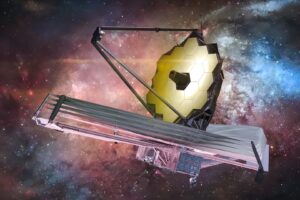
Extending such techniques to deep space presents significant challenges but holds the promise of unveiling the mass distribution within galactic clusters and the elusive dark matter halos that influence cosmic structure. Sensitive gravimeters aboard spacecraft could measure gravitational acceleration with unprecedented accuracy, enabling the construction of three-dimensional gravity well maps on a cosmic scale.
Relativity and the Complexity of Gravity
Gravity is fundamentally a relativistic phenomenon, described not as a force acting at a distance but as the curvature of spacetime itself. Einstein’s General Theory of Relativity revolutionized our understanding by framing gravity within a four-dimensional continuum of space and time. This perspective complicates mapping efforts, as gravitational fields are influenced by both spatial and temporal factors.
Consequently, any comprehensive gravity map must incorporate temporal changes and relativistic effects, capturing the dynamic and evolving nature of gravitational interactions. This approach enriches the representation of gravity wells, providing a more authentic depiction of the universe’s gravitational landscape.
The Role of Dark Matter in Gravity Wells
Dark matter, an invisible form of matter that does not emit or absorb electromagnetic radiation, exerts significant gravitational influence throughout the cosmos. It forms the underlying framework upon which visible matter congregates, shaping the formation and evolution of galaxies and larger structures.
Mapping gravity wells thus extends beyond visible mass, revealing the hidden gravitational scaffolding created by dark matter. Understanding these invisible wells is crucial for unraveling the mysteries of cosmic evolution and the large-scale structure of the universe.
Visualization and Interpretation of Gravity Wells
Advanced computational models and visualization software transform raw gravitational data into intuitive, three-dimensional representations. These visualizations depict gravity wells as dynamic valleys and ridges within the multidimensional fabric of spacetime, rather than static pits.
Such imagery not only facilitates scientific analysis but also enhances public understanding and appreciation of the subtle forces shaping our universe. By rendering abstract gravitational concepts into tangible forms, these visual tools bridge the gap between complex data and human perception.
Challenges in Mapping Gravity Wells
- Measurement Sensitivity:
Detecting gravitational variations across vast interstellar and intergalactic distances requires instruments of extraordinary precision. - Computational Demands:
Processing and interpreting the immense volumes of data necessitate powerful computational resources and sophisticated algorithms. - Dynamic Fields:
Gravitational fields are constantly changing, influenced by phenomena such as gravitational waves-ripples in spacetime generated by cataclysmic cosmic events-requiring continuous monitoring and real-time updates.
Applications and Significance of Gravity Well Mapping
Mapping gravity wells holds profound implications across multiple domains. In space navigation, detailed gravitational maps can optimize spacecraft trajectories, improving mission efficiency and safety. In astrophysics, these maps deepen our understanding of cosmic structure, dark matter distribution, and the evolution of galaxies.
Furthermore, as humanity contemplates future interstellar travel, knowledge of gravitational landscapes will be essential for planning routes and harnessing gravitational assists. Ultimately, gravity well maps expand our conceptual framework, revealing the invisible forces that govern matter and energy throughout the cosmos.
Future Prospects and the Quest for a Cosmic Gravity Map
As measurement technologies advance and theoretical models become more refined, the vision of a comprehensive, three-dimensional gravity map encompassing the universe draws nearer. Such a map would not only chart gravitational wells but also illuminate the intricate architecture of the cosmos, exposing the hidden peaks and valleys that shape the celestial environment.
This endeavor epitomizes humanity’s enduring pursuit to comprehend the universe-not merely as a collection of stars and galaxies but as a dynamic interplay of forces woven into the very fabric of spacetime.
Leave a Reply