
Short Answer
Understanding Artificial Gravity
Artificial gravity refers to the creation of a force that mimics the natural gravitational pull experienced on Earth, within environments where gravity is otherwise negligible or absent, such as spacecraft or space stations. This engineered force aims to replicate the sensation of weight and the physiological effects of Earth’s gravity, providing a stable and familiar environment for humans in space.
The Role of Gravity in Space and Human Physiology
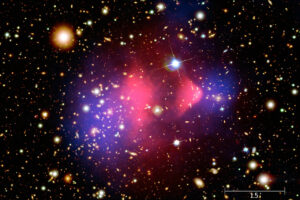
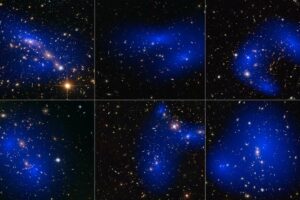
Gravity is a fundamental force that governs the structure and behavior of the universe. It shapes galaxies, maintains planetary orbits, and sustains life by exerting a constant downward pull. In the microgravity conditions of space, this force is drastically reduced, leading to significant challenges for human health. Astronauts experience muscle weakening, bone density loss, and other physiological changes due to the absence of gravitational stress. Therefore, generating artificial gravity is crucial for long-term space missions and the viability of extraterrestrial habitats.
Methods to Generate Artificial Gravity
Rotational Artificial Gravity
One of the most promising and conceptually straightforward techniques to simulate gravity in space involves rotation. By spinning a spacecraft or habitat, centrifugal force pushes occupants outward against the interior surface, creating a sensation similar to gravity. This principle is akin to a rotating amusement park ride, where the direction of “down” is defined by the outward force generated by the spin.
- Mechanism:
The rotation induces centripetal acceleration directed toward the center of the structure, which results in an outward reactive force perceived as weight by the occupants. - Adjustability:
By modifying the radius of the rotating habitat and its angular velocity, engineers can fine-tune the artificial gravity to approximate Earth’s gravitational acceleration of 9.8 m/s². - Challenges:
Smaller radii require faster spins, which can cause motion sickness and disorientation. Larger structures reduce these effects but pose significant engineering and financial challenges.
Alternative Theoretical Approaches
Beyond rotation, other speculative methods explore manipulating gravity through advanced physics concepts:
- Gravitational Manipulation:
Theoretical ideas involve controlling mass distribution or exploiting frame-dragging effects near massive rotating bodies, concepts rooted in general relativity and quantum field theory. - Acceleration-Based Gravity:
Continuous linear acceleration of a spacecraft can simulate gravity by pushing occupants in one direction, though this requires enormous and sustained energy inputs. - Magnetic Systems:
Hypothetical use of magnetic fields to influence charged particles or biological tissues to mimic weight, currently more relevant to bioengineering research than practical space travel.
Physics Behind Artificial Gravity
Artificial gravity generated by rotation is fundamentally a result of centripetal acceleration. When an object moves in a circular path, it experiences an inward acceleration toward the center of rotation. This acceleration produces an outward force on the object, which is perceived as gravity by anyone inside the rotating frame.
The magnitude of this artificial gravity (a) can be calculated using the formula:
a = ω²r
- a: Artificial gravity acceleration (m/s²)
- ω: Angular velocity (radians per second)
- r: Radius of the rotating habitat (meters)
By adjusting ω and r, the artificial gravity can be tailored to match Earth’s gravity, providing a comfortable and health-sustaining environment for astronauts.
Practical Applications and Experimental Progress
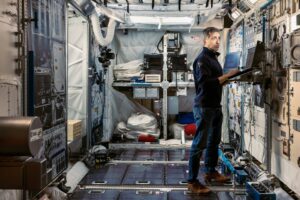
Efforts to implement artificial gravity are ongoing, with experiments conducted aboard the International Space Station and conceptual designs such as the O’Neill cylinder-a large, rotating space habitat envisioned as a self-sustaining mini-planet. These designs aim to create livable environments with Earth-like gravity, supporting long-term human presence in space.
While engineering challenges related to materials, structural stability, and cost remain significant, incremental advancements continue to bring the concept closer to reality.
Psychological and Physiological Benefits
Artificial gravity offers more than just physical advantages; it also plays a vital role in mental well-being. The presence of gravity helps maintain normal bodily functions, reduces the disorientation caused by weightlessness, and provides a sense of familiarity and comfort for astronauts. These factors are essential for the success of extended missions and the establishment of permanent extraterrestrial colonies.
Common Misconceptions About Artificial Gravity
Artificial gravity can be created simply by turning on a machine.
Artificial gravity requires specific physical conditions, such as rotation or acceleration, and cannot be generated by conventional devices without these mechanisms.
Any spinning spacecraft will provide comfortable artificial gravity.
The size and spin rate must be carefully balanced to avoid motion sickness and disorientation; too small a radius or too fast a spin can cause adverse effects.
Magnetic or other exotic methods can easily replace gravity.
While magnetic fields can influence charged particles, they do not replicate the comprehensive effects of gravity on the human body and environment.
Significance of Artificial Gravity in Space Exploration
Artificial gravity is a cornerstone for the future of human space exploration and colonization. It addresses critical health issues caused by prolonged weightlessness, enabling astronauts to maintain muscle and bone strength. Moreover, it facilitates the design of habitats that support normal human activities, from sleeping and eating to exercising and socializing, thereby enhancing mission success and quality of life in space.
Ultimately, the development of artificial gravity technologies represents a profound step toward making space a truly habitable frontier, bridging the gap between Earth-bound life and the vast cosmos.
FAQ
What is artificial gravity?
Artificial gravity is a force created to mimic Earth’s gravitational pull, essential for human health in space.
How is artificial gravity generated?
It can be generated through methods like rotation of spacecraft, acceleration, or theoretical concepts like gravitational manipulation.
What are the benefits of artificial gravity for astronauts?
It helps maintain muscle and bone strength, reduces disorientation, and enhances overall mental well-being during missions.
Leave a Reply