
Short Answer
Definition of Dark Matter-Deficient Galaxies
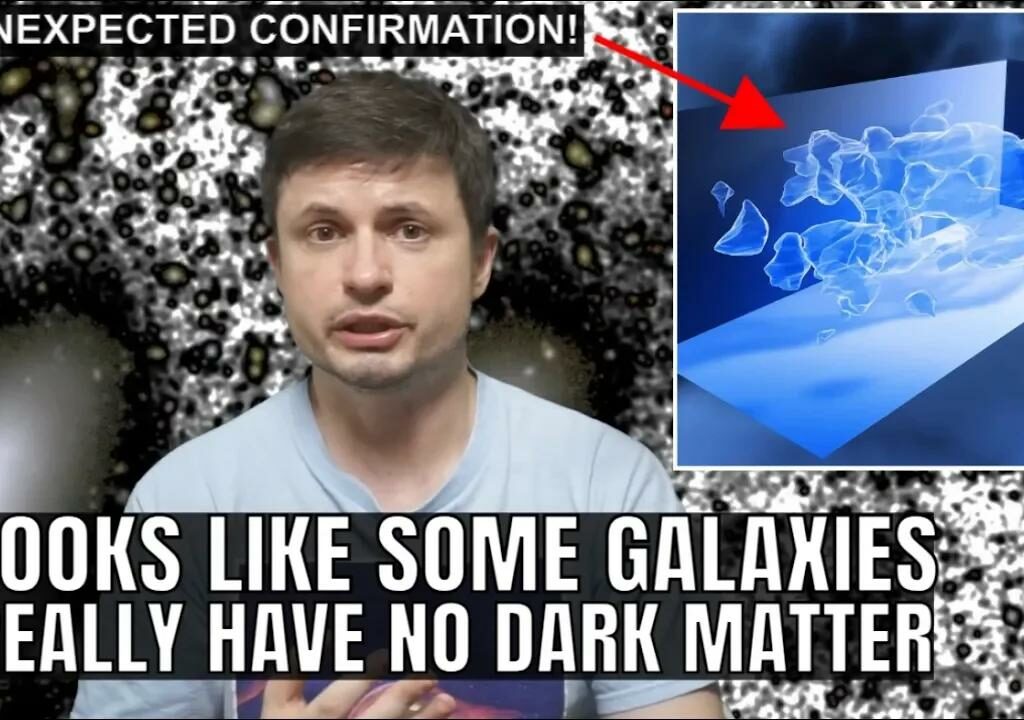
Dark matter-deficient galaxies are celestial systems that appear to lack the invisible and elusive substance known as dark matter, which is traditionally thought to dominate the mass composition of galaxies. Unlike typical galaxies enveloped by massive dark matter halos, these galaxies exhibit stellar and gaseous components without the expected gravitational influence of dark matter. This phenomenon challenges the conventional understanding of galactic formation and dynamics.
The Role of Dark Matter in Galactic Structure
Dark matter is widely regarded as the unseen framework that supports the formation and stability of galaxies. It exerts gravitational forces that bind stars and interstellar gas, enabling them to orbit the galactic center at speeds that visible matter alone cannot justify. Without the gravitational pull of dark matter, the outer regions of galaxies would disperse due to centrifugal forces. Typically, dark matter halos outweigh luminous matter by factors of five or more, shaping the rotational behavior and overall morphology of galaxies.
Observational Evidence and Anomalies
Standard measurements of galactic rotation curves reveal discrepancies between the observed velocities of stars and the gravitational pull expected from visible matter alone, implying the presence of dark matter. However, certain galaxies defy this pattern, displaying rotation profiles consistent solely with their luminous content. These anomalies raise the question of whether these galaxies genuinely lack dark matter or if observational or methodological factors are at play.
Environmental Influences on Dark Matter Content
One explanation for the absence of dark matter in some galaxies involves their cosmic surroundings. In densely populated regions of the universe, gravitational interactions are frequent and intense. Tidal forces from nearby massive galaxies or galaxy clusters can strip away both visible and dark matter from smaller galaxies. This process can leave behind stellar-rich remnants that appear devoid of their original dark matter halos.
Baryonic Processes Affecting Dark Matter Distribution
Normal matter, or baryonic matter, interacts with radiation and stellar phenomena in ways that can influence the distribution of dark matter within galaxies. Energetic events such as supernova explosions and stellar winds can expel gas and alter the gravitational potential, potentially disturbing or reducing the surrounding dark matter halo. These feedback mechanisms may contribute to the observed dark matter deficits in certain galaxies.
Challenges in Detecting Dark Matter
The inference of dark matter presence relies heavily on models that assume specific distributions and behaviors of matter within galaxies. Variations in stellar orbits, such as highly radial rather than circular paths, can complicate kinematic analyses and lead to underestimations of dark matter content. Therefore, careful consideration of stellar dynamics is essential to avoid misinterpretations.
Alternative Theories and Implications
Galaxies lacking dark matter provide a unique opportunity to test alternative gravitational theories. For example, Modified Newtonian Dynamics (MOND) proposes adjustments to classical gravity at low acceleration scales, potentially explaining galactic rotation without invoking dark matter. If these galaxies truly lack dark matter yet exhibit expected dynamics, they could serve as critical benchmarks for evaluating such theories.
Impact on Galaxy Formation and Evolution
The presence or absence of dark matter significantly influences galaxy formation, star formation rates, and structural stability. Dark matter-deficient galaxies may display distinctive features such as lower total mass, unusual shapes, or atypical stellar motions. Studying these characteristics helps astronomers reconstruct their formation histories and understand the environmental factors shaping their evolution.
Case Studies and Recent Discoveries
Recent observations have identified galaxies that appear to confirm hypotheses about dark matter removal through gravitational interactions. These galaxies exhibit mass distributions and stellar kinematics consistent with the idea that strong tidal forces can effectively strip dark matter halos. Such findings prompt further questions about whether these galaxies are remnants of past interactions or represent a separate evolutionary class, and whether they are more prevalent than previously recognized.
Advances in Observation and Simulation Techniques
Progress in understanding dark matter-deficient galaxies depends on sophisticated observational tools and computational models. High-precision instruments capable of mapping stellar velocities, combined with surveys targeting faint or diffuse galaxies, enhance detection capabilities. Simulations modeling galaxy interactions under various conditions help explore mechanisms of dark matter stripping and redistribution, bridging theoretical predictions with empirical data.
Significance in Astrophysics and Cosmology
Galaxies without dark matter challenge established paradigms and encourage refinement of cosmic evolution models. While dark matter remains undetectable by direct means, its gravitational effects are typically evident in galactic behavior-except in these rare cases. Investigating these exceptions deepens our understanding of the universe’s composition and the forces shaping its vast structures.
Common Misconceptions
All galaxies must contain dark matter.
While most galaxies are embedded in dark matter halos, some have been observed with little to no dark matter, likely due to environmental stripping or other processes.
Absence of dark matter means the galaxy is not gravitationally bound.
Some galaxies maintain structural integrity through the gravitational influence of visible matter alone, especially if dark matter has been removed or redistributed.
Dark matter-deficient galaxies disprove the existence of dark matter.
These galaxies provide valuable insights but do not negate dark matter’s role; instead, they highlight complex interactions and the need for nuanced models.
Conclusion: Expanding Our Cosmic Perspective
The existence of galaxies seemingly devoid of dark matter invites a broader exploration of cosmic phenomena. Their study integrates environmental effects, baryonic feedback, observational challenges, and alternative physics, enriching our comprehension of galactic dynamics. As technology and theory advance, these enigmatic galaxies will continue to illuminate the intricate balance of forces sculpting the universe, reminding us that the cosmos is far more intricate than previously imagined.
FAQ
What are dark matter-deficient galaxies?
They are galaxies that show little to no dark matter, raising questions about galactic formation.
Why do some galaxies lack dark matter?
Possible reasons include environmental stripping and baryonic processes that alter dark matter distribution.



Leave a Reply