
Short Answer
Understanding Dark Matter and Cosmic Rays
The cosmos is an immense and enigmatic realm, filled with phenomena that continue to challenge our grasp of physics and cosmology. Among these mysteries, dark matter stands out as one of the most confounding and invisible components, believed to constitute roughly 27% of the universe’s total mass-energy. Unlike ordinary matter, dark matter neither emits nor absorbs light, rendering it undetectable by traditional telescopes. However, cosmic rays-high-energy particles traveling through space-offer a promising indirect method to investigate the elusive characteristics of dark matter. This article explores how cosmic ray research contributes to unveiling the properties and behavior of dark matter.
Definition of Cosmic Rays and Dark Matter
Cosmic Rays: These are energetic particles, mainly protons and atomic nuclei, that move through space at velocities close to the speed of light. They originate from diverse astrophysical phenomena such as supernova remnants, active galactic nuclei, and pulsars, continuously striking Earth and carrying information about their sources and the interstellar medium they traverse.
Dark Matter: A form of matter that does not interact with electromagnetic radiation, making it invisible to direct observation. Its presence is inferred from gravitational effects on visible matter, radiation, and the large-scale structure of the universe.
Cosmic Ray Spectroscopy: A Window into Dark Matter
One of the key methods to probe dark matter through cosmic rays is spectroscopy, which involves analyzing the energy distribution of incoming cosmic particles. Deviations or unexpected features in these energy spectra can hint at processes beyond known astrophysical sources. For example, unusual peaks or troughs in the flux of positrons or antiprotons-particles often produced in cosmic ray interactions-may indicate annihilation or decay events involving dark matter particles.
Such spectral anomalies could be signatures of hypothetical particles like weakly interacting massive particles (WIMPs), sterile neutrinos, or axions. By carefully mapping these energy distributions across various ranges, scientists can place constraints on the mass, interaction cross-sections, and decay pathways of potential dark matter candidates.
Variations in Cosmic Ray Particle Composition
The makeup of cosmic rays themselves provides another avenue for indirect dark matter detection. Typically, cosmic rays consist of a predictable ratio of protons, heavier nuclei, electrons, positrons, and antiprotons. Any significant deviation from these expected proportions-particularly an excess of antimatter particles such as positrons-may signal dark matter interactions.
For instance, the Alpha Magnetic Spectrometer (AMS-02) aboard the International Space Station has detected an unexpected surplus of positrons at energies exceeding 10 GeV, a phenomenon not fully explained by conventional astrophysical sources. While alternative explanations like pulsars or microquasars exist, the study of cosmic ray composition remains crucial for understanding potential dark matter processes influencing particle populations.
Spatial and Temporal Patterns in Cosmic Ray Data
Examining the spatial distribution and time-dependent variations in cosmic ray intensity adds depth to dark matter investigations. Areas with high dark matter density, such as the centers of galaxy clusters or dwarf spheroidal galaxies, are prime targets for observation. If dark matter annihilation or decay significantly contributes to cosmic ray production, anomalies should be more pronounced in these regions.
Multiwavelength studies combining X-ray, gamma-ray, and cosmic ray observations help correlate particle excesses with dark matter halos. Additionally, temporal fluctuations in cosmic ray fluxes might reveal transient dark matter phenomena or interactions influenced by changing astrophysical environments.
High-Energy Cosmic Rays and Dark Matter Signatures
Cosmic rays at ultra-high energies provide a unique probe into the mass scale of dark matter particles. These particles may exhibit spectral cutoffs or novel interaction channels that reflect the underlying dark matter mass distribution. Observations of gamma rays, neutrinos, and secondary particles produced by cosmic ray interactions with the interstellar medium can also illuminate dark matter decay or annihilation processes at energies beyond the reach of Earth-based experiments.
Facilities like the Pierre Auger Observatory and the IceCube Neutrino Observatory enhance indirect detection efforts by searching for neutrino emissions from dark matter-rich regions such as the Galactic Center. Neutrinos, due to their weak interactions, travel virtually unimpeded, potentially carrying unaltered information about dark matter interactions.
Technological Advances and Multi-Messenger Astronomy
Recent improvements in detector technology and data analysis have significantly enhanced the study of cosmic rays for dark matter research. Instruments with superior energy resolution, advanced particle identification, and longer observation periods enable more precise detection of cosmic ray anomalies. These advancements help distinguish potential dark matter signals from the complex astrophysical background.
Moreover, the integration of multiple observational channels-cosmic rays, gamma rays, X-rays, and neutrinos-forms the foundation of multi-messenger astronomy. This comprehensive approach allows cross-verification of signals and refinement of dark matter models, reducing uncertainties and improving the accuracy of constraints on dark matter properties.
Challenges in Detecting Dark Matter via Cosmic Rays
- Propagation Effects:
The random scattering of cosmic rays through turbulent magnetic fields causes diffusion and energy loss, which can obscure original spectral features linked to dark matter. - Astrophysical Backgrounds:
Accurately modeling conventional astrophysical sources is essential to differentiate dark matter signals from other cosmic ray origins.
Future Directions and Prospects
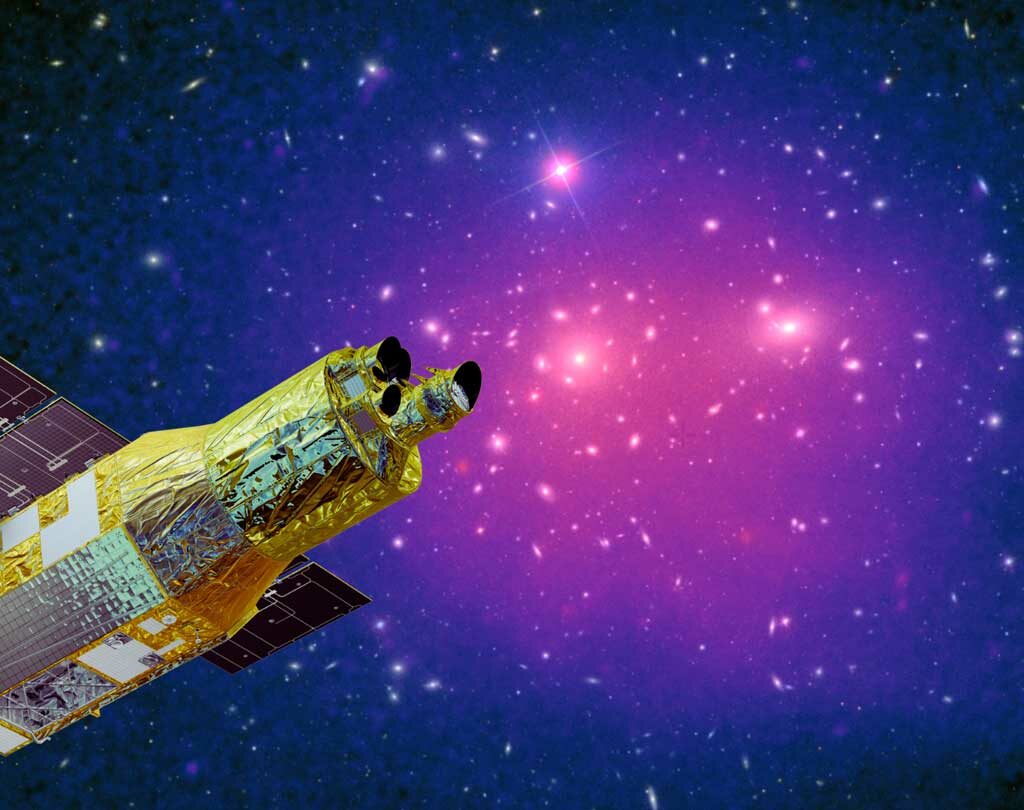
Despite current challenges, upcoming missions and observatories promise enhanced sensitivity and broader spectral coverage. Projects like the Cherenkov Telescope Array (CTA), the XRISM X-ray observatory, and advanced balloon-borne experiments will improve cosmic ray measurements and complement theoretical progress in particle physics and cosmology. These developments are expected to bring us closer to unraveling the dark matter mystery.
Significance of Cosmic Ray Studies in Dark Matter Research
Cosmic rays serve as a crucial investigative tool in the ongoing quest to understand dark matter. Through detailed examination of their energy spectra, particle composition, spatial and temporal distributions, and high-energy characteristics, cosmic ray research provides a multifaceted perspective on this invisible cosmic component. While obstacles remain, the combination of cutting-edge technology and multi-messenger strategies offers a promising path toward revealing the fundamental nature of dark matter, one of the universe’s most profound secrets.
FAQ
What are cosmic rays?
Cosmic rays are high-energy particles, mainly protons and atomic nuclei, traveling through space at nearly the speed of light, originating from various astrophysical phenomena.
How do cosmic rays relate to dark matter?
Cosmic rays provide indirect evidence for dark matter through their interactions, energy spectra, and anomalies in particle composition, potentially indicating dark matter processes.




Leave a Reply